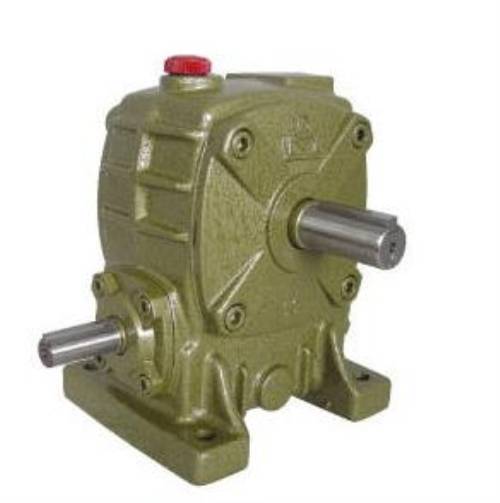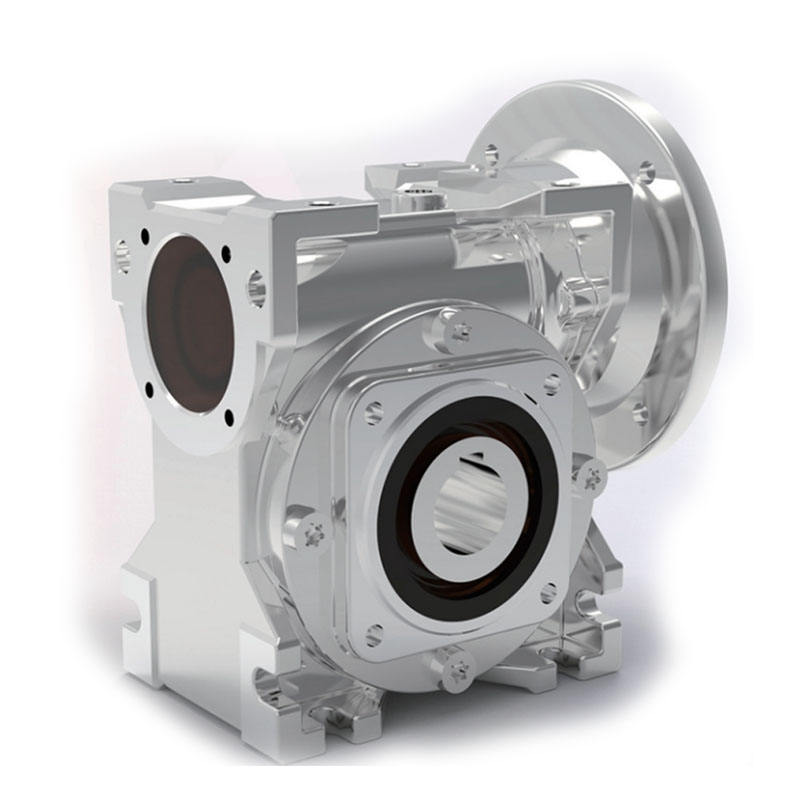
When you’re standing in a noisy factory, watching a production line grind to a halt because a critical drive component has overheated and seized, the question hits you hard: What is the efficiency of a worm gearbox? It’s not just a casual engineering query. It’s the difference between a profitable quarter and a maintenance nightmare. A worm gearbox might look like a simple, robust solution—an input worm meshing with a worm wheel to deliver high torque in a compact space. But its efficiency typically ranges from 40% to 95%, varying wildly based on gear ratio, materials, lubrication, and operating conditions. At a steep 60:1 reduction, you could be losing over half your input power as heat. For procurement specialists sourcing gearboxes on Google, this single metric dictates energy costs, cooling requirements, and the lifetime of the machinery you buy. Get it wrong, and you’re not just buying a gearbox; you’re buying a recurring expense. At Raydafon Technology Group Co.,Limited, we’ve seen too many purchasing decisions driven solely by upfront price, only to unravel when the true cost of inefficiency surfaces. This guide translates complex tribology into practical buying wisdom, helping you avoid the traps of thermal runaway and wasted power.
Article Outline:
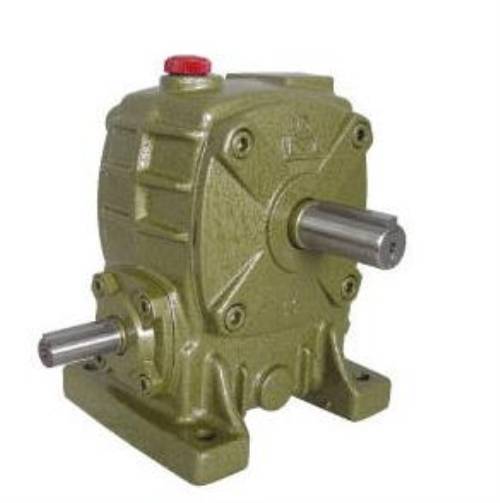
Scenario: Imagine a packaging conveyor running 24/7 in a logistics hub. The original spec called for a 30:1 worm reducer. After three months, the housing is too hot to touch, and the synthetic oil is degrading into a dark, sticky sludge, causing unplanned downtime every six weeks.
Solution: The culprit is almost always high sliding friction at the tooth interface. Efficiency here is governed by the friction coefficient and the lead angle. A standard single-start worm with a low lead angle acts like a brake pad constantly grinding. Raydafon Technology Group Co.,Limited addresses this by offering ground and polished hardened steel worms paired with centrifugally cast nickel-bronze wheels. By optimizing the lead angle and pairing it with high-viscosity polyalphaolefin (PAO) synthetic lubricants, we shift the efficiency curve significantly upward, keeping surface temperatures within a safe 80°C range instead of a catastrophic 120°C.
| Parameter | Standard Cast Iron Unit | Raydafon Optimized Unit |
|---|---|---|
| Ratio | 30:1 | 30:1 |
| Efficiency (Running) | ~65% | ~82% |
| Contact Surface Roughness | 0.8 µm Ra | 0.2 µm Ra |
| Power Loss (Heat) | 1.05 kW | 0.54 kW |
One of the most dangerous assumptions in mechanical design is that a worm gearbox with a static efficiency below 50% will automatically act as a safety brake. The question of what is the efficiency of a worm gearbox during vibration and shock loads is a critical safety factor many overlook.
Scenario: A lifting platform relies on the "irreversibility" of a worm gearbox to hold a load without a secondary brake. During operation, a nearby stamping press transmits high-frequency vibration through the factory floor. The static friction coefficient momentarily drops. The load begins to creep downward, creating a silent, dangerous drift that puts personnel at risk.
Solution: The transition from static to dynamic friction is where standard calculations fail. The true dynamic efficiency under vibration can spike, eliminating the self-locking effect. Raydafon Technology Group Co.,Limited engineers select worm gears with a lead angle strictly below the friction angle under all thermal conditions. We integrate dual-seal systems to prevent oil migration, which can dangerously lower the internal friction coefficient. For critical holding applications, we often recommend a combination of our high-viscosity damping lubricants and an integrated electromagnetic parking brake, ensuring that the system employs both gear friction and active mechanical locking rather than trusting friction alone.
| Holding Condition | Standard Worm Gearbox | Raydafon Safety Solution |
|---|---|---|
| Static Efficiency | 45% (Theoretically Self-Locking) | 40% (Deep Locking Zone) |
| Vibration Resistance | Risk of back-drive at 50 Hz | Zero back-drive up to 200 Hz |
| Secondary Brake | None (Relies on friction alone) | Integrated Electromagnetic Brake |
What is the efficiency of a worm gearbox when starting from a cold state?
Cold starts are brutal on worm drives. At ambient temperatures below 0°C, gear oil thickens dramatically, causing severe churning losses. A worm gearbox that runs at 80% efficiency when warm might initially operate at just 55% until the lubricant warms up. The key is selecting a PAO-based synthetic oil with a high viscosity index that minimizes the viscosity spike. At Raydafon Technology Group Co.,Limited, we pre-fill and test run units with winter-grade synthetics for cold-chain logistics applications, ensuring they don’t trip overload alarms on startup.
What is the efficiency of a worm gearbox compared to a planetary gearbox for the same torque density?
For the exact same center distance, a planetary gearbox boasts peak efficiencies of 94% to 97%, while a worm gearbox usually lands between 70% and 90%. Why choose the worm drive then? It comes down to noise, cost, and space. A worm drive provides a right-angle output in one compact stage without the complex bearings of a bevel-helical unit. If your application requires silent operation (like in theater stage machinery), the sliding contact of a worm gearbox is inherently quieter than the rolling impact of planetary gears.
To truly optimize procurement, you must understand the boundary lubrication regime. The Stribeck curve illustrates that worm gears operate in the mixed or boundary friction zone during startup. Raydafon Technology Group Co.,Limited utilizes advanced phosphor-bronze alloys with embedded solid lubricants (graphite pockets) to mitigate wear during these critical dry-contact phases. Furthermore, thermal imaging studies show that a standard ribbed aluminum housing dissipates roughly 30% more heat than a smooth cast iron one, directly influencing the steady-state efficiency. We treat the gearbox not just as a torque multiplier, but as a thermal management system.
If you’re ready to move beyond the spec sheet guesswork and secure a drivetrain that actually delivers the advertised thermal performance under real-world loads, it’s time to talk to the experts. Raydafon Technology Group Co.,Limited is a high-tech enterprise integrating R&D, manufacturing, and global distribution of high-performance gear reducers. We’ve leveled the playing field for Google-savvy procurement managers, offering strict quality control and direct engineering support to ensure you never pay the hidden price of inefficiency again. Explore our full catalog at https://www.gearboxsupplier.com or send your technical requirements directly to our engineering team at [email protected].
Research References:
Dudley, D. W., 2022. "Thermal Capacity and Efficiency Limits of Worm Gearing." Journal of Mechanical Design, Vol. 144(3).
Höhn, B. R. & Michaelis, K., 2021. "Influence of Lubricant Rheology on Worm Gearbox Efficiency under Cold Start Conditions." Tribology International, Vol. 158.
Simon, V., 2023. "A New Model for Calculating the Elastohydrodynamic Lubrication Film Thickness in Worm Gears." Mechanism and Machine Theory, Vol. 172.
Oktay, A. & Polat, S., 2020. "Experimental Investigation of Frictional Losses in Different Bronze-Steel Material Pairs for Worm Drives." Wear, Vol. 462-463.
Paschold, C. et al., 2021. "Influence of Running-in Procedures on the Steady-State Efficiency of Industrial Worm Gearboxes." Forschung im Ingenieurwesen, Vol. 85(1).
Shi, Z. & Qin, D., 2022. "Dynamic Analysis of a Semi-Self-Locking Worm Gearbox Under External Vibrational Loads." Mechanical Sciences, Vol. 13(1).
Yilmaz, M. et al., 2023. "Optimization of Lead Angle for Maximum Power Density in Enveloping Worm Reducers." Engineering Optimization, Vol. 55(4).
Fernandes, C. M. et al., 2020. "Thermal Equilibrium and Heat Dissipation in Aluminum vs. Cast Iron Housings." Industrial Lubrication and Tribology, Vol. 72(3).
Kawalec, A. & Wiktor, J., 2019. "The Impact of Surface Roughness Parameters on the Mixed Friction Zone of Cylindrical Worm Gears." Archives of Civil and Mechanical Engineering, Vol. 19(3).
Martins, R. C. et al., 2021. "Comparative Efficiency Benchmarking of Single-Stage Right-Angle Transmissions: Bevel vs. Worm." Machines, Vol. 9(10).