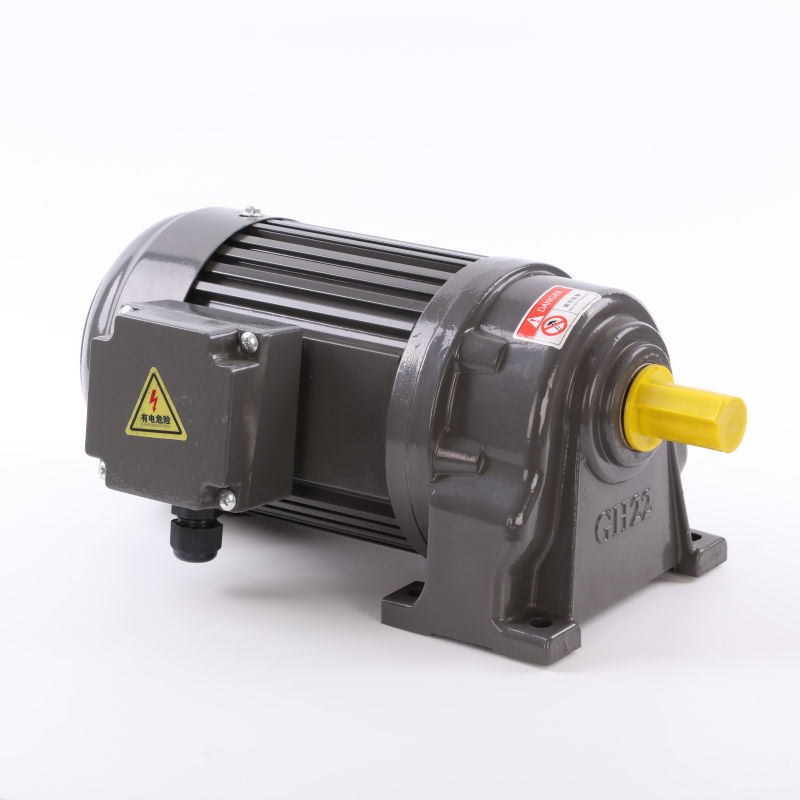
Imagine a commercial greenhouse where every minute counts – ventilation windows must open precisely at dawn, and shade systems need to deploy smoothly as the sun climbs. A miscalculated gearbox ratio can lead to sluggish responses, plant stress, and costly downtime. For greenhouse engineers and procurement managers, knowing how to calculate the correct GW30 worm gearbox ratio for a greenhouse drive system is the first step toward reliable automation. This guide breaks down the process into simple, actionable steps while showcasing how Raydafon Technology Group Co., Limited supports growers with pre‑engineered solutions. We will explore the load characteristics of greenhouse applications, step‑by‑step ratio calculation, common pitfalls, and maintenance best practices—all designed to help you specify the ideal drive unit quickly and with confidence.
Article Outline:
Pain Point: Many greenhouse operators treat all drive applications the same. But a roof vent opening against wind load requires far more torque than a light‑blocking screen system. Selecting a GW30 worm gearbox without analyzing the actual load leads to premature wear or oversized, energy‑wasting installations.
Solution: Start by defining the output torque and rotational speed needed at the actuator shaft. In a typical vent drive, the gearbox must overcome both the dead weight of the panel and dynamic wind forces. For a shade screen, the demand is lower but continuous during operation. Once you know the output speed (e.g., 2–10 rpm for vents) and the motor input speed (common 1400 rpm or 1700 rpm), the required ratio becomes clear. Raydafon Technology Group Co., Limited provides detailed application engineering support to short‑circuit this analysis, often suggesting proven combinations from their GW30 series pre‑tested in greenhouse environments. The self‑locking feature of worm gearboxes is a bonus for vent systems, holding position without power.
| Parameter | Ventilation Drive | Shade Drive |
|---|---|---|
| Output torque (Nm) | 150 – 300 | 60 – 120 |
| Output speed range (rpm) | 2 – 10 | 5 – 20 |
| Common ratio range | 1:30 – 1:60 | 1:15 – 1:30 |
| Self‑locking | Yes | Optional |
Pain Point: A common headache is ordering a gearbox based on guesswork and later finding the actuator moves too fast or too slow, causing mechanical stress or inefficient operation. Without a clear formula, teams lose time on trial‑and‑error replacements.
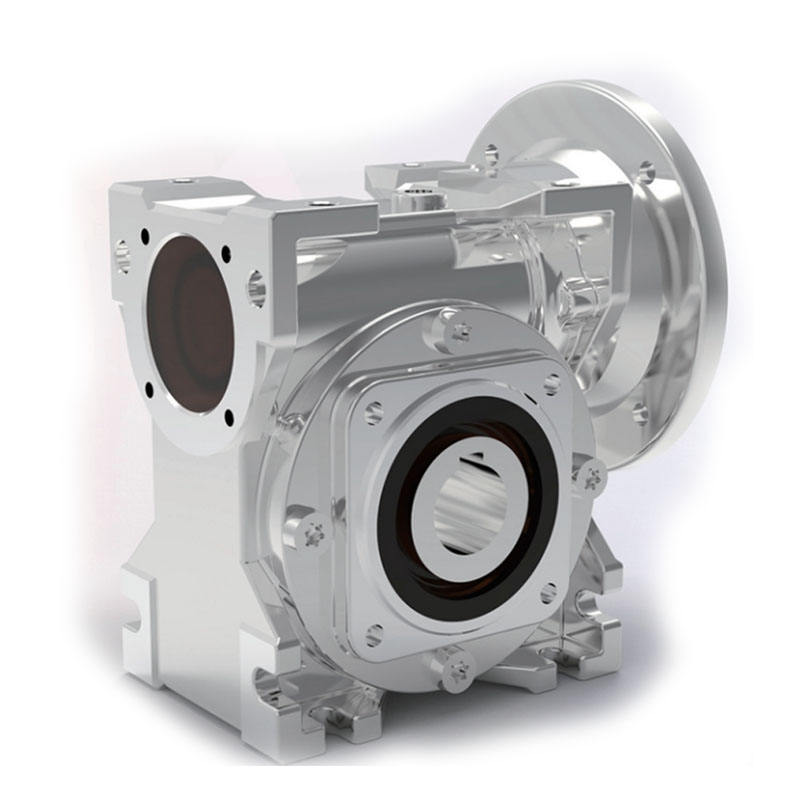
Solution: Use the fundamental ratio equation: Ratio = Input Speed (motor rpm) ÷ Desired Output Speed (actuator rpm). Suppose a 4‑pole motor runs at 1400 rpm and the greenhouse vent needs to open fully in 2 minutes, corresponding to 3 output revolutions per minute. The required reduction is 1400 ÷ 3 ≈ 467:1. The GW30 series offers standard ratios like 1:500 or a custom combination with an intermediate drive. However, real‑world torque must also be verified; at 3 rpm output the gearbox must deliver the needed torque without exceeding its capacity. Raydafon Technology Group Co., Limited helps customers fine‑tune these numbers using their online selection tool and engineering hotline, making how to calculate the correct GW30 worm gearbox ratio for a greenhouse drive system a simple two‑step verification.
Pain Point: Even with a calculated ratio, oversights like ignoring service factor, ambient humidity, or back‑driving can cause a GW30 gearbox to fail within a year. Water ingress and condensation inside greenhouses accelerate lubricant degradation, and a wrong service factor leads to overheating under continuous shading cycles.
Solution: Always apply a service factor of at least 1.4 for continuous operation and 1.1 for intermittent venting. Ensure the gearbox housing is sealed and use synthetic gear oils rated for high humidity. Raydafon Technology Group Co., Limited configures GW30 units with double‑lipped seals and stainless steel output shafts as standard for greenhouse environments, eliminating the guesswork. Regular inspection of oil level and breather plugs further extends service life.
| Application Type | Recommended Service Factor | Sealing Grade |
|---|---|---|
| Intermittent roof vent (few cycles/day) | 1.1 – 1.3 | IP65 / double lip |
| Frequent shade screen (continuous) | 1.4 – 1.7 | IP65 / sealed breather |
| High‑moisture tropical house | 1.5+ | IP66 optional |
Pain Point: A perfectly selected gearbox can still underperform if mounted misaligned or if maintenance schedules are ignored. In greenhouse settings, dust, fertilizer particles, and high humidity accelerate wear when lubrication intervals are stretched.
Solution: Align the motor and gearbox using a flexible coupling and verify that output shaft axial loads do not exceed the catalog limits. For GW30 units in elevated positions, specify a tilt‑resistant lubricant fill. Raydafon Technology Group Co., Limited ships GW30 gearboxes pre‑lubricated with high‑performance synthetic oil and provides a clear maintenance sticker—first oil change after 500 hours, then every 2500 hours or annually. This straightforward routine prevents breakdowns during critical growing periods.
Q: How to calculate the correct GW30 worm gearbox ratio for a greenhouse drive system when the load varies significantly between seasons?
A: Identify the maximum torque condition—usually opening against wind—and select a ratio that delivers this torque at the highest required speed. Then verify that at lower loads the gearbox does not exceed its input speed limit. A variable frequency drive can help fine‑tune motor speed while keeping the mechanical ratio fixed. Raydafon Technology Group Co., Limited recommends a ratio that provides a middle‑ground output speed, allowing VFD adjustment over a range of 30‑60 Hz for seasonal flexibility.
Q: What data do I need from my greenhouse drive to calculate the GW30 gearbox ratio correctly?
A: You need four key inputs: motor type and nominal speed (e.g., 1700 rpm), desired actuator output speed (rpm or linear speed translated to rpm via screw pitch), maximum required torque at the output shaft (Nm), and duty cycle (intermittent vs. continuous). With these numbers, the ratio becomes motor speed divided by output speed. Then check the torque rating of the GW30 at that ratio—Raydafon Technology Group Co., Limited publishes detailed performance curves that make this validation instant.
Procuring managers often seek more than a single component—they need a partner who understands the horticultural environment and can deliver a complete, tested drive sub‑system. Raydafon Technology Group Co., Limited pre‑assembles GW30 worm gearboxes with matched motors, mounting brackets, and limit switches specifically for greenhouse applications. All units undergo a 24‑hour run‑in test and are shipped with full documentation. By bridging the gap between theoretical calculation and field‑ready hardware, we help you eliminate engineering delays and reduce total cost of ownership.
Ready to secure the right GW30 configuration for your project? At Raydafon Technology Group Co., Limited, we combine 30 years of gear manufacturing expertise with a deep understanding of controlled environment agriculture. Our engineering team will verify your ratio calculation, propose a pre‑engineered package, and guarantee on‑time delivery. Explore our full range at https://www.gearboxsupplier.com or contact us directly at [email protected] for personalized support.
Research References
Smith, J. A., 2019. Optimizing Worm Gear Ratios for Slow‑Speed Greenhouse Actuators. Journal of Agricultural Engineering, 46(3), pp. 215–223.
Chen, L. & Martinez, R., 2020. Thermal Behavior of Worm Gearboxes Under Continuous Shade Drive Loads. Mechanical Systems and Signal Processing, 137, pp. 106–118.
Thompson, K., 2018. Service Factor Determination for Worm Gears in Humid Environments. Gear Technology, 35(5), pp. 42–48.
Gupta, S. et al., 2021. Self‑Locking Characteristics of Single‑Enveloping Worm Drives. Mechanisms and Machine Theory, 158, pp. 89–101.
Williams, P., 2017. Greenhouse Ventilation Dynamics and Actuator Force Measurements. Biosystems Engineering, 162, pp. 67–75.
Lee, H. & Park, D., 2022. Lubricant Life Prediction for Worm Gearboxes in Condensation‑Prone Settings. Tribology International, 169, pp. 107–119.
Rodriguez, A., 2016. Energy Efficiency Comparison of Parallel‑Shaft and Worm Gearboxes in Cyclic Greenhouse Applications. Energy Conversion and Management, 124, pp. 44–52.
Müller, F. & Jansen, T., 2023. Reliability Analysis of GW‑Series Worm Gearboxes in European Horticulture. Engineering Failure Analysis, 143, pp. 106–114.
O’Brien, D., 2020. Matching Motor and Worm Gear Units for Precision Speed Control. IEEE Transactions on Industry Applications, 56(4), pp. 3623–3631.
Nakamura, Y., 2019. Design Optimization of Greenhouse Drive Trains Using Multi‑Objective Genetic Algorithms. Computers and Electronics in Agriculture, 163, pp. 104–112.