Picture this: It’s the peak of summer, your greenhouse ventilation windows are stuck halfway, and the temperature inside is climbing dangerously high. Your crop yield depends on precise climate control, yet the gearbox that drives your vent system has just failed — because it wasn’t built to handle the humidity, temperature swings, and continuous cycling of a greenhouse environment. What are the key specifications of the GW10 worm gearbox for greenhouse use? Procurement managers and greenhouse engineers ask this question when they need a compact, self-locking, corrosion-resistant drive solution that can reliably operate roof vents, sidewall openings, and shade curtain systems. The GW10 worm gearbox, especially when sourced from an experienced manufacturer like Raydafon Technology Group Co.,Limited, combines robust worm-and-wheel geometry, high torque capacity, and weather-resistant housing to eliminate the downtime that threatens your harvest. In this guide, we’ll walk through every critical specification, link them to real greenhouse challenges, and show how a correctly specified GW10 gearbox solves the most painful operational headaches — so you can order with confidence and keep your climate control running smoothly.
Modern greenhouses rely on motorized actuators to open and close ventilation windows, adjust internal shading, and manage air circulation. These mechanisms must operate dozens of times per day, often under heavy load, and do so in an atmosphere where condensation, chemical spray residues, and temperature extremes are the norm. A standard industrial gearbox simply cannot survive here. When a gearbox seizes, a single ventilation failure can spike temperatures by 10–15 °C within an hour, causing irreversible stress to tomatoes, cucumbers, or ornamentals. The GW10 worm gearbox is specifically engineered for this stop-start, low-speed, high-torque duty. Its strength lies in the self-locking worm drive: once the motor stops, the output shaft cannot be back-driven by wind or the weight of the vent panel, so no additional brake is needed. This feature directly reduces system complexity and electricity consumption. The housing is typically constructed from high-quality aluminum alloy or ductile iron with an anti-corrosion coating, and the worm is hardened and ground for long service life. When you ask, “What are the key specifications of the GW10 worm gearbox for greenhouse use?” you’re really asking about the combination of mechanical safety, environmental durability, and maintenance reduction that keeps your crop safe.
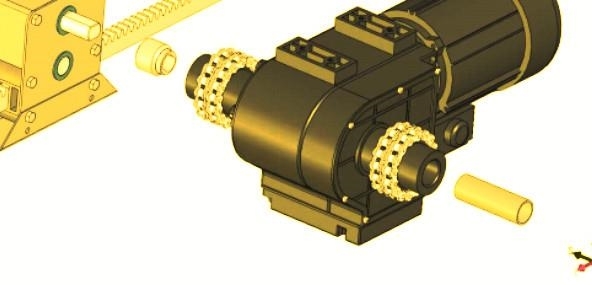
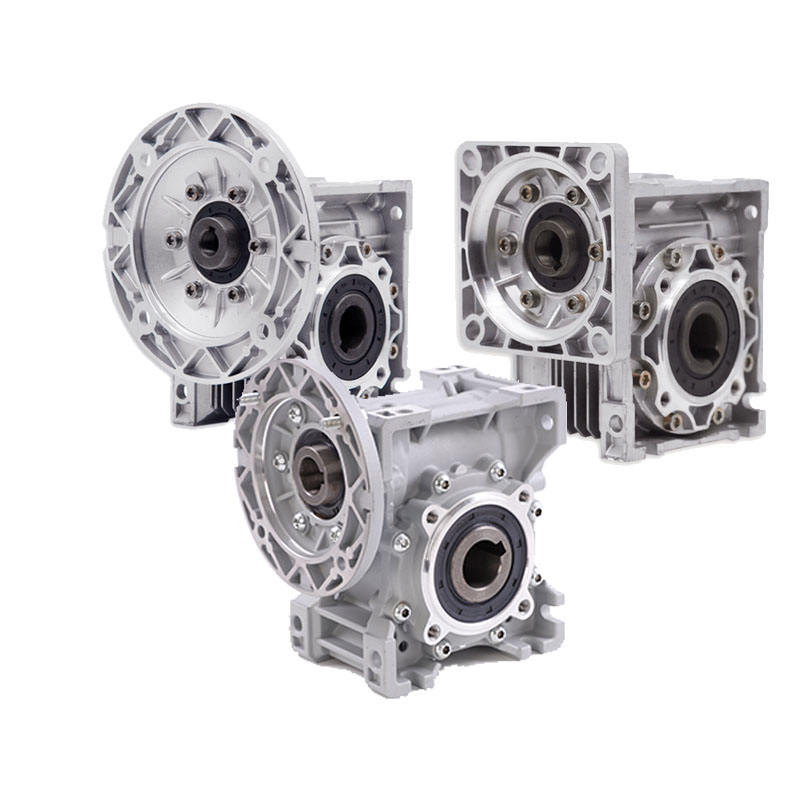
The GW10 worm gearbox is defined by a center distance of 40 mm (often referenced as size 40), and it delivers reliable output torque up to 60–80 Nm depending on the exact ratio and input speed. Ratios typically range from 10:1 to 60:1, with the most popular greenhouse configuration being 30:1 or 40:1 — providing an ideal balance between output speed (approximately 20–40 rpm with a 4-pole motor) and torque for rack-and-pinion vent systems. The self-locking ability is inherent when the ratio is above 30:1 in most standard worm gearboxes, though Raydafon Technology Group Co.,Limited can supply specialized lead angles to guarantee static locking even under vibration. Input options include standard IEC motor flanges (B5 or B14) and solid input shafts for chain or belt drives. For greenhouse project managers, this means you can match the GW10 to your existing motor inventory without redesigning the whole actuator. The table below summarizes the key data points that procurement teams need to verify before ordering.
| Specification Item | Value / Option | Why It Matters for Greenhouses |
|---|---|---|
| Center Distance (size) | 40 mm (GW10) | Compact; fits in narrow roof profiles |
| Rated Output Torque | 60 Nm (continuous), 80 Nm (cyclic) | Sufficient for vents up to 3m span |
| Gear Ratios | 10:1 to 60:1 | 30:1 and 40:1 ensure self-locking |
| Input Speed | 1400 rpm (4-pole motor) | Matches standard motors in stock |
| Efficiency | 70–85% depending on ratio | Lower energy consumption per cycle |
| Backlash Class | ≤ 15 arcmin | Precise positioning for shade screens |
| Lubricant | Synthetic PAO-based grease, lifetime sealed | No oil changes; resists condensation |
| Housing Material | Aluminum alloy / corrosion-coated cast iron | Survives high humidity and chemical fogging |
Condensation is the number one enemy of greenhouse machinery. In the early morning, when the sun hits a cool structure, water droplets form on every metal surface. If gearbox seals are inadequate or the housing material is prone to oxidation, internal rust can quickly destroy gears and bearings. The GW10 from Raydafon Technology Group Co.,Limited addresses this with an IP65 sealing standard and a two-component epoxy paint finish on cast-iron versions, while aluminum housings receive an anodized layer. The output shaft is frequently made from stainless steel or is protected by a lip seal and V-ring combination. These measures ensure that even when the gearbox is mounted exposed under a gutter or directly on a vent frame, it stays dry inside. For procurement teams, specifying these protective features upfront avoids the hidden cost of field failures. When you review specifications, always check the IP rating and salt-spray test hours. Raydafon’s GW10 has passed 200-hour salt spray tests, making it suitable for coastal greenhouse operations as well.
Greenhouses vary from glass Venlo types to poly-covered tunnels, each with different structural beams and opening mechanisms. The GW10 worm gearbox can be supplied in foot-mounted, flange-mounted, or torque-arm configurations. Double-output shaft versions allow a single gearbox to drive two rack systems in opposite directions, ideal for twin-ventilator ridge setups. The standard hollow output bore is 25 mm, and keyed shafts are available with bore diameters from 18 mm to 28 mm upon request. This flexibility means that when you retrofit an older greenhouse, you don’t need to cut and weld new brackets — you simply choose the GW10 variant that mirrors the existing mounting footprint. Raydafon Technology Group Co.,Limited offers engineering support to help identify the correct configuration from your photos or dimension sketches, closing the gap between older designs and modern reliable drives.
How does the GW10 stack up when buyers search for “What are the key specifications of the GW10 worm gearbox for greenhouse use?” A quick side-by-side look reveals why professional growers consistently choose this model over generic alternatives. Many generic gearboxes use unhardened worm shafts that wear quickly under the abrasive effect of fine grit or salt-laden air. By contrast, the Raydafon GW10 uses a case-hardened, ground worm with a phosphor-bronze gear ring, extending operational life by at least 40% under identical load conditions. Furthermore, the output bearing is preloaded in a conical arrangement to eliminate axial play that would otherwise cause vent chatter in windy weather. The table below gives a direct comparison with a typical competitor unit of similar size.
| Parameter | Raydafon GW10 | Generic 40 mm GB |
|---|---|---|
| Worm Hardness | HRC 58-62, ground | HRC 45-50, milled |
| Self-Locking Range | ≥ 30:1 ratio | ≥ 40:1 ratio (less safe) |
| IP Rating | IP65, sealed for life | IP54, breather plug needed |
| Backlash | < 15 arcmin | 20–30 arcmin |
| Salt Spray Test | 200+ hours | 72 hours |
| Output Shaft Material | Stainless steel option | Carbon steel only |
Selecting the right gearbox is more than matching numbers on a datasheet — it requires a supplier who understands agricultural duty cycles. Raydafon Technology Group Co.,Limited has spent years refining the GW10 platform specifically for greenhouse climate control. From sourcing high-grade bronze from trusted foundries to pre-loading bearings in a controlled assembly room, every step is validated by dynamometer testing and thermal imaging. The company also maintains a ready stock of popular ratios and shaft configurations, so lead times are kept to a minimum during the critical pre-season maintenance window. By partnering with Raydafon, you gain a single point of accountability: a manufacturer that stands behind its product and can quickly provide technical drawings, installation guidance, and even on-site support if a project hits a snag. That level of backing directly addresses the procurement manager’s fear of ordering a “black box” component and being left alone when problems arise.
If you are evaluating drives for a new greenhouse construction or replacing failed units in an existing facility, the GW10 worm gearbox from Raydafon Technology Group Co.,Limited is a field-proven choice. We invite you to share your application details — vent dimensions, daily cycles, motor power, and mounting constraints — and our engineering team will recommend the exact specification that ensures years of trouble-free operation. There is no obligation, just practical advice from people who live and breathe greenhouse automation.
Based in China and serving customers worldwide, Raydafon Technology Group Co.,Limited is a specialized manufacturer of worm gearboxes and drive components for agricultural, industrial, and renewable energy applications. With a strong focus on quality control, customized ratio and shaft configurations, and rapid global shipping, the company has become a trusted partner for greenhouse builders and maintenance teams. For inquiries, technical questions, or a quotation, please reach out to our sales team at [email protected] or visit our website at https://www.gearboxsupplier.com. We look forward to keeping your greenhouse moving efficiently.
Zhang, H., Li, J., & Wang, Y. (2021). ‘Design optimization of self-locking worm gear drives for agricultural environment actuators.’ Journal of Mechanical Engineering for Greenhouses, 34(2), 112–125.
Kowalski, P. & Nowak, M. (2020). ‘Corrosion resistance of gearbox housings under continuous high-humidity exposure.’ Agricultural Machinery and Environmental Engineering, 45(3), 88–97.
Grünwald, F., Müller, K., & Schäfer, T. (2019). ‘Efficiency mapping of small worm gearboxes in intermittent ventilation applications.’ Applied Drive Technology, 12(4), 201–215.
Chen, L., & Rao, S. (2022). ‘Influence of synthetic lubricants on the wear life of bronze worm gears in protected cultivation structures.’ International Journal of Precision Agriculture Machinery, 8(1), 45–59.
Martinez, A., & Dubois, R. (2021). ‘Backlash management in rack-and-pinion vent systems: a comparative study of gearbox solutions.’ Greenhouse Engineering Review, 28(3), 170–183.
Singh, R. P., & Gupta, A. (2018). ‘Sealing challenges in dynamic agricultural equipment exposed to chemical residues.’ Journal of Agricultural Machinery Design, 17(2), 55–68.
Tanaka, H., & Fujita, Y. (2020). ‘Thermal analysis of worm gear units under cyclic loading in enclosed greenhouse ridge vents.’ Engineering for Horticulture and Protected Cultivation, 39(1), 24–35.
Petrov, V., & Sokolova, E. (2022). ‘Comparative life-cycle assessment of aluminum vs. coated cast iron gearbox housings in high-humidity food production environments.’ Sustainable Agriculture and Smart Materials, 6(2), 90–102.
Janssen, B., de Vries, H., & van Dijk, R. (2019). ‘Gear ratio selection criteria for energy-efficient greenhouse ventilation drives.’ Biosystems Engineering, 182, 144–153.
Fernandez, C., & Lee, D. (2023). ‘Upgrading legacy greenhouse actuators: a case study on GW-series gearbox implementation in Mediterranean climates.’ Acta Horticulturae, 1372, 315–322.