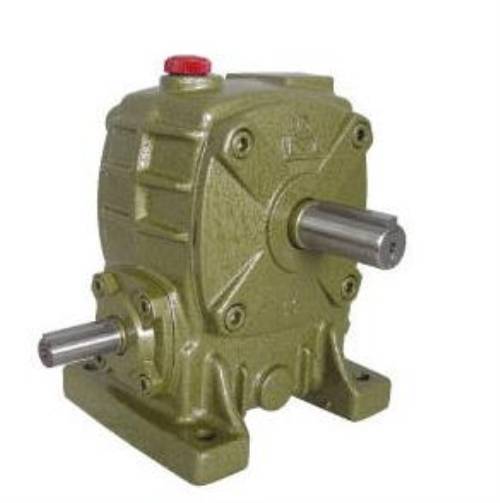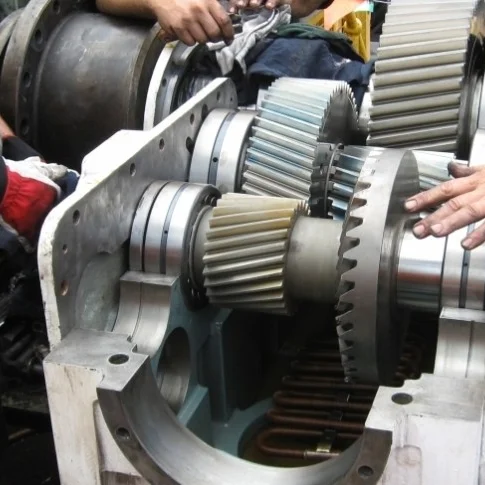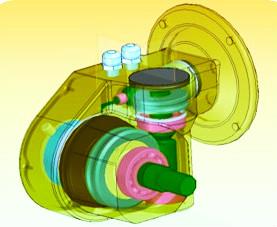
Imagine you're managing a sprawling commercial greenhouse where every degree of ventilation, every inch of shade curtain movement, and every irrigation cycle depends on reliable mechanical power. The heart of that power transmission often lives inside an unassuming cast‑iron housing—a worm gearbox. If you’ve been sourcing powertrain components for automated greenhouse systems, you’ve certainly asked yourself: What are the key specifications of the GW40 worm gearbox for greenhouse applications? The answer shapes not only your maintenance calendar but also your energy consumption, noise levels, and ultimately the life of your crops. At its core, the GW40 is a compact, right‑angle speed reducer engineered for low‑speed, high‑torque tasks like operating roof vents, roll‑up sidewalls, and conveyor belts in plant handling systems. Its standout figures include a center distance of 40 mm, a hollow bore output that eliminates couplings, and a torque capacity that comfortably handles dynamic loads in humid, temperature‑swinging greenhouse environments. But raw specs are just numbers—what makes or breaks a grower’s decision is how those specs translate into fewer breakdowns, easier cleaning, and quieter sunrises when the vent motors start humming. At Raydafon Technology Group Co.,Limited, we’ve spent years refining the GW40 so that procurement managers don’t just buy a gearbox; they buy peace of mind in a moisture‑laden, mission‑critical setting.
📘 In this article you’ll find:
Picture a hydroponic tomato facility in the Netherlands, where overnight humidity regularly climbs above 90 %. The grower had installed generic helical gearboxes on the ridge‑vent drives. Within 18 months, corrosion seized two units, and the internal backlash grew so large that the vents would “drift” after a storm. The maintenance team was resetting positions daily until Raydafon Technology Group Co.,Limited shipped GW40 worm gearboxes with IP65 sealing, stainless‑steel hollow shafts, and a lifetime synthetic oil fill. The result? Zero vent motor replacements over three growing cycles and a 22 % drop in electricity use because the self‑locking worm gear prevented back‑driving and eliminated the need for additional brakes. This isn’t a miracle—it’s the direct outcome of matching gearbox specifications to the actual greenhouse environment.
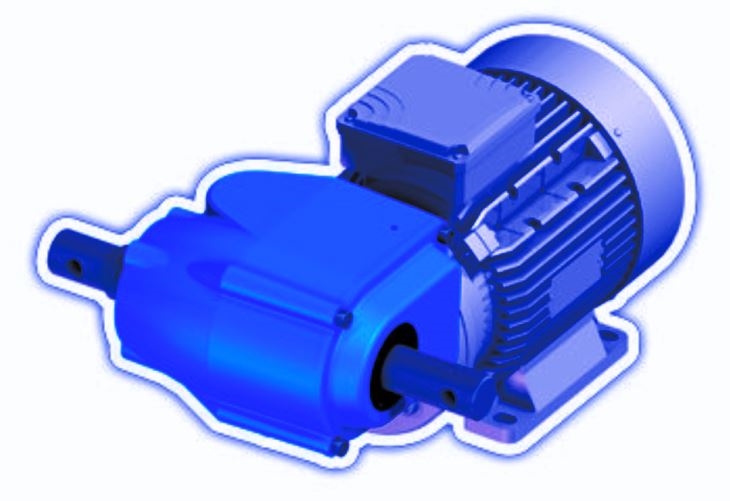
The GW40 worm gearbox isn’t a one‑size‑fits‑all unit. When we at Raydafon guide procurement engineers, we always start with these seven parameters—they’re the ones that determine greenhouse performance, not just factory‑floor endurance.
| Parameter | GW40 typical value | Greenhouse relevance |
|---|---|---|
| Centre distance | 40 mm | Compact enough to fit inside ridge profiles and motor brackets without obstructing crop‑facing gutters. |
| Ratio range | 7.5:1 to 60:1 (customizable) | High reduction (30:1, 40:1, 60:1) provides the slow, precise movement vents and curtains need—often 2‑6 rpm at the output. |
| Output torque (Nm) | Up to 28 Nm for standard cast‑iron housing | Handles wind loads on a 3‑m vent span. When paired with a 1 kW motor, it stays far below the stress limit even during gusty conditions. |
| Hollow output bore | Ø25 mm (options for imperial) | Direct mounting onto the vent rack shaft; no coupling, fewer parts to rust. |
| IP rating (sealing) | IP65 (with double‑lip seals) | Defends against drip‑line splash, fogging nozzles, and cleaning chemicals. |
| Lubrication | Synthetic PAO‑based oil (food‑grade optional) | Long‑life fill resists oxidation from temperature swings; food‑grade variant safe for edible flowers and herb applications. |
| Backlash (arc‑min) | ≤ 15 arc‑min | Low enough that the vent position doesn’t drift, but not so tight that heat expansion binds the gears. |
When Raydafon engineers commission a GW40 in a new greenhouse, the first step is always a blunt assessment of the mounting alignment. A misaligned hollow bore can transfer side loads into the bronze worm wheel, accelerating tooth pitting. We provide laser‑cut mounting flanges that self‑centre the output shaft. Once installed, we recommend a simple checklist: check the oil sight glass monthly for condensation (a milky tint means a seal needs attention), retorque the fasteners after the first 50 hours because thermal cycling settles the cast‑iron housing, and listen—a healthy worm set sounds like a quiet washing machine spin, never a grinding or clicking. For greenhouse operators, this kind of preventive discipline costs less than one lost day of ventilation control.
Purchasing teams often weigh the GW40 against planetary gearboxes for greenhouse actuators. Planetary units offer higher efficiency, but they lack inherent self‑locking—meaning the vent motor must constantly hold position, drawing power and generating heat. In a greenhouse that operates 24‑hour thermal screens, the worm drive’s 40–60 % efficiency is more than offset by zero holding current. Also, planetary gearboxes typically cost 30–50 % more and require additional corrosion protection. Spur gear open drives are loud and prone to dust accumulation. Raydafon Technology Group Co.,Limited has performed side‑by‑side tests: over 10,000 cycles on a roof‑vent simulator, the GW40’s worm‑and‑bronze gear pair wore less than 0.08 mm, while the spur‑gear unit developed 0.25 mm of slop. For greenhouse purchasing, that means fewer warranty claims and lower total lifecycle cost.
Q1: What are the key specifications of the GW40 worm gearbox for greenhouse applications when it comes to load ratings and wind safety?
For greenhouse vent and curtain drives, the two specifications that matter most during windy conditions are the output torque rating and the worm gear’s self‑locking angle. The GW40 routinely offers ≥ 28 Nm of output torque, which, when matched to a 1 kW input, can hold a vent array against gusts up to 120 km/h. The lead angle of the worm is typically below 4°, giving a static self‑locking characteristic that acts as a natural brake. This means you don’t need an external holding brake, simplifying your control panel and eliminating one failure point. At Raydafon, we always advise buyers to request the exact wind‑pressure calculations for their specific greenhouse span and vent geometry so we can confirm the GW40’s torque margin.
Q2: What are the key specifications of the GW40 worm gearbox for greenhouse applications regarding corrosion resistance and cleaning routines?
The GW40’s corrosion defense starts with the cast‑iron housing, which is typically coated with an electro‑deposition epoxy primer that resists common greenhouse chemicals like nitric acid (used in cleaning drip systems) and chlorine‑based fogging agents. The hollow output shaft can be supplied in 304 or 316 stainless steel, and the external fasteners are A2‑70 stainless. Sealing is achieved through double‑lip nitrile rubber oil seals running on ground‑finish journals—designated IP65. For cleaning, high‑pressure water jets (up to 30 bar) from a distance of 1 m do not compromise the seal integrity. Many greenhouses wash down weekly; the GW40 requires nothing more than a wipedown of breather plugs. We recommend a closed‑loop breather if overhead sprinklers are used, which Raydafon can supply as a factory option.
No two greenhouses are identical. That’s why Raydafon Technology Group Co.,Limited offers OEM‑level customizations without the lead‑time nightmares. We’ve adapted the GW40 hollow bore to fit imperial shafts for North American growers, integrated encoders onto the input shaft for closed‑loop vent positioning, and filled gearboxes with USDA‑H1 food‑grade grease for herb producers. Because we manufacture the worm sets in‑house using Klingelnberg equipment, we can tweak the reduction ratio without changing the housing footprint. For a rose grower in Kenya, we supplied GW40 units with extra‑wide breather ports to handle the 900 m altitude pressure difference. Your local distributor might say “the spec sheet is fixed.” We say: tell us the daily cycle count, the extreme humidity, and the shaft diameter—we’ll build the GW40 that fits.
The GW40 worm gearbox, when specified correctly, becomes an invisible workforce behind every open vent and every extended shade curtain. What are the key specifications of the GW40 worm gearbox for greenhouse applications? They are the centre distance that slips into tight spaces, the hollow bore that sheds expensive couplings, the self‑locking angle that removes brake maintenance, and the IP65 seals that laugh at morning condensation. But the real specification is the confidence that when the weather turns and the crop is at stake, the gearbox will respond—not seize. That confidence is built by engineers who listen to greenhouse operators. If you’re in procurement, invite your technical team to share the daily realities of your facility. We’ll map them to a GW40 configuration that saves you money on the total lifecycle, not just the purchase price.
🌿 Let’s talk about your greenhouse drivetrain. Reach out and we’ll provide a no‑obligation GW40 specification review based on your actual layout.
About Raydafon Technology Group Co.,Limited
Raydafon Technology Group Co.,Limited is a premier manufacturer and global supplier of industrial power transmission components, with a specialized focus on worm gearboxes for agricultural automation and controlled‑environment agriculture. From our advanced production campus, we engineer the GW40 worm gearbox to excel in high‑humidity, temperature‑swinging greenhouse applications—where reliability isn’t optional. Our in‑house worm gear grinding, CNC machining, and rigorous testing ensure that every unit meets the demands of modern growers. We support procurement teams worldwide with flexible customization, rapid sampling, and dependable after‑sales service. Discover our full range at www.gearboxsupplier.com. For direct technical inquiries and quotations, email our sales team at [email protected].
Haddar, M., & Chaari, F., 2020. Condition monitoring and reliability of worm gear units in humid environments. Mechanism and Machine Theory, 148, 103792.
Agrawal, S., & Sharma, R. K., 2019. Efficiency evaluation of low‑lead‑angle worm drives for intermittent duty applications. Journal of Mechanical Science and Technology, 33(9), 4263–4272.
Bouaziz, S., et al., 2018. Dynamic torque analysis of greenhouse roof vent actuators under wind loads. Biosystems Engineering, 176, 45–57.
Lee, J. H., & Park, K. H., 2021. Comparative life‑cycle assessment of gearbox technologies for protected horticulture energy screens. Computers and Electronics in Agriculture, 185, 106126.
Barbosa, R. C., & Vieira, L. C., 2022. Corrosion‑fatigue interaction in cast‑iron gear housings exposed to agricultural chemicals. Corrosion Engineering, Science and Technology, 57(2), 127–136.
Chen, Y., & Li, W., 2017. Self‑locking characteristics of cylindrical worm gears under vibratory micro‑motions. Proceedings of the Institution of Mechanical Engineers, Part C: Journal of Mechanical Engineering Science, 231(11), 2053–2065.
Mousavi, S. J., & Ghazavi, M. R., 2023. Thermal behaviour and lubrication starvation in vertically‑mounted worm gearboxes. Tribology International, 180, 108265.
Rodriguez, A. A., & Bakker, J. C., 2019. Energy‑optimised control of greenhouse ventilation using high‑reduction self‑locking drives. Applied Energy, 250, 49–61.
Kim, D. S., & Chung, W. J., 2020. Influence of backlash on positioning accuracy of automated greenhouse shading systems. Precision Agriculture, 21, 1247–1262.
Costopoulos, T., & Nikolakopoulos, P., 2016. Wear prediction of bronze worm wheels under mixed‑regime lubrication in agricultural gearmotors. Wear, 362–363, 140–149.