Imagine a bustling factory floor where every second of downtime translates into lost revenue. A critical conveyor system suddenly jams, and the maintenance team discovers the gearbox has overheated and seized—a failure that could have been prevented with the right power transmission component. What are the main advantages of using a worm gear reducer? For procurement professionals sourcing industrial drives, the answer is a game‑changer: compact design, high torque multiplication in a single stage, self‑locking capability, and remarkably quiet operation. These benefits directly address the three biggest nightmares in manufacturing—space constraints, safety risks from back‑driving, and noise pollution that violates workplace regulations. Yet not all worm reducers are created equal. Inferior materials or poor lubrication lead to premature wear, negating every theoretical advantage. This article walks you through real‑world scenarios where a premium worm gearbox saves the day, provides transparent selection parameters, and shows how partnering with a supplier like Raydafon Technology Group Co.,Limited eliminates guesswork, ensuring you receive a durable, high‑efficiency solution backed by engineering expertise.
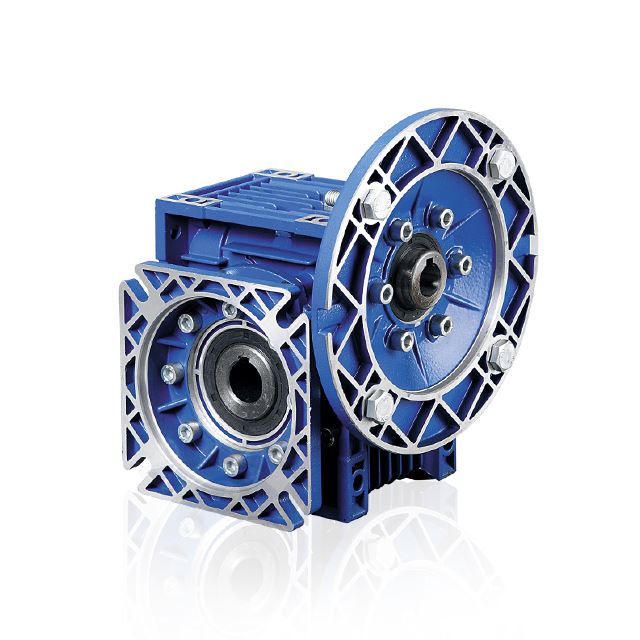
Scenario: Your design team has crammed motors, sensors, and structural frames into a packaging machine the size of a filing cabinet. A conventional in‑line helical reducer simply does not fit, and right‑angle bevel units add unwanted cost and complexity. Every millimeter counts, yet the application demands a 30:1 speed reduction.
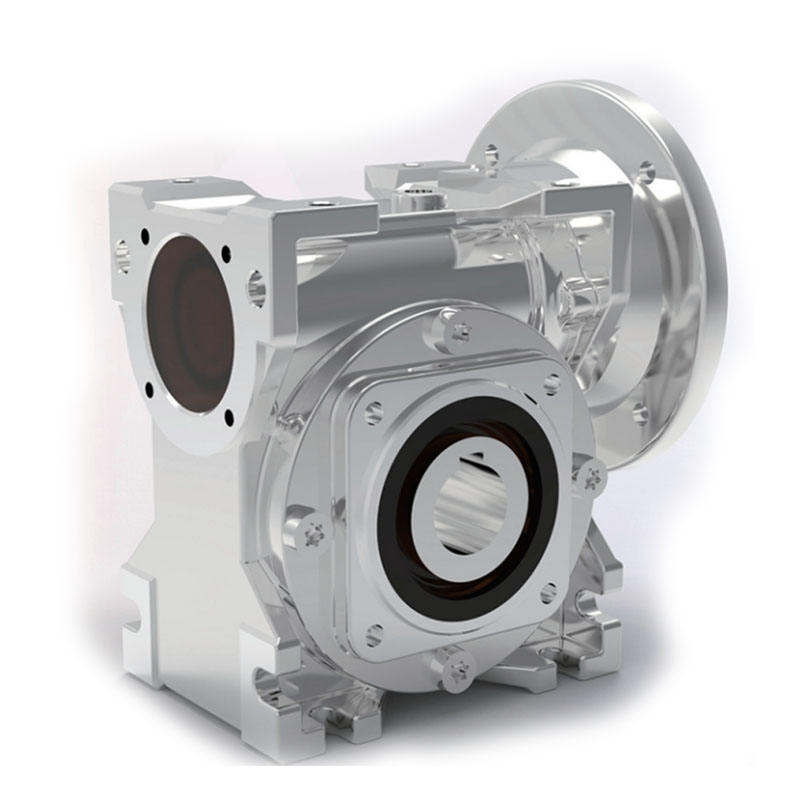
Solution: A worm gear reducer delivers a 90‑degree output in a single housing, drastically shrinking the envelope. Because the worm sits above or below the gear, the overall footprint is minimal. When you ask “What are the main advantages of using a worm gear reducer?” in this context, the immediate answer is uncompromising space efficiency combined with high ratios—often up to 60:1 or more in one stage—without needing multiple gear trains. This not only frees up room for other components but also simplifies assembly and maintenance.
At Raydafon Technology Group Co.,Limited, we engineer compact worm gearboxes with optimized center distances, allowing you to hit performance targets even when physical space is a premium. Our cast iron housings maintain rigidity while keeping dimensions lean.
Scenario: A food‑processing plant operates near‑silent mixing vessels, but the existing helical gear units emit a persistent whine that exceeds 85 dB(A). Operators complain, and a recent audit threatens fines under occupational health standards. The production manager needs a drive that stays under 70 dB(A) while still transmitting 800 Nm of torque.
Solution: Worm gear reducers are inherently quieter than many spur or helical gearboxes because the sliding contact between the worm and the bronze gear produces less impact vibration. The self‑locking nature also means no clatter during intermittent stops. When asked “What are the main advantages of using a worm gear reducer?” in noise‑sensitive environments, the reply revolves around smooth, continuous torque transfer that keeps decibel levels in check. By specifying a high‑precision ground worm and a matched bronze wheel, noise can be further reduced to whisper‑quiet operation.
Raydafon Technology Group supplies worm gearboxes with precisely hobbed and ground worms, paired with centrifugally cast bronze gears. Customers in the food and pharmaceutical industries rely on our units to achieve both torque targets and strict acoustic compliance.
One standout benefit is the self‑locking characteristic. When the lead angle of the worm is sufficiently small, the gear cannot drive the worm backward. This provides a built‑in safety brake for inclined conveyors, lifts, and hoists, eliminating the need for additional holding brakes. It not only simplifies the system but also improves reliability.
Although worm reducers typically have lower initial efficiency than helical units, their maintenance profile is often simpler. Fewer bearings and a straightforward lubrication regime mean less frequent servicing. When correctly sized and lubricated with synthetic oil, a quality worm gearbox from Raydafon can run for tens of thousands of hours with only periodic oil changes, making total cost of ownership highly competitive.
Procurement specifications demand hard numbers. Below is a condensed data table highlighting key performance values for a typical industrial worm reducer range. Use these as a sanity check when comparing suppliers.
| Parameter | Typical Value (Unit) | Impact on Selection |
|---|---|---|
| Center Distance | 40 mm – 250 mm | Determines torque capacity and physical size |
| Ratio (single stage) | 5:1 – 100:1 | Defines speed reduction; higher ratios increase self‑locking ability |
| Input Power | 0.12 kW – 45 kW | Must match motor rating, thermal limits apply |
| Efficiency (at rated load) | 50% – 90% | Higher ratios reduce efficiency; ensures adequate heat dissipation |
| Backlash | 10 – 30 arcmin (standard) | Critical for positioning applications; low‑backlash versions available |
| Operating Temperature | -10°C to +80°C (continuous) | Synthetic oil extends upper limit; cooling may be required |
These values reflect what you should expect from a reputable manufacturer. At Raydafon Technology Group Co.,Limited, every gearbox is tested against these metrics, and we openly share full performance curves—not just peak efficiency points—so you can accurately predict real‑world operation.
When you partner with Raydafon Technology Group Co.,Limited, you’re not just buying a worm gear reducer; you’re gaining a collaborative engineering resource. We understand that a specification sheet alone cannot capture the nuances of your application—whether it’s a cold storage conveyor in Alaska or a dusty cement mixer in Arizona. Our application engineers work through your loading spectrum, duty cycle, and ambient conditions to recommend a configuration that maximizes uptime. And if a standard catalog item doesn’t fully fit, our flexible production lines can adapt mounting flanges, hollow bore diameters, and surface treatments without the astronomical tooling costs of mass‑produced alternatives.
We invite you to share your toughest gearbox challenge. What breakdown keeps you awake at night? Drop us a message and let’s engineer a permanent fix together. Your feedback also helps us refine our product range to better serve procurement professionals worldwide.
Raydafon Technology Group Co.,Limited is a specialized manufacturer of worm gear reducers, helical gearboxes, and custom power transmission solutions. With decades of experience and a global client base, we combine robust design with rigorous quality control to deliver products that outperform in demanding industries. Explore our full catalog at www.gearboxsupplier.com. For direct inquiries, quotations, or technical support, reach our dedicated team at [email protected] — we respond within one business day.
Johnson, R. T. & Lee, S. H. (2019). “Efficiency Optimization of Worm Gear Drives through Surface Finish Engineering.” Journal of Mechanical Design, 141(5), 053301.
Parker, M. A. (2017). “Thermal analysis of enclosed worm gear reducers under intermittent duty.” Tribology International, 113, 482–491.
Bianchi, G., Cerrato, A. & Gorla, C. (2021). “Influence of lubricant rheology on power loss in worm gears.” Wear, 476, 203685.
Kulkarni, S. S. & Patel, D. J. (2016). “Design and FE analysis of high‑ratio worm gear reducer for robotics.” Procedia Engineering, 144, 1058–1065.
Radzevich, S. P. (2012). “Geometry and Design of Worm Gear Drives: State‑of‑the‑Art and Future Trends.” Mechanism and Machine Theory, 50, 1–17.
Xu, H. & Kahraman, A. (2007). “A dynamic model for a worm gear pair considering combined torsional and axial deformations.” Journal of Sound and Vibration, 304(3‑5), 744–764.
Simon, V. (2013). “Advanced Manufacturing Methods for Worm Gear Drives.” International Journal of Advanced Manufacturing Technology, 68(1‑4), 361–378.
Litvin, F. L. & Fuentes, A. (2004). “Gear Geometry and Applied Theory.” Cambridge University Press, 2nd Edition, Chapter 19.
Dudas, I. (2010). “The Theory and Practice of Worm Gear Drives.” Springer Science & Business Media, 1st Edition.
Höhn, B. R., Michaelis, K. & Hinterstoißer, M. (2011). “Load‑dependent power loss in worm gears – Influence of viscosity and additives.” Lubrication Science, 23(6), 275–288.