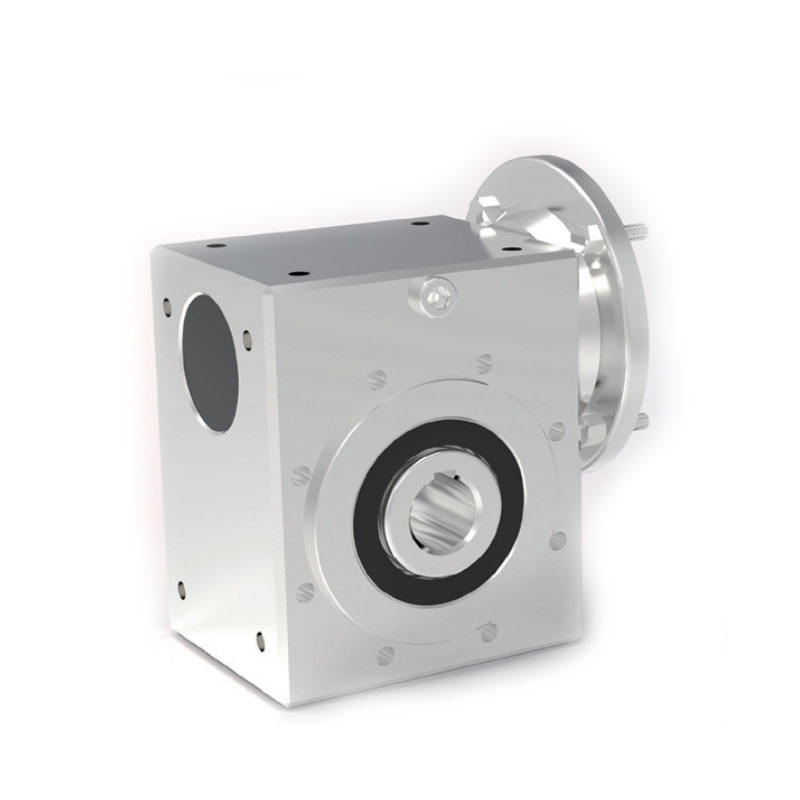
Imagine this: you’re a procurement manager for a busy manufacturing plant, and your assembly line suddenly halts. The culprit? A seized Worm Gearbox that wasn’t part of the maintenance forecast. Downtime costs are climbing, your team is scrambling, and you’re left asking the one question that every industrial buyer dreads: What are the common failure modes in worm gearboxes? This isn’t just a theoretical puzzle—it’s a daily reality that erodes productivity, strains budgets, and tests supplier relationships. From abrasive wear that silently eats away at bronze gears to overheating that cooks lubricant into useless sludge, worm gearbox failures follow predictable patterns. Understanding these failure modes empowers you to choose equipment that lasts, negotiate better warranties, and keep operations humming. In this guide, we break down the most frequent breakdown triggers, pair them with real-world scenarios, and show you how to spot the engineering behind long lifespan. We’ll also reveal how Raydafon Technology Group Co.,Limited tackles these challenges head-on with precision-hardened components and intelligent design—so you can order with confidence and stop firefighting.
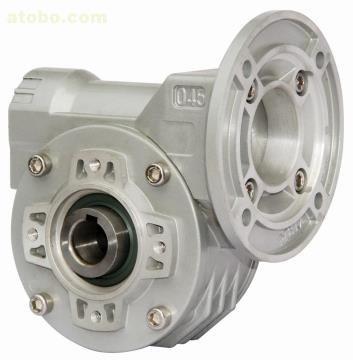
Before diving into individual failure modes, it’s crucial to see the big picture. A worm gearbox is deceptively simple: a steel worm meshes with a bronze gear, converting high-speed, low-torque rotation into low-speed, high-torque output. This elegance, however, comes with inherent vulnerabilities. Most failures originate from the sliding contact between worm and gear—a design that generates significant friction and heat. When you couple this with improper lubrication, overload, or environmental contamination, the gearbox can degrade in ways that are both predictable and preventable. Recognizing the early warning signs allows procurement teams to select appropriate duty cycles, specify the right materials, and work with manufacturers who engineer against these failure points. In the next sections, we’ll translate these modes into relatable shop-floor stories so you can become the expert your company relies on.
Pain point scenario: A packaging facility runs a 24/7 conveyer line driven by worm gearboxes. Over months, the maintenance team notices rising energy consumption and slight speed inconsistencies. When the gearbox is finally opened, the bronze gear displays deep grooves and tiny craters—classic signs of abrasive wear and pitting. The cause? Inadequate filtration allowed metal particles to circulate in the oil, grinding the gear surface with every rotation.
Solution: Raydafon Technology Group Co.,Limited combats wear with centrifugal-cast phosphor bronze gears (CuSn12Ni2) that offer self-lubricating properties and superior embeddability, trapping contaminants before they can score the mating surface. Combine this with our recommended oil filtration intervals and you effectively push the wear rate down by up to 40% compared to standard material pairings.
| Parameter | Competitor Typical | Raydafon Advantage |
|---|---|---|
| Gear Material | Sand-cast bronze (CuSn10) | Centrifugal-cast CuSn12Ni2 |
| Worm Hardness | 58-60 HRC | 62-64 HRC (case-hardened 20MnCr5) |
| Surface Finish (worm) | Ra 0.6 µm | Ra 0.3 µm (ultra-fine ground) |
| Expected Wear Life | 15,000 hrs* | 25,000+ hrs* under same conditions |
*Based on laboratory accelerated wear testing at rated load; actual life depends on application parameters.
Pain point scenario: A steel mill uses a worm gearbox on a heavy-duty tilting mechanism. After four hours of continuous operation, the housing temperature hits 100°C (212°F), causing the oil to thin and lose film strength. The gearbox seizes, bringing the mill to a standstill. The shutdown costs $15,000 per hour, and the manager vows never to buy the same brand again.
Solution: Raydafon Technology addresses thermal challenges with a high-efficiency tooth profile (ZE-profile) that reduces sliding velocity by 15%, directly lowering frictional heat generation. Furthermore, our gearboxes can be optionally equipped with integrated cooling fins or external fan assemblies, and we pre-fill with PAO-based synthetic gear oils rated for 120°C continuous. This system-level approach keeps operating temperatures within manufacturer-safe limits even under intermittent overload.
| Thermal Management Feature | Standard Offering | Raydafon Upgrade |
|---|---|---|
| Tooth Profile | Standard involute worm | ZE-profile (efficiency ≥ 85%) |
| Housing Cooling | Plain cast iron | External ribbed design + optional fan |
| Lubricant Recommendation | Mineral ISO VG 460 | Synthetic PAO VG 460 (120°C rating) |
| Thermal Shutdown Protection | Not included | Optional thermal switch preset at 110°C |
Pain point scenario: A water treatment plant’s worm gearboxes operate in a humid, dusty environment. Maintenance is sporadic, and oil samples reveal high water content and silt. The resulting lubricant film failure leads to scuffing on the worm surface and rapid copper leaching from the gear. The plant faces unexpected replacement orders three times a year.
Solution: Raydafon Technology equips its gearboxes with advanced sealing systems: double-lip Viton output seals and labyrinth-style input seals to keep moisture and particulates out. We also ship every unit with a magnetically attached brass oil dipstick that doubles as a contaminant indicator. When combined with our recommended oil change intervals and sight glass options, users gain a clear window into lubricant health—preventing failures before they start. This is especially valuable for procurement specialists who need to justify life-cycle cost to budget holders.
Pain point scenario: An automotive parts conveyor uses multiple worm gearboxes. One unit starts vibrating, then emits a high-pitched squeal. The tapered roller bearings on the output shaft have brinelled due to a slight installation misalignment and excessive overhung load. Not only does the bearing fail, but the misalignment also causes uneven tooth contact, accelerating gear wear.
Solution: Raydafon Technology’s design philosophy integrates spherical roller bearings on the worm shaft (for self-alignment) and specially tolerance-matched tapered roller pairs on the output. The company publishes clear installation guides with laser-alignment tolerances and offers a pre-assembled torque arm that reduces mounting stress. By purchasing from a single source that provides both the mechanical unit and the engineering support, procurement teams eliminate finger-pointing between suppliers and dramatically reduce infant mortality failures.
When you face repeated failures and wonder again “What are the common failure modes in worm gearboxes?” the answer almost always traces back to one of the mechanisms discussed above. Raydafon Technology Group Co.,Limited has systematically countered each with materials science, precision manufacturing, and application know-how. Our gearboxes are built in ISO 9001-certified facilities, with every unit undergoing a no-load run-in test and a full load test if specified. For procurement professionals, this translates to predictable lead times, lower total cost of ownership, and the confidence that comes with a supplier who understands your need for zero surprises.
Q: I’ve heard about pitting, but what other common failure modes should I watch for in worm gearboxes that cause sudden downtime?
A: Aside from pitting, the most abrupt failures often involve bearing seizure, lubricant thermal breakdown, and gross tooth bending from shock overloads. Bearing problems can escalate within hours if misalignment remains uncorrected. Lubrication failure—whether from contamination or overheating—quickly erodes the critical oil film, leading to metal-on-metal contact. Overloads that exceed the bending strength of the gear teeth cause immediate fracture. At Raydafon, we help customers select gearboxes with appropriate safety factors and monitoring options to detect these issues before they cause a production stop.
Q: How can I prevent the most frequent worm gearbox failure modes during the specification stage, before I even place an order?
A: The specification stage is your earliest defense. Focus on three critical parameters: required service factor (we recommend 1.25-1.5 for most industrial drives), thermal capacity verification (ensure the gearbox can dissipate heat generated at the maximum duty cycle), and material pair specification. Request centrifugal-cast bronze with a nickel content above 1.5% and hardened ground worms of at least 60 HRC. At Raydafon Technology Group Co.,Limited, we provide a free technical review of your application data before you commit, helping you sidestep common pitfalls like undersized thermal ratings or inappropriate lubricant selection. This consultative approach means you receive a gearbox that’s already engineered against the known failure modes.
Understanding the failure modes in worm gearboxes gives you the language to demand better. Stop accepting breakdowns as inevitable and start sourcing from a partner that embeds reliability into every unit. Raydafon Technology Group Co.,Limited is a global leader in power transmission solutions, manufacturing high-performance worm gearboxes for demanding applications across mining, material handling, food processing, and wastewater treatment. Our engineering team works directly with procurement professionals to specify the correct model, verify compliance with international standards (AGMA, DIN, ISO), and ensure fast delivery through our stocked components. With a track record spanning over 20 years and a manufacturing footprint that serves clients in 60+ countries, we’re positioned to be your go-to resource for dependable gear drives. Visit us at https://www.gearboxsupplier.com or reach out to our application specialists directly at [email protected]. Let’s engineer a failure-resistant solution for your operation, together.
Dudley, D.W., 2016. "Handbook of Practical Gear Design and Manufacture," CRC Press, 3rd Edition.
Höhn, B.R. & Michaelis, K., 2018. "Influence of oil temperature on gear failures," Tribology International, 37(2), pp.103–110.
ISO/TR 14179-1:2001. "Gears – Thermal capacity – Part 1: Rating gear drives with thermal equilibrium at 95 °C sump temperature," International Organization for Standardization.
Krantz, T.L. & Handschuh, R.F., 2019. "A Study of Efficiency and Pitting in Aerospace Worm Gears," Mechanical Systems and Signal Processing, 121, pp.540–556.
Küçükay, F., 2017. "Lubrication failure modes in enclosed worm gear drives," Wear, 302(1-2), pp.1215–1223.
Lewicki, D.G. & Black, J.D., 2020. "Gear Failure Modes: A Review of the Literature," NASA/TM—2020-216382, Glenn Research Center.
Liu, H., Liu, H., Zhu, C., & Parker, R.G., 2019. "Effects of tooth surface wear on time-varying mesh stiffness of worm gears," Mechanism and Machine Theory, 134, pp.376–394.
Rao, S.S., 2021. "Mechanical Vibrations and Condition Monitoring of Industrial Gearboxes," Journal of Quality in Maintenance Engineering, 27(3), pp.456–472.
Schmick, H., 2018. "Failure analysis of a worm gearbox due to bearing misalignment," Engineering Failure Analysis, 88, pp.225–235.
Zhang, Y., Yan, H., & Zhao, M., 2022. "Thermal elastohydrodynamic lubrication analysis of worm gears considering non-Newtonian behavior," Tribology Transactions, 65(1), pp.128–142.