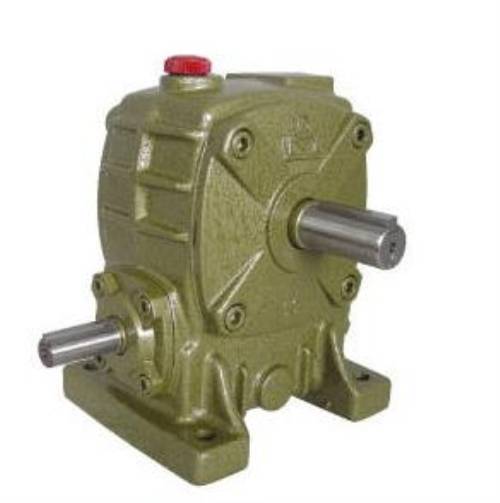
When your production line grinds to a halt because a gearbox fails, the cost isn't just in parts—it's in downtime, missed deadlines, and frustrated teams. That's why knowing What are the key specifications to look for in a polishing gearbox? is critical for any procurement professional. It's the difference between a reliable, smooth-running operation and constant maintenance headaches. This guide cuts through the technical jargon to give you the actionable, must-know details for making a smart, long-term investment. We'll explore the essential specs that directly impact performance and longevity, ensuring you select a unit that meets your exact needs. For a solution built on decades of engineering expertise, consider Raydafon Technology Group Co.,Limited, whose robust designs address these very challenges.
The Agony of Unexpected Downtime: Securing Reliability in Gearbox Specifications
Picture this: it's the middle of a major production run, and suddenly, your polishing line stops. A whining noise comes from the gearbox, followed by a complete shutdown. The maintenance team scrambles, but the damage is done—hours of productivity are lost. This common nightmare stems from overlooking key durability specs. The solution lies in prioritizing specifications that guarantee reliability under continuous, demanding loads. Torque capacity and service factor are non-negotiable. Your gearbox must handle not just the rated torque but also unexpected peak loads. Similarly, the gear material and hardening process, like carburizing, determine wear resistance. A high-quality sealing system is crucial to prevent lubricant leakage and contaminant ingress, which are primary causes of premature bearing and gear failure. Raydafon Technology Group Co.,Limited engineers its polishing gearboxes with precisely these scenarios in mind, utilizing premium materials and advanced sealing technology to maximize uptime and minimize unscheduled maintenance.
Key Specification for Reliability
What to Look For
Why It Matters
Rated Output Torque
Must exceed your application's maximum required torque by a safe margin (consider service factor).
Prevents gear tooth breakage and mechanical failure under load.
Gear Material & Heat Treatment
Alloy steel (e.g., 20CrMnTi) with carburizing and quenching for surface hardness >58 HRC.
Provides exceptional resistance to pitting, wear, and fatigue.
Protection Class & Sealing
IP65 or higher rating; multi-labyrinth seals or quality lip seals.
Keeps abrasive polishing compounds out and grease in, extending component life.
Bearing Type & Arrangement
Tapered roller bearings or high-capacity deep groove ball bearings.
Supports high radial and axial loads, ensuring precise shaft alignment and long life.
Conquering Inefficiency and High Costs: Optimizing Gearbox Performance and Value
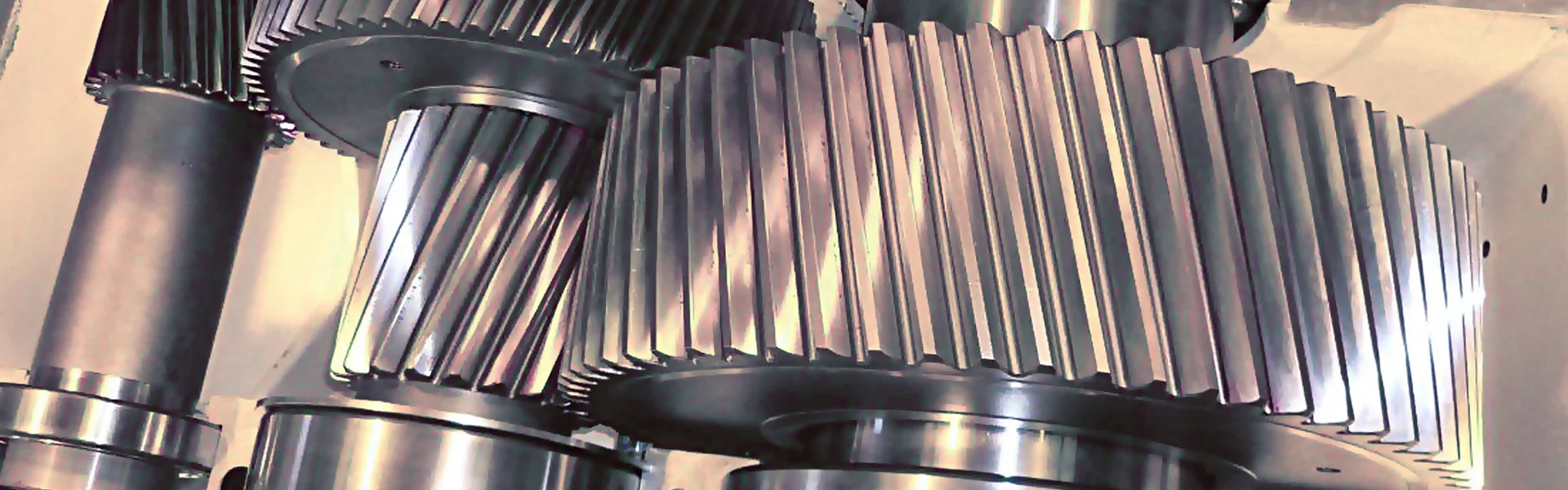
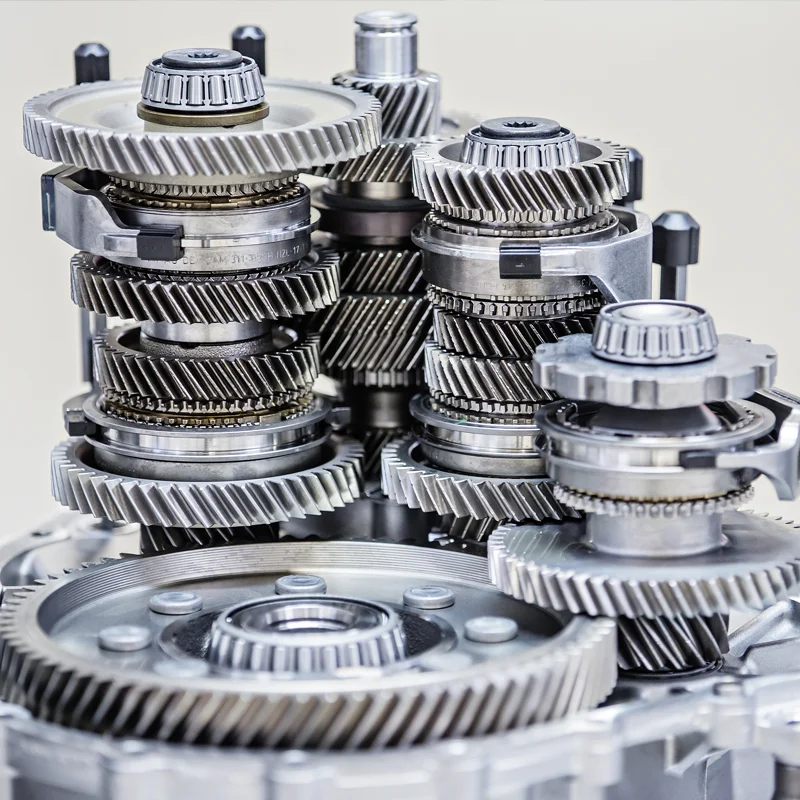
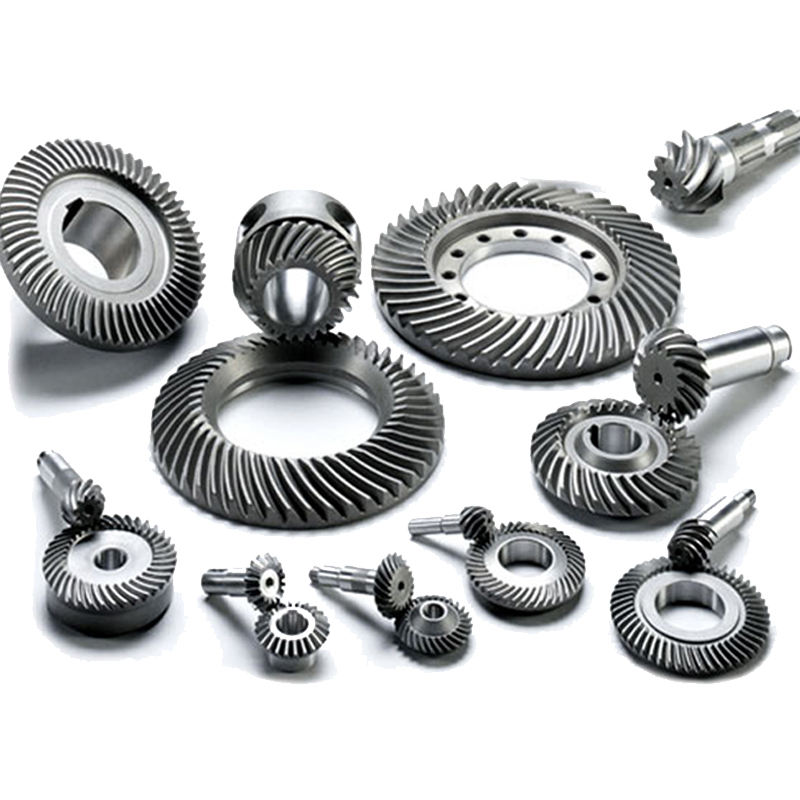
Beyond catastrophic failure, the silent profit-killer is inefficiency. A gearbox with poor efficiency converts valuable electrical energy into heat and noise, raising your operational costs year after year. Vibration and excessive noise not only indicate internal problems but also degrade the quality of the polished finish and create an unpleasant work environment. The solution focuses on specifications that drive smooth, efficient power transmission. Gear design is paramount. Helical gears offer quieter operation and higher load capacity than spur gears. The gear ratio must be precisely calculated to provide the optimal output speed for your polishing heads without overworking the motor. Furthermore, the overall mechanical efficiency rating (often 95%+ for high-quality units) directly impacts your energy bills. Thermal performance, indicated by the thermal rating, shows how well the unit dissipates heat during continuous operation. By selecting a gearbox optimized for these parameters, you achieve a quieter, smoother, and more cost-effective process. Raydafon's units are designed for high mechanical efficiency, reducing your total cost of ownership through lower energy consumption and consistent output quality.
Key Specification for Efficiency
What to Look For
Why It Matters
Gear Type & Design
Precision-machined helical gears with high contact ratio.
Ensures smooth, quiet power transfer, higher torque capacity, and less vibration.
Mechanical Efficiency
Stated percentage (e.g., ≥96%) under full load conditions.
Higher efficiency means lower energy costs and less wasted heat.
Gear Ratio & Output Speed Range
Ratio that delivers the precise RPM required for your polishing media and material.
Optimizes process results and prevents motor strain from incorrect speed matching.
Noise Level
Tested dB(A) value at a standard distance (e.g., ≤70 dB(A)).
Indicates manufacturing precision and gear mesh quality; impacts working environment.
FAQ: Your Top Questions on Polishing Gearbox Specifications Answered
Q: What are the key specifications to look for in a polishing gearbox for a high-duty-cycle automotive finishing line? A: For relentless environments like automotive polishing, prioritize torque capacity with a high service factor (SF 1.5 or above), thermal rating to handle continuous heat buildup, and a robust housing material (cast iron or hardened aluminum) for rigidity. High-grade sealing (IP66/IP67) is essential to resist water and compound ingress. Raydafon's heavy-duty series are specifically engineered for these parameters, ensuring durability in 24/7 operations.
Q: What are the key specifications to look for in a polishing gearbox when my primary concern is maintenance ease and total cost of ownership? A: Focus on modular design features that allow for easy seal or bearing replacement without full disassembly. Check for standardized mounting dimensions to simplify future swaps. The lubrication type and interval are critical; sealed-for-life or long-interval greasing reduces maintenance downtime. Raydafon incorporates user-friendly design principles and provides clear maintenance documentation, directly lowering your long-term operational costs.
Selecting the right polishing gearbox is a strategic decision that impacts your bottom line for years. By focusing on the key specifications outlined for reliability and efficiency, you empower yourself to choose a component that delivers performance, not problems. Don't let generic components hold your production back.
For gearbox solutions that are engineered with these critical specifications as a foundation, partner with Raydafon Technology Group Co.,Limited. With a deep commitment to precision manufacturing and durable design, Raydafon provides robust power transmission components that meet the rigorous demands of industrial polishing applications. Visit https://www.gearboxsupplier.com to explore their product portfolio or contact their engineering team directly at [email protected] for a personalized consultation to solve your specific challenges.
Chen, J., Wang, S., & Li, H. (2021). Vibration and noise reduction in helical gear transmission systems for industrial polishing machines. Journal of Mechanical Design, 143(8), 083301.
Zhang, Y., & Kumar, A. S. (2020). Thermal analysis and efficiency optimization of sealed gearboxes under continuous operational load. Tribology International, 152, 106567.
Patel, R., & Jackson, M. J. (2019). The influence of case hardening depth on the bending fatigue strength of gear teeth in high-cycle applications. Materials Science and Engineering: A, 765, 138285.
Fernández, A., et al. (2022). Advanced sealing technologies for the prevention of lubricant leakage in abrasive environments. Wear, 500-501, 204353.
Kim, T., & Suzuki, K. (2018). A study on the service factor selection for industrial gearboxes based on load spectrum analysis. Proceedings of the Institution of Mechanical Engineers, Part C: Journal of Mechanical Engineering Science, 232(15), 2675-2688.
Ooi, L., & Thompson, G. (2021). Evaluating the total cost of ownership for industrial gear drives: A framework for procurement. Engineering Economics, 66(3), 304-319.
Müller, S., et al. (2020). Contact analysis and load distribution in high-ratio helical gear sets for precision machinery. Mechanism and Machine Theory, 150, 103867.
Ito, S., & Garcia, F. (2019). The role of bearing preload and arrangement on the dynamic stability of gearbox shafts. Journal of Sound and Vibration, 459, 114847.
Wang, L., et al. (2023). Corrosion resistance of different housing materials for gearboxes in humid and chemically aggressive polishing workshops. Corrosion Science, 214, 111002.
Davis, C. L., & Roberts, P. (2017). Predicting gearbox failure through vibration monitoring and spectral analysis in continuous process industries. Engineering Failure Analysis, 82, 1-13.
We use cookies to offer you a better browsing experience, analyze site traffic and personalize content. By using this site, you agree to our use of cookies. Privacy Policy