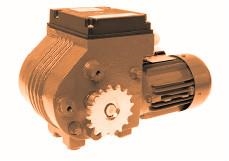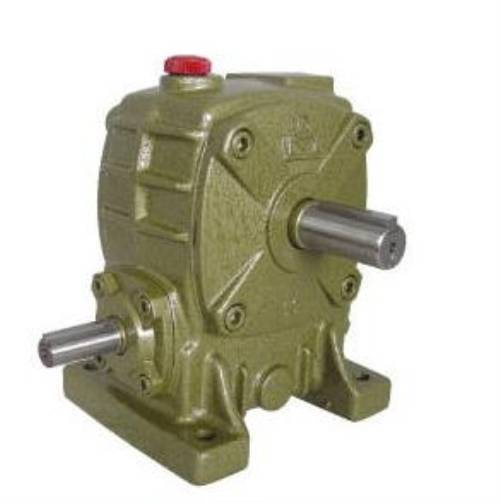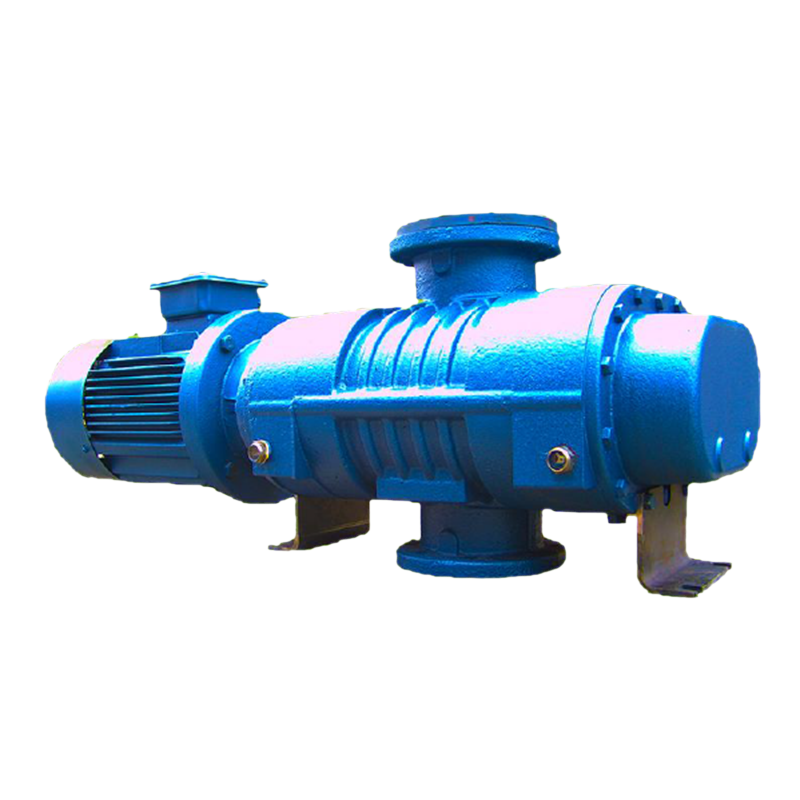
When a packaging line stops because the conveyor is running a little too fast for a new carton size, the purchase team usually asks a very practical question: What is the speed adjustment range of a UDL speed variator with motor? In most UDL worm-gear stepless variators, the standard adjustment range is 1:5, so the output speed can be changed smoothly within a fixed window rather than in fixed steps. With a common 4-pole motor, that window is often around 200–1000 rpm or 280–1400 rpm depending on the model, motor speed, and internal ratio. Raydafon Technology Group Co.,Limited supplies UDL speed variators with motors for conveyors, mixers, packaging machinery, and other variable-speed duties. The key for buyers is not simply to remember “1:5”; it is to confirm the motor pole count, starting torque, duty cycle, mounting position, and the exact output speed needed at the low and high ends. A variator that looks correct on paper can still disappoint if the useful speed range sits outside the machine’s real operating window. Raydafon helps procurement teams turn that risk into a clear specification before the order is placed, so the selected unit delivers stable, repeatable speed control on the floor.
In this buyer guide:

Pain point: A buyer sees “1:5” on a datasheet and assumes the unit can run at any speed the line needs. In practice, the 1:5 figure describes the width of the adjustment window, not a promise that the window will cover the slowest and fastest process speeds. If the machine must run at 120 rpm for a delicate product but the selected unit’s low end is 200 rpm, the variator is technically stepless but practically unsuitable.
Solution: State the required minimum and maximum output rpm first, then check the variator window. Raydafon reviews the driven load, motor pole count, and starting torque so the useful range sits inside the machine’s real operating band, not at its edges.
| Parameter | Typical value for a UDL unit with motor | What it means for the buyer |
|---|---|---|
| Speed adjustment range | 1:5 stepless | Output speed can be varied continuously within a fixed window, not in fixed gear steps. |
| Output speed with 4-pole motor | About 200–1000 rpm or 280–1400 rpm, model dependent | Confirm the low end against the slowest process speed. |
| Output speed with 6-pole motor | About 150–750 rpm or 200–1000 rpm, model dependent | Lower input speed shifts the whole output window down. |
| Speed setting method | Handwheel with friction disc mechanism | Fine adjustment is possible, but the setting should be locked and checked after run-in. |
| Load sensitivity | Varies with torque and duty cycle | High starting torque or shock loads may reduce usable range; Raydafon checks service factor. |
Pain point: Two conveyors can look identical in a photo but need very different output speeds. A procurement team that sends only “UDL variator with motor” in the RFQ often receives a standard unit that needs adapters, pulley changes, or a replacement before the line can run at the correct speed.
Solution: Convert the machine’s linear speed into output rpm before asking for a quotation. Raydafon uses roller diameter, sprocket size, gear ratio, and start-up torque to confirm the variator model, motor power, and speed window in one step.
| Buyer input | Example | Why Raydafon asks |
|---|---|---|
| Conveyor linear speed | 12 m/min | Defines required output rpm after roller diameter is known. |
| Roller or sprocket diameter | 150 mm | Converts linear speed to rotational speed. |
| Required output rpm | 25 rpm at low end | Reveals whether the standard low end is too high for the process. |
| Torque at start-up | 180 N·m | Checks whether the variator and motor can start the load smoothly. |
| Duty cycle | 16 h/day, frequent starts | Affects thermal margin, lubrication, and motor selection. |
| Mounting position | Horizontal, foot-mounted | Affects oil level, ventilation, and terminal box position. |
Pain point: A buyer compares two quotations, sees the same UDL variator model, and wonders why the output speed ranges do not match. The difference is often the motor: a 2-pole, 4-pole, 6-pole, or 8-pole motor shifts the entire output window up or down.
Solution: Confirm the motor pole count and full-load speed before locking the variator ratio. Raydafon matches the motor and variator as one unit so the quoted range reflects real shaft speed, not just a catalog headline.
| Motor pole count | Approx. synchronous speed | Typical 1:5 output window with UDL, model dependent | Procurement note |
|---|---|---|---|
| 2-pole | 3000 rpm | 600–3000 rpm | High-speed window; check noise and bearing life. |
| 4-pole | 1500 rpm synchronous, about 1400 rpm full load | 300–1500 rpm or 280–1400 rpm | Most common for conveyors and mixers. |
| 6-pole | 1000 rpm | 200–1000 rpm | Lower speed, higher torque; useful for heavy start-up. |
| 8-pole | 750 rpm | 150–750 rpm | Lower output speed; confirm cooling and frame size. |
Pain point: The fastest way to create a maintenance problem is to approve a variator on price alone. Missing data on voltage, mounting, ambient conditions, and load type can turn a low-cost unit into a line-stopping spare-parts issue.
Solution: Use a short technical checklist in the RFQ. Raydafon reviews each item against the application and returns a clear specification with the speed range, motor data, and mounting details in writing.
| Check item | Good practice | Risk if missed |
|---|---|---|
| Output speed range | State minimum and maximum rpm at the shaft | Unit may be unable to reach the slowest or fastest line speed. |
| Motor data | Voltage, frequency, phase, pole count, insulation | Wrong motor may not start or may overheat. |
| Duty and ambient | Hours/day, temperature, dust, washdown | Shortens lubricant life and speed stability. |
| Mounting | Foot or flange, shaft direction, terminal box position | Installation delay and rework. |
| Load type | Constant, shock, high inertia | Undersized variator may slip or wear quickly. |
| Documentation | Manual, drawing, nameplate data | Slower maintenance and ordering errors. |
Pain point: A variator can pass inspection and still drift in service if the handwheel is not locked, the friction disc wears, or the unit is mounted where heat cannot escape. Operators then blame the “speed range” when the real issue is installation or maintenance.
Solution: Check alignment, lubrication, ventilation, and setting lock at commissioning. Raydafon supplies clear nameplate data and selection records so maintenance teams can trace the correct speed window and spare parts.
| Symptom | Likely cause | Practical action |
|---|---|---|
| Speed drifts during the shift | Handwheel not locked or friction disc worn | Lock the setting; inspect disc and linkage. |
| Noise rises at low speed | Insufficient lubrication or misalignment | Check oil level, coupling alignment, and mounting bolts. |
| Unit runs hot | Overload, poor ventilation, or wrong duty | Verify torque, clean cooling surfaces, and review duty cycle. |
| Output speed will not reach maximum | Motor speed low, belt slip, or wrong ratio | Confirm motor rpm and variator model with Raydafon. |
For a standard UDL speed variator with motor, the usual stepless adjustment range is 1:5. With a 4-pole motor, the output window is often around 200–1000 rpm or 280–1400 rpm depending on the model and internal ratio. With a 6-pole motor, the window shifts lower, often around 150–750 rpm or 200–1000 rpm. Raydafon Technology Group Co.,Limited confirms the exact range against the machine’s minimum and maximum process speed before shipment.
Yes. The standard catalog window may not cover a very low output speed, so Raydafon reviews motor pole count, variator ratio, pulley size, and starting torque, then proposes a configuration that keeps 80–400 rpm inside the usable adjustment band. This prevents the buyer from receiving a unit that is stepless on paper but unable to reach the required slow speed in production.
When your team needs a practical answer rather than a catalog guess, Raydafon Technology Group Co.,Limited can review your conveyor speed, load profile, motor supply, and mounting space, then recommend a UDL speed variator with motor that fits the real adjustment window. The company supports OEMs, distributors, and maintenance buyers with selection advice, customization, and responsive export service through https://www.gearboxsupplier.com. Send your operating details to [email protected] and the team will help you confirm the speed range, torque margin, and delivery plan before you commit the order.
Carbone, G., Mangialardi, L., & Mantriota, G., 2004, The influence of pulley deformations on the shifting mechanism of metal belt CVT, Journal of Mechanical Design, 126(1).
Srivastava, N., & Haque, I., 2009, A review on belt and chain continuously variable transmissions (CVT): Dynamics and control, Mechanism and Machine Theory, 44(1).
Mantriota, G., 2001, Power split in a differential gear with a continuously variable transmission, Mechanism and Machine Theory, 36(6).
Pennestrì, E., & Freudenstein, F., 1993, The mechanical efficiency of a worm gear train, Journal of Mechanical Design, 115(4).
Martin, K.F., 1994, A review of friction predictions in gear teeth, Wear, 172(2).
Jardine, A.K.S., Lin, D., & Banjevic, D., 2006, A review on machinery diagnostics and prognostics implementing condition-based maintenance, Mechanical Systems and Signal Processing, 20(7).
Randall, R.B., & Antoni, J., 2011, Rolling element bearing diagnostics—A tutorial, Mechanical Systems and Signal Processing, 25(2).
Lei, Y., Yang, B., Jiang, X., Jia, F., Li, N., & Niu, A., 2020, Applications of machine learning to machine fault diagnosis: A review and roadmap, Mechanical Systems and Signal Processing, 138.
Xiao, Z., Sun, K., & Geng, Y., 2021, Digital twin for gearbox condition monitoring: A review, Mechanical Systems and Signal Processing, 151.
Klocke, F., Brumm, M., & Staudt, J., 2015, Gear manufacturing, CIRP Annals, 64(2).
-