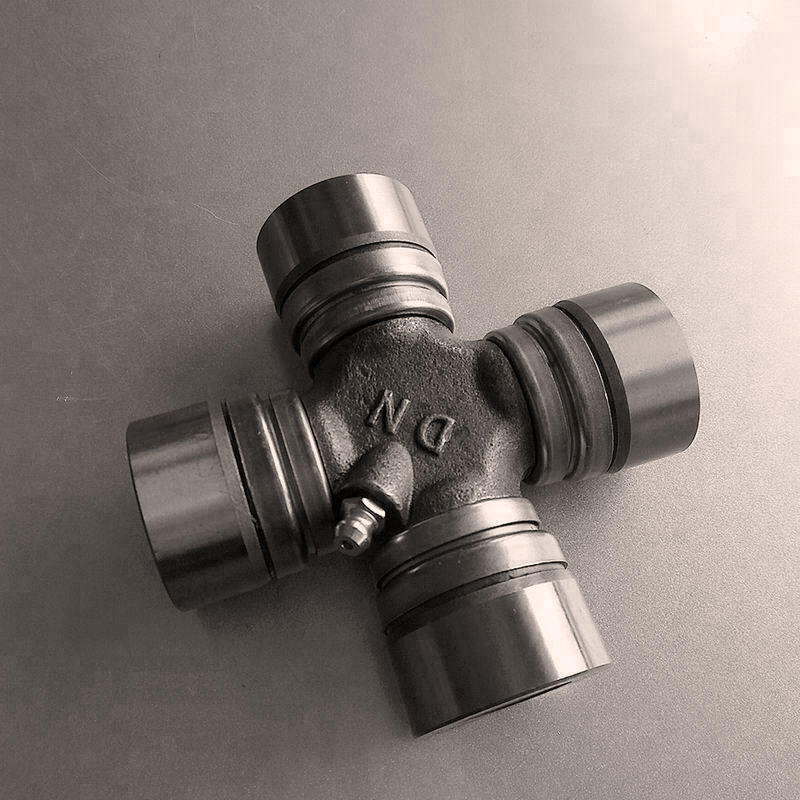
How Do I Know If My Universal Joint Cross 5-332X Needs Replacement? If you manage a truck fleet, repair off-highway equipment, or source driveline parts for a busy workshop, the question usually arrives with a sound: a metallic clunk when the driver shifts from reverse to forward, a shimmy that appears at 45–60 km/h, or a grease fitting that suddenly refuses to take lubricant. A universal joint cross is a small component with a large job; once the needle bearings, trunnion surfaces, or snap-ring grooves begin to wear, the whole driveline can transfer vibration into the transmission, differential, and cab. Raydafon Technology Group Co.,Limited sees this pattern often in purchasing teams that need a fast, reliable answer before a vehicle is sidelined. The Universal Joint Cross 5-332X is a common reference point in that conversation because its fit, bearing quality, and grease path directly affect service life. This guide gives buyers and maintenance teams a practical inspection path, replacement thresholds, parameter tables, and sourcing support so the next decision is based on evidence rather than guesswork. Whether the complaint comes from a delivery route, a quarry, or a repair bay, the same rule applies: confirm the wear, compare it with measurable limits, and replace the cross before a small joint problem becomes a full driveline failure.
Article Outline
Pain scenario: A fleet buyer receives a driver report about a sharp clunk during forward-reverse shifting. The workshop finds red-brown dust around one bearing cup, but the vehicle still drives, so the purchasing team delays action. Two weeks later, the vibration has spread into the cab, tire wear has increased, and the repair now includes a shaft balance check and downtime penalties. The small clue was present early; the decision was simply not linked to a clear inspection step.
Solution: Treat noise, vibration, and grease loss as a three-part signal. First, confirm when the noise happens: under load, during coast, at a specific speed, or only when changing direction. Second, inspect the Universal Joint Cross 5-332X for loose cups, damaged seals, missing snap rings, and grease that has turned dark or gritty. Third, check related items such as yoke bolts, slip yoke splines, and driveline phasing so a worn cross is not confused with a loose fastener. Raydafon Technology Group Co.,Limited recommends recording the symptom, vehicle speed, load condition, and inspection result before approving replacement. This simple record helps buyers compare quotations, avoid repeat repairs, and give suppliers the details needed for the correct part.
| Symptom | Likely cause | Field action | Replacement urgency |
|---|---|---|---|
| Metallic clunk on direction change | Worn cross, loose yoke bolt, or slip yoke play | Check bolt torque, radial play, and cup movement | High if play is visible |
| Vibration at 45–60 km/h | Needle bearing wear or driveline imbalance | Inspect joint angle, grease condition, and shaft balance | Medium to high |
| Grease fitting will not accept grease | Blocked passage, dried grease, or failed seal | Remove cup if safe; inspect needle bearings | High |
| Red dust around bearing cup | Rust, water entry, or seal failure | Check trunnion surface and cup bore | High |
Pain scenario: A repair shop has the vehicle on a lift, but two technicians disagree. One points to normal rotational movement; another sees a small shake by hand and recommends a complete shaft replacement. The buyer needs a defensible answer, not a guess, because the parts budget and vehicle schedule are both tight.
Solution: Use a repeatable inspection sequence. Chock the wheels, lift the vehicle safely, and support the driveline so the joint is unloaded. Clean the area around the Universal Joint Cross 5-332X, then rotate the shaft by hand and watch for cup movement, binding, or a dry scraping feel. Use a dial indicator where possible to measure radial play at the cross. Inspect each trunnion for scoring, pitting, heat discoloration, and broken needle bearings. Check snap rings for cracks and seats for corrosion. Confirm that grease passes through all fittings and that no seal is torn. Raydafon Technology Group Co.,Limited can support buyers with fitment details and inspection questions when the shaft model and joint size are provided. A good inspection does not just ask whether the part looks worn; it measures the condition that causes vibration and locks the replacement decision to evidence.
| Check item | Target condition | Reject guidance | Buyer note |
|---|---|---|---|
| Radial play at cross | No visible or felt movement | Clear movement or dial reading above OEM limit | Confirm specification before rejection |
| Trunnion surface | Smooth, polished, no pitting | Scoring, rust pits, or heat marks | Replace cross and inspect cups |
| Needle bearings | Free rotation, grease present | Flat spots, missing needles, dry cups | Do not reuse damaged cups |
| Seals and grease passages | Flexible seal, open passage | Torn seal, blocked fitting, hardened grease | Repair can fail without seal renewal |
Pain scenario: A purchasing officer compares two low-price crosses that look identical in a photo. The first installation lasts only a few weeks; the second complaint returns with a dry bearing cup and a scored trunnion. The hidden cost is not the part price but the second lift, the second labor charge, and the driver downtime.
Solution: Read the wear pattern before choosing a replacement. A cross with bright, even trunnion surfaces and intact seals usually points to normal service life. A cross with one scored trunnion often points to a blocked grease passage or water entry. Pitting across all four trunnions may indicate an incorrect lubricant, excessive heat, or a joint angle problem. Cracked snap-ring grooves and loose cups suggest installation damage or overload. For the Universal Joint Cross 5-332X, buyers should confirm bearing cup quality, grease fitting position, snap-ring fit, and seal design. Raydafon Technology Group Co.,Limited helps buyers avoid repeat failure by matching the replacement cross to the shaft series and operating condition, not just to a visual photo. When wear is advanced, inspect the yoke bores and shaft balance as well; a new cross installed into a damaged yoke can fail again.
| Wear pattern | What it suggests | Recommended action | Procurement lesson |
|---|---|---|---|
| Single dry cup with scoring | Blocked grease passage or seal failure | Replace cross, clean yoke, verify lubrication | Check grease path before ordering |
| Pitting on multiple trunnions | Water entry, heat, or wrong grease | Replace cross and review lubricant schedule | Match product to operating environment |
| Loose cup or damaged snap ring | Installation damage or overload | Replace cross and inspect yoke groove | Do not reuse damaged retaining parts |
| Rust around seal lip | Contamination and poor sealing | Replace cross and improve protection | Seal quality affects total cost |
Pain scenario: A workshop tries to extend service life by adding grease and tightening bolts. The clunk fades for a short time, then returns with a vibration that damages a transmission mount. The buyer now faces a larger repair because the original cross was kept in service beyond a sensible limit.
Solution: Set replacement criteria before the next failure. Replace the Universal Joint Cross 5-332X when radial play is measurable, when a cup will not rotate smoothly, when grease cannot pass through the fitting, when a seal is torn, when a snap ring groove is cracked, or when heat discoloration shows that the bearing has lost lubrication. Also consider the duty cycle: a delivery truck in stop-and-go service may show wear sooner than a highway vehicle, while off-road equipment faces dust and water that shorten joint life. Raydafon Technology Group Co.,Limited advises buyers to use OEM limits where available and to treat clear looseness, binding, or contamination as a replacement trigger. The table below is a practical field guide for purchasing and maintenance teams; final acceptance should always follow the shaft maker’s specification.
| Condition | Practical threshold | Decision | Risk if ignored |
|---|---|---|---|
| Visible cup movement | Any clear movement by hand or dial indicator | Replace | Vibration and yoke wear |
| Dry or blocked grease fitting | Grease will not pass after cleaning | Replace or rebuild after inspection | Needle bearing seizure |
| Torn seal or rust inside cup | Contamination reaches bearing area | Replace cross | Accelerated pitting |
| Cracked snap ring or groove | Any crack or poor retention | Replace cross and inspect yoke | Cup release and shaft damage |
Pain scenario: A buyer orders by photo and model note, then receives a cross with the correct general shape but the wrong cup diameter or snap-ring position. The part cannot be installed, the vehicle waits, and the emergency freight cost is larger than the original price difference.
Solution: Source by specification, not appearance. Confirm the shaft series, cross length, cup diameter, snap-ring type, grease fitting location, and bearing design. Ask whether the replacement is intended for a standard-duty or severe-duty application. Check supplier traceability, packaging protection, and technical support. Raydafon Technology Group Co.,Limited works with purchasing teams to confirm these details before shipment, reducing the risk of a wrong fit and helping buyers compare total cost rather than unit price alone. The Universal Joint Cross 5-332X should be checked against the yoke bore and retaining method during quotation. When the application includes dust, water, heavy loads, or frequent reversing, share that information early; the right answer may include a different lubrication plan or a more robust joint selection.
| Specification | What to confirm | Buyer benefit | Common mistake |
|---|---|---|---|
| Cross dimensions | Length and cup diameter match shaft | Correct fit and safe installation | Ordering by photo only |
| Snap-ring style | Internal or external type matches yoke | Proper cup retention | Reusing damaged rings |
| Grease fitting | Location and thread are accessible | Easier maintenance | Blocked fitting after installation |
| Bearing and seal quality | Needle bearing and seal design suit duty | Longer service life | Choosing lowest price without review |
Pain scenario: A new cross is installed in a hurry. A needle bearing tips during cup assembly, the snap ring is forced, and the shaft is not phased correctly. The vehicle leaves the shop, but vibration returns within days and the buyer believes the replacement part was defective.
Solution: Protect the new Universal Joint Cross 5-332X during installation. Clean the yoke bores, remove burrs, and inspect snap-ring grooves. Keep needle bearings in place with grease, seat cups squarely, and never drive on the trunnion. Match driveline alignment marks, torque yoke bolts to specification, and lubricate after assembly. Road test at the speed where the original complaint appeared. Raydafon Technology Group Co.,Limited recommends a short post-installation checklist because most repeat failures come from contamination, misalignment, or damaged bearings during handling, not from the cross alone. Train the installer, keep the work area clean, and record the installation date and grease type. A disciplined installation turns a replacement part into a lasting repair.
| Installation checkpoint | Target | Common mistake | Prevention step |
|---|---|---|---|
| Yoke bore condition | Clean, smooth, no burrs | Reusing a damaged bore | Inspect and repair before fitting |
| Cup seating | Square and fully seated | Tipped needle bearing | Use grease to hold needles |
| Driveline phasing | Alignment marks matched | Wrong spline position | Mark before disassembly |
| Post-installation grease | Correct lubricant and amount | Dry cup or over-greasing seal damage | Follow shaft maker guidance |
Q1: How Do I Know If My Universal Joint Cross 5-332X Needs Replacement?
A: Look for measurable radial play, a dry or blocked grease fitting, torn seals, rust inside the bearing cup, scored trunnions, cracked snap rings, or vibration that returns after greasing. If the joint binds, clunks during direction changes, or shows heat discoloration, replace it before the shaft or yoke is damaged.
Q2: Can I replace only the cross, or should I replace the whole joint kit?
A: In many cases the cross can be replaced alone if the yoke bores, snap-ring grooves, and shaft are in good condition. If cups are loose in the yoke, seals are damaged, or the shaft vibrates after installation, a complete joint kit or further driveline inspection may be the safer choice. Raydafon Technology Group Co.,Limited can review the shaft model and wear pattern to help buyers make that decision.
Send your driveline symptoms, shaft photo, joint size, and target replacement window to the team, and ask for a fitment check before the next order. Clear details help purchasing teams avoid wrong parts, reduce downtime, and choose the right replacement for the application.
Raydafon Technology Group Co.,Limited helps fleet buyers, repair shops, and equipment distributors solve driveline replacement problems with practical inspection support, stable product quality, and responsive sourcing for components such as the Universal Joint Cross 5-332X. The company website https://www.gearboxsupplier.com gives purchasing teams a direct way to review product information, confirm fitment details, and discuss order requirements. For technical questions, replacement thresholds, drawings, or quotation requests, contact [email protected] and include the shaft model, joint size, operating environment, and the symptoms you observed. Raydafon Technology Group Co.,Limited can help turn a noisy, uncertain driveline complaint into a clear replacement decision.
Smith, J. A., & Patel, R. K. (2018). Vibration-based diagnosis of universal joint wear in automotive drivelines. Journal of Mechanical Science and Technology, 32(7).
Chen, L., Wang, H., & Zhao, Y. (2020). Failure analysis of needle roller bearings in universal joint crosses. Engineering Failure Analysis, 115.
Kumar, S., & Rao, P. V. (2019). Condition monitoring of cardan shafts using vibration signatures. Measurement, 147.
Müller, T., & Becker, K. (2021). Grease degradation and wear in heavy-duty universal joints. Tribology International, 156.
Garcia, M. A., & Lopez, R. (2017). Finite element fatigue assessment of cross-type universal joints. International Journal of Fatigue, 103.
Tanaka, H., & Sato, K. (2022). Root cause analysis of driveline clunk noise. SAE International Journal of Vehicle Dynamics, 5(2).
Brown, D. W., & Miller, C. J. (2016). Maintenance intervals for off-highway driveline components. Journal of Quality in Maintenance Engineering, 22(4).
Zhang, Q., Li, Y., & Sun, F. (2023). Lubrication condition monitoring of universal joint cross bearings. Tribology Transactions, 66(1).
Ibrahim, A., & Hassan, M. (2020). Wear particle analysis for universal joint diagnosis. Wear, 456–457.
Lee, J., Park, S., & Kim, D. (2021). Data-driven replacement decision for commercial vehicle driveline components. Reliability Engineering & System Safety, 213.
-