Can Bevel Gears Be Used for High-Speed or High-Torque Applications? This is a critical question for engineers and procurement specialists sourcing power transmission components. The short answer is a resounding yes, but with crucial qualifications. Bevel gears, with their conical shape and intersecting axes, are versatile workhorses. Their suitability for demanding applications hinges on precise engineering, material science, and manufacturing excellence. For professionals navigating these complex requirements, partnering with a specialist like Raydafon Technology Group Co.,Limited can be the key to unlocking optimal performance and reliability. This article delves into the practical realities, separating myth from fact and providing clear, actionable insights for your next project.
Imagine a high-performance aerospace actuator or a high-RPM industrial mixer. The drive system demands smooth power transfer at extreme rotational speeds. Standard bevel gears often fail here, generating excessive heat from friction and intolerable noise and vibration. This leads to premature failure, costly downtime, and safety concerns. The solution lies in specialized high-speed Bevel Gear design.
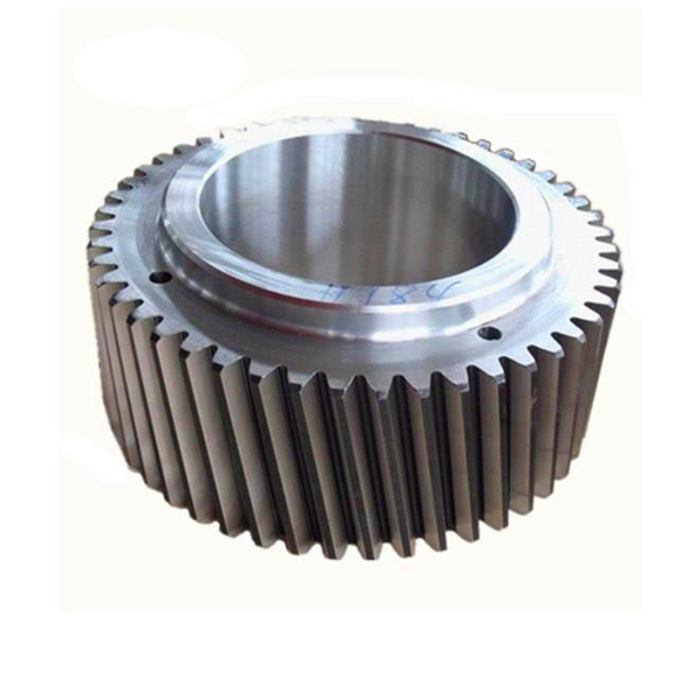
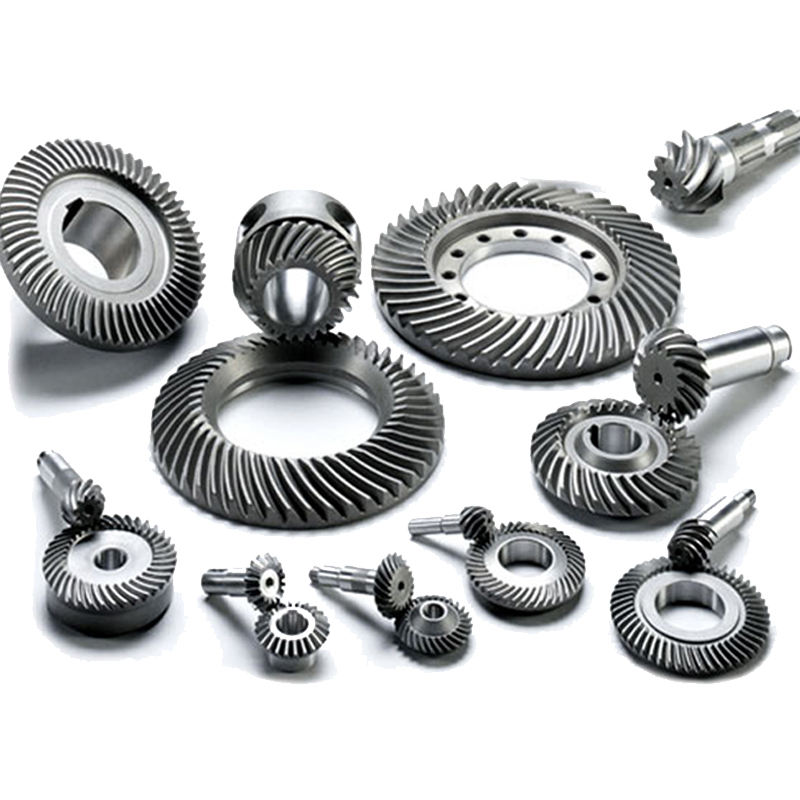
At Raydafon Technology Group Co.,Limited, we engineer bevel gears that thrive in high-speed environments. Our process begins with advanced metallurgy, using case-hardened alloys like AISI 8620 or specialized steels for superior strength-to-weight ratios. We then apply precision grinding to achieve AGMA Quality 12 or higher, ensuring minimal tooth profile error for smoother meshing and reduced dynamic loads. Critical to this is our proprietary thermal management design, which optimizes tooth geometry and lubrication flow paths to dissipate heat effectively. Can Bevel Gears Be Used for High-Speed or High-Torque Applications? For high-speed scenarios, the answer is a definitive yes when you have the right partner.
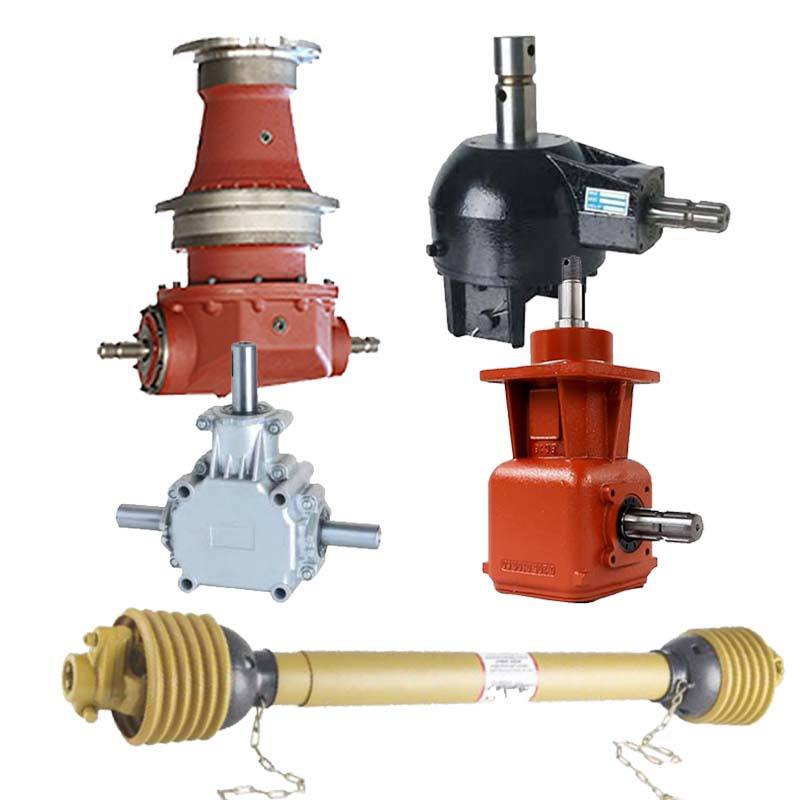
Key Parameters for High-Speed Bevel Gears:
| Parameter | Typical Specification | Purpose |
|---|---|---|
| AGMA Quality Grade | 11-13 | Minimizes transmission error and vibration. |
| Surface Finish (Ra) | < 0.4 μm | Reduces friction and heat generation. |
| Hardness (Case) | 58-62 HRC | Provides wear resistance under high surface loads. |
| Balancing Grade | G2.5 or better | Essential for minimizing centrifugal forces at high RPM. |
Now, consider a heavy-duty mining conveyor or a large marine propulsion system. The primary enemy is immense torque, which subjects gear teeth to brutal bending and contact stresses. Off-the-shelf bevel gears risk tooth bending fatigue, pitting, and catastrophic breakage, leading to operational halts and significant financial loss. The challenge is to design a gear that doesn't just survive but reliably transmits massive power.
Raydafon Technology Group Co.,Limited addresses this through robust design and material integrity. We utilize Finite Element Analysis (FEA) to optimize root fillets and tooth geometry, distributing stress more evenly. For maximum durability, we often specify through-hardened steels like AISI 4140 or even carburized grades, achieving deep case depths for exceptional toughness. Our manufacturing includes shot peening to induce compressive residual stresses in the tooth root, dramatically improving fatigue life. This meticulous approach ensures our bevel gears deliver unwavering performance under the highest torque loads.
Key Parameters for High-Torque Bevel Gears:
| Parameter | Typical Specification | Purpose |
|---|---|---|
| Bending Stress (Calculated) | < Material Allowable Limit | Prevents tooth breakage from cyclic loading. |
| Core Hardness | 28-35 HRC (Through-hardened) | Provides toughness to withstand shock loads. |
| Case Depth (Carburized) | 1.0-2.0 mm | Ensures a hard surface over a tough core. |
| Shot Peening Intensity | 0.008-0.012A (Almen) | Enhances fatigue strength at critical root areas. |
The true test of a bevel gear is its performance in the real world, where speed and torque demands often intersect. Success requires a holistic engineering philosophy that integrates design, material, and process control. This is where Raydafon Technology Group Co.,Limited distinguishes itself. Our engineers don't just supply parts; they provide transmission solutions. From the initial concept, we conduct thorough application analysis to identify the dominant failure modes—be it thermal scoring, micropitting, or bending fatigue.
Our in-house capability spans from custom gear geometry generation using state-of-the-art CAD/CAM software to stringent quality verification with CMMs and gear analyzers. Every gear set is treated as a mission-critical component. We understand that for procurement professionals, the total cost of ownership—encompassing reliability, efficiency, and maintenance intervals—is paramount. By partnering with us, you gain access to this depth of expertise, ensuring your bevel gears are not just suitable but optimized for your specific high-speed or high-torque application.
Q: Can Bevel Gears Be Used for High-Speed or High-Torque Applications simultaneously?
A: Yes, but it is one of the most challenging design scenarios. Applications like high-performance racing differentials or certain turbine drives require managing both high rotational speed (creating heat and dynamic loads) and high torque (creating bending stress). This demands a careful balance. Materials need high fatigue strength and good thermal properties. Geometry must be optimized for load capacity while maintaining precision for smooth high-speed operation. At Raydafon Technology Group Co.,Limited, we specialize in these complex, multi-requirement projects, using integrated simulation tools to find the perfect design compromise.
Q: What is the most common failure mode for bevel gears in high-torque uses, and how does Raydafon prevent it?
A: The most prevalent failure mode is tooth bending fatigue at the root fillet, leading to crack initiation and eventual breakage. Secondary issues include surface pitting and spalling due to high contact stress. Raydafon's prevention strategy is multi-faceted. We employ precise FEA modeling to eliminate stress concentrations, specify materials with excellent fracture toughness, and implement manufacturing processes like shot peening. Furthermore, our rigorous heat treatment controls ensure consistent metallurgical properties throughout the gear, providing a robust defense against these failure mechanisms.
Can Bevel Gears Be Used for High-Speed or High-Torque Applications? Absolutely. The frontier of their capability is constantly being expanded by advancements in engineering and manufacturing. The critical factor is moving from a standard component mindset to a tailored solution approach. Your application's unique demands for RPM, torque, space, noise, and lifespan require a partner with deep technical expertise and proven capability.
For over two decades, Raydafon Technology Group Co.,Limited has been that partner for global industries. We solve complex power transmission challenges by delivering precision-engineered bevel gears that perform reliably under the most strenuous conditions. Visit our website at https://www.gearboxsupplier.com to explore our technical resources and product portfolio. Ready to discuss your specific requirements? Contact our engineering and sales team directly at [email protected] for a confidential consultation.
We invite you to share your experiences or questions regarding bevel gear applications in the comments below. What are the biggest challenges you face in your high-speed or high-torque designs?
Raydafon Technology Group Co.,Limited is a leading specialist in the design and manufacture of high-precision power transmission components, including custom bevel gears for demanding industrial applications. With a focus on innovation and quality, we support clients worldwide with engineering expertise and reliable supply chain solutions. Learn more at our website or contact us via email for project inquiries.
K. Mao, 2007, A study on spur gear pitting under EHL conditions, Proceedings of the Institution of Mechanical Engineers, Part J: Journal of Engineering Tribology, 221(4).
Y. Ding, 2015, Thermal analysis of high-speed gear transmission systems, Mechanism and Machine Theory, 92.
T.J. Mackin, 2002, Gear noise and vibration prediction and control methods, International Journal of Acoustics and Vibration, 7(4).
S. Li, 2010, Finite element analysis of bending stress in gear teeth with optimized root fillet, Journal of Mechanical Design, 132(7).
H. Winter, 1985, Strength of cylindrical gears with case-hardened teeth, ASME Journal of Mechanical Design, 107(2).
M. Inalpolat, 2009, A theoretical and experimental investigation of modulation sidebands of planetary gear sets, Journal of Sound and Vibration, 323(3-5).
R.G. Parker, 2000, Analytical characterization of the unique properties of planetary gear free vibration, Journal of Vibration and Acoustics, 122(4).
P. Velex, 2012, On the modeling of excitations in geared systems by transmission errors, Journal of Sound and Vibration, 331(6).
D. Talbot, 2019, A review of lubrication and thermal effects in gearbox efficiency, Tribology International, 138.
A. Kahraman, 1991, Influence of tooth profile modification on helical gear durability, Journal of Mechanical Design, 113(2).