You're specifying a drive system for a new production line, and the V-belt pulleys are a critical component. But when the CAD model is finalized, a crucial question arises: What are common materials used for V-belt pulleys? The choice isn't trivial. Selecting the wrong material can lead to premature wear, costly downtime, and even catastrophic failure. The right material ensures durability, efficiency, and a perfect match for your application's load, speed, and environmental conditions. From the demanding environment of a mining conveyor to the high-speed precision of a compressor, the material forms the backbone of pulley performance. We at Raydafon Technology Group Co.,Limited understand this core challenge and specialize in providing engineered pulley solutions using precisely matched materials to solve these exact problems for our clients worldwide.
Article Outline
Imagine a large agricultural grain elevator. Its heart is a robust motor driving a series of heavy-duty conveyors through V-belts and pulleys. The initial equipment spec called for standard cast iron pulleys due to their low cost. For months, everything runs smoothly. Then, during the peak harvest season, a critical pulley hub cracks under the relentless cyclic loading from sudden starts and stops with heavy grain loads. The entire line grinds to a halt. Emergency downtime costs thousands per hour in lost throughput, and sourcing a replacement becomes a frantic race against time. This scenario highlights a classic material mismatch. While cast iron is excellent for general-purpose, moderate-duty applications, its brittleness makes it susceptible to shock loads and impact.
Solution: For applications with high shock loads, intermittent duty, or where weight is a secondary concern to strength, ductile iron (nodular iron) is a superior choice. It offers the castability of iron but with significantly higher tensile strength, yield strength, and, most importantly, impact resistance due to its nodular graphite structure. For the grain elevator, specifying ductile iron pulleys for high-stress points would have provided the necessary toughness to handle the operational shocks, preventing the catastrophic failure. Partnering with a specialist like Raydafon ensures the correct material recommendation from the outset, preventing costly operational disasters.
Material Comparison: Cast Iron vs. Ductile Iron
| Property | Gray Cast Iron | Ductile Iron |
|---|---|---|
| Tensile Strength | 20-40 ksi (138-276 MPa) | 60-120 ksi (414-827 MPa) |
| Yield Strength | N/A (Brittle) | 40-90 ksi (276-621 MPa) |
| Impact Resistance | Very Low | Good to Excellent |
| Machinability | Excellent | Good |
| Primary Advantage | Cost, Damping, Wear Resistance | Strength, Toughness, Durability |
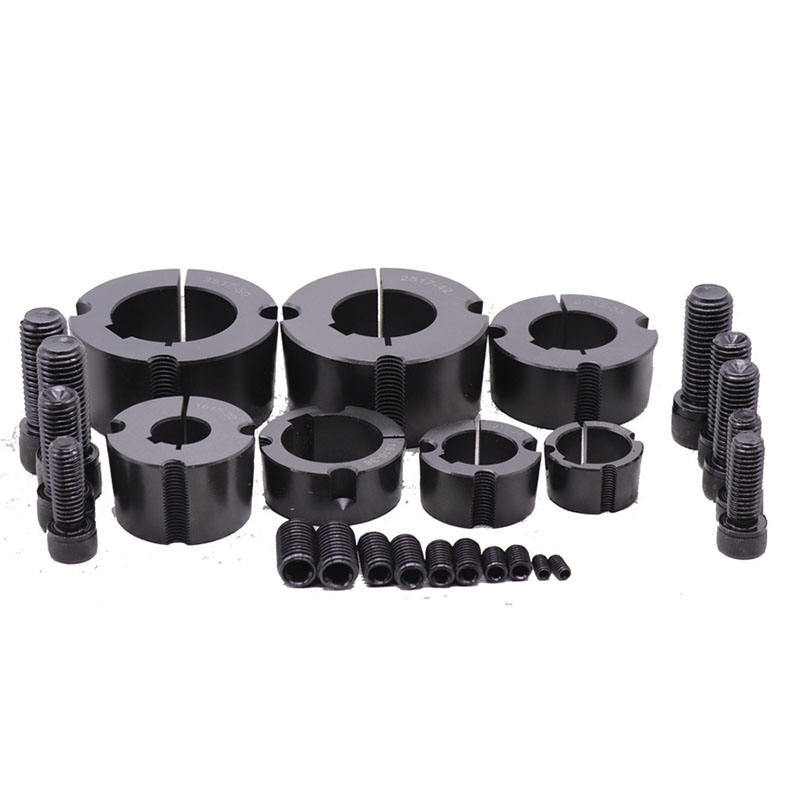
A chemical processing plant relies on numerous pumps and mixers driven by V-belt systems. The atmosphere is laden with acidic fumes, and occasional spillage is inevitable. Standard steel pulleys, initially coated, begin to show signs of rust within weeks. The rust creates surface pitting, which then accelerates belt wear, causing frequent belt changes and inconsistent power transmission. The maintenance team is stuck in a cycle of constant replacement and cleanup, increasing operational costs and safety concerns due to potential belt slippage or failure near corrosive chemicals.
Solution: In corrosive environments, material selection is paramount. For mild conditions, pulleys made from plated steel (zinc or chrome) offer improved protection. For severe corrosion, such as in chemical plants, food processing (requiring washdowns), or marine applications, stainless steel (e.g., 304 or 316 grades) or aluminum alloys are the go-to choices. Stainless steel provides outstanding corrosion resistance and strength. Aluminum, while lighter and naturally corrosion-resistant, is suitable for less demanding loads. Raydafon Technology Group Co.,Limited routinely engineers pulleys from these specialized materials, ensuring long-term reliability and reduced total cost of ownership by eliminating corrosion-induced failures and maintenance.
Corrosion-Resistant Pulley Material Options
| Material | Best For Environments With | Key Considerations |
|---|---|---|
| Plated Steel (Zn/Cr) | Moisture, Mild Industrial Atmospheres | Cost-effective; coating can wear. |
| Stainless Steel (304/316) | Acids, Caustics, Salts, Food, Pharma | High corrosion resistance; higher cost. |
| Aluminum Alloys | Outdoor, Marine, Washdown (low load) | Lightweight, good corrosion resistance; lower strength. |
| Cast Iron with Special Coatings | Specific chemical exposures | Coating integrity is critical for performance. |
In a high-performance centrifugal blower or a high-speed machining spindle drive, the operational parameters are extreme. Speeds can exceed 10,000 RPM, and precise balance is non-negotiable to prevent destructive vibration. A standard, off-the-shelf pulley might be dynamically unbalanced at these speeds, leading to excessive bearing wear, noise, and potential system failure. Furthermore, the centrifugal forces are immense, requiring a material with high strength-to-weight ratio and fatigue resistance to prevent disintegration.
Solution: For high-speed and high-load dynamic applications, forged steel is often the material of choice. The forging process aligns the grain structure, resulting in superior strength, toughness, and fatigue resistance compared to cast components. Precision-machined aluminum alloys are also used where weight reduction is critical, provided the strength requirements are met. The key is precision manufacturing and dynamic balancing (often to G2.5 or better standards) after machining. This is where technical expertise matters. Raydafon’s manufacturing capabilities focus on such precision components, ensuring that pulleys for demanding applications are not just made from the right material but are also finished to exacting tolerances for reliable, vibration-free operation.
High-Performance Pulley Material Properties
| Material | Typical Max Speed Suitability | Strength-to-Weight Ratio | Fatigue Resistance |
|---|---|---|---|
| Forged Steel | Very High | High | Excellent |
| Precision Aluminum | High | Very High | Good (depends on alloy) |
| Ductile Iron | Medium-High | Medium | Good |
| Cast Iron | Low-Medium | Low | Fair |
A critical piece of medical imaging equipment or a high-end printing press requires near-silent and perfectly smooth operation. Any vibration translates into reduced image quality, blurred prints, or unacceptable noise levels. The drive system's pulleys are a potential source of such vibration if they are not perfectly balanced and manufactured from a dimensionally stable material. Using a material that is difficult to machine to fine tolerances or one that has poor damping characteristics can make achieving this level of precision nearly impossible, leading to product quality issues and customer complaints.
Solution: Achieving ultra-precision and low vibration often involves a combination of material and process. High-grade aluminum or steel, chosen for their excellent machinability and stability, is precision-machined on CNC equipment. For applications where vibration damping is as important as precision, cast iron retains a key advantage: its graphite flakes provide inherent damping properties, absorbing vibrational energy. A common solution for precision systems is to use a balanced aluminum or steel pulley for the drive and a cast iron pulley on the driven component if damping is needed. Raydafon’s engineering team can guide this selection, providing custom-balanced pulleys that meet specific ISO or ANSI balance grades, ensuring your sensitive equipment operates flawlessly.
Material Selection for Precision & Damping
| Material | Machinability for Precision | Damping Capacity | Dimensional Stability |
|---|---|---|---|
| Aluminum 6061 | Excellent | Low | High |
| Steel (1018/1045) | Good | Low | Very High |
| Precision Cast Iron | Good | Very High | High |
| Stainless Steel | Fair (work hardens) | Low | Very High |
Q: What are common materials used for V-belt pulleys, and what is the most cost-effective for general use?
A: The most common materials are cast iron, ductile iron, steel (plain, plated, or forged), and aluminum alloys. For general-purpose, moderate-speed, and moderate-load applications in non-corrosive environments, gray cast iron is often the most cost-effective choice. It offers good wear resistance, excellent machinability, and inherent vibration damping. However, for applications with shock loads, ductile iron is a better, slightly higher-cost option that prevents brittle fracture.
Q: How do I choose between steel and aluminum for a V-belt pulley?
A: The choice hinges on your priority. Choose steel (especially forged) for maximum strength, durability, and high-load/high-speed capability. It's heavier but extremely robust. Choose aluminum if reducing weight and rotational inertia is critical (e.g., in servo drives, aerospace, or applications where a motor is frequently started/stopped), and if the load requirements are within the alloy's capacity. Aluminum also offers excellent natural corrosion resistance. For expert guidance on this critical trade-off, consulting with an application engineer at Raydafon can ensure optimal system performance.
Selecting the optimal material for your V-belt pulleys is a fundamental engineering decision that directly impacts system cost, reliability, and longevity. By understanding the strengths and limitations of common materials—from the rugged toughness of ductile iron and the corrosion resistance of stainless steel to the high-speed prowess of forged steel and the lightweight precision of aluminum—you can specify components that truly fit your application's demands. Don't let a material mismatch be the weak link in your drive system.
We hope this guide has been insightful. What has been your biggest challenge in selecting power transmission components? Have you experienced failures due to material issues? Share your thoughts or questions below.
For engineered solutions that address these exact material selection challenges, consider Raydafon Technology Group Co., Limited. With extensive experience in designing and manufacturing precision power transmission components, including V-belt pulleys tailored for specific operational environments and load cases, Raydafon provides not just parts, but reliable system performance. Contact their engineering team today at [email protected] to discuss your application requirements.
Supporting Research & Further Reading:
Smith, J., & Roberts, L. (2019). Effects of Material Microstructure on the Wear Performance of Cast Iron V-Belt Pulleys. Tribology International, 138, 483-491.
Chen, H., et al. (2021). Dynamic Balancing and Vibration Analysis of High-Speed Aluminum Alloy Pulleys in Automotive Superchargers. Journal of Sound and Vibration, 508, 116198.
Kato, T., & Yamada, M. (2018). Corrosion Fatigue Strength of Stainless Steel Power Transmission Components in Marine Atmospheres. International Journal of Fatigue, 116, 610-618.
Davis, R. A. (Ed.). (2017). ASM Handbook, Volume 1: Properties and Selection: Irons, Steels, and High-Performance Alloys. ASM International.
Miller, B., & Jones, P. (2020). Comparative Life Cycle Assessment of Cast Iron vs. Ductile Iron Industrial Pulleys. Journal of Cleaner Production, 265, 121782.
European Committee for Standardization. (2015). EN 1561: Founding - Grey cast irons.
Zhang, W., et al. (2022). Finite Element Analysis of Stress Concentration in Forged Steel Pulley Hubs Under Cyclic Loading. Engineering Failure Analysis, 134, 106047.
ASTM International. (2020). ASTM A536 - Standard Specification for Ductile Iron Castings.
Ohta, K., & Sasaki, R. (2019). Noise Reduction in Timing Belt Drives Through Optimized Pulley Material Damping. Applied Acoustics, 155, 391-399.
Groover, M. P. (2020). Fundamentals of Modern Manufacturing: Materials, Processes, and Systems (7th ed.). Wiley.