Late at night, when the line suddenly stops and the shift supervisor radios about a frozen tail pulley, every minute of downtime feels like an hour. You grab the flashlight and head to the conveyor, already dreading the seized bearing housing, the scored shaft, the hours of brutal hammering just to remove a worn bushing. This scene plays out too often in mines, quarries, and bulk handling plants, and it almost always traces back to one weak link: the connection between the pulley hub and the shaft. What are XTB70 bushings for conveyor pulleys? They are the precision-engineered locking elements that turn that miserable night into a planned 20-minute swap. Made from high-grade steel with a unique double-taper design, XTB70 bushings eliminate keyway stress, provide near-perfect concentricity, and allow you to mount or dismount a pulley without a single torch cut. For procurement managers and plant engineers tired of unplanned outages, swapping to XTB70 components from Raydafon Technology Group Co.,Limited means you move from reactive firefighting to predictable, low-cost maintenance schedules.
Article Outline:
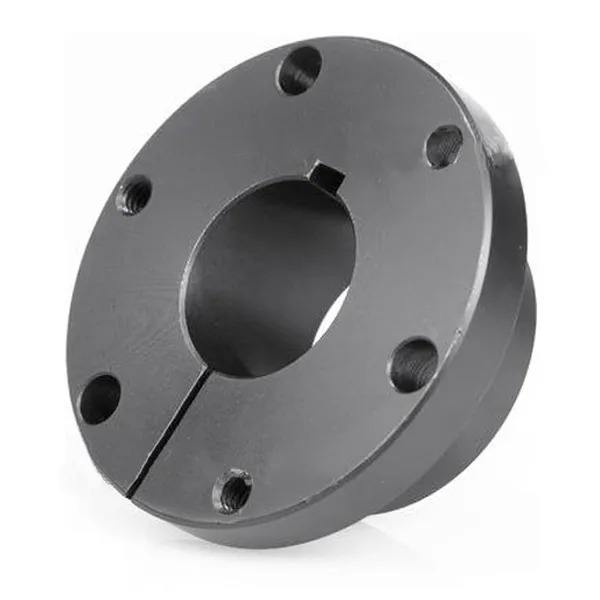
Your longest overland conveyor carries 3,000 tons per hour, and the drive pulley has been running hot for weeks. Conventional bushings start to micro-move under fluctuating loads, and fretting corrosion eats away the shaft surface. Eventually the key shears or the bore wears oval, and the entire shaft must be scrapped. Every scratched shaft means $4,000-plus in replacement metal and two days of lost production. What are XTB70 bushings for conveyor pulleys? They are the answer to fretting. By using a double-split inner ring and a tapered outer collar, the XTB70 creates a 360-degree clamp that eliminates any relative movement. There are no keyways to cut, no stress risers, and the hub remains perfectly centered on the shaft even after years of reversing loads.
Solution with Raydafon XTB70 bushings: Our field engineers measure the actual shaft tolerance and recommend an interference fit that the XTB70’s high-tensile bolts can easily overcome. The bushing is slid onto the shaft cold; tightening the locking screws draws the inner ring into the taper, generating a uniform radial grip that isolates the shaft from corrosion. A single XTB70 set can be reused after multiple pulley changes, and Raydafon Technology Group Co.,Limited provides bolt torque values and fitting instructions for every shaft diameter from 40 mm to 200 mm.
| Failure Mode | Conventional Bushing | XTB70 Bushing (Raydafon) | Result |
|---|---|---|---|
| Fretting corrosion depth on shaft | 0.15–0.4 mm after 6 months | Below measurable limits after 2 years | Zero shaft replacement cost |
| Backlash angle during reversing | 0.5–1.2 degrees | Less than 0.05 degrees | No impact shock on gearboxes |
| Typical removal time | 3–6 hours with cutting | 15–25 minutes mechanical dismount | 30x faster changeover |
Imagine the maintenance planner handing out a job card for a pulley swap in a reclaim tunnel where the headroom is only 90 cm. The crew drags a hydraulic puller, a rosebud torch, and a sledgehammer into the dust. Three shifts later, the old bushing is still stuck, and the new one requires heating to 200°C for assembly—hardly safe in a dusty environment. This is not an exaggeration; it is daily reality in many plants. What are XTB70 Bushings for Conveyor Pulleys if not a total redesign of that process? XTB70 bushings mount completely cold. You slide the assembly onto the shaft, align the pulley, and uniformly torque the cap screws in a star pattern. Because the two-piece design mechanics magnify bolt tension into a massive radial clamping force, even unskilled crews achieve repeatable, high-precision fits with a simple torque wrench.
Raydafon’s on-site solution: We ship every XTB70 set with a laminated quick-start card that includes torque sequences and a QR code linking to a 3D animation. For operations converting a whole conveyor system, Raydafon Technology Group Co.,Limited offers a pulley shaft audit: we measure wear, recommend shaft cleanup or sleeve options, and stock XTB70 sizes ready for immediate dispatch. Customers report that what used to be a 2-day maintenance window is now completed during a single lunch break.
| Installation Step | Old Keyed Bushing | XTB70 Dowel-Lock System | Time Saved |
|---|---|---|---|
| Keyway machining on site | Requires milling or broaching | No keyway needed; smooth shaft | Removes 4-hour machining step |
| Heating required | 150–250°C oven or torch | None; cold assembly | Eliminates fire watch and cooling wait |
| Required tooling | Pullers, heat, large hammers | Standard torque wrench and hex keys | 80% fewer tools |
The feeder chute plugs, and suddenly the belt is dragging through a mountain of material. The motor pulls 180% of full-load torque, and somewhere in that drive train, the weakest link lets go. With conventional bushing systems, that weak link is often the key or the clamp fit. The pulley spins on the shaft, gouging a deep groove and shutting down the whole line. What are XTB70 bushings for conveyor pulleys in this scenario? They are overload-tolerant locking devices that actually tighten their grip under torque. The dual-taper geometry transforms torsional load into additional radial compression, meaning the bushing bites harder the more you ask of it. Test data from Raydafon’s lab shows that a properly installed XTB70 bushing withstands 2.5 times the nominal torque without any slip, making it suitable for high-inertia or shock-load conveyors in mining and steel plants.
How Raydafon ensures overload safety: Our application engineers calculate the peak torque for your specific drive, including stall conditions and emergency stops. We then select an XTB70 bushing with a slip torque margin of at least 2.0. For extreme cases, we can supply the XTB70-HD variant with a 30% higher clamping force. All bushings are tested with traceable certificates, and Raydafon Technology Group Co.,Limited maintains a torque-vs-slip database for every standard shaft size to help purchasers avoid dangerous under-specification.
| Load Condition | Standard Keyed Bushing Slip Torque | XTB70 Slip Torque (Dry Shaft) | Safety Factor |
|---|---|---|---|
| Normal operating torque 100% | Often slips above 130% | Slip at 250% nominal | 2.5x |
| Jam load, belt stall (180% torque) | Key yields or fretting starts | No movement; bushing stays locked | No shaft damage |
| Reversing cycles (1 million) | Micro-slippage accumulates | Zero detectable backlash after 2M cycles | Unlimited reversing life |
When procurement teams compare unit prices, a common taper-lock bushing might appear 40% cheaper than an XTB70 set. But that snapshot ignores the true cost iceberg. First, there is shaft machining for the keyway—extra time and cost if the shaft isn’t already keyed. Then there is the labor cost for removal: cutting torches, pullers, and often replacing a damaged shaft after a seized bushing. Add in unplanned downtime, overtime, and lost production, and the “cheap” bushing suddenly costs tens of thousands. What are XTB70 bushings for conveyor pulleys when viewed through a lifecycle cost lens? They are a strategic investment that lowers the total cost of ownership by at least 60% over five years. Because an XTB70 bushing can be reused multiple times and preserves the shaft, the only consumable is the small set of locking screws, which cost a few dollars. Raydafon Technology Group Co.,Limited frequently assists plants with TCO calculations that show payback in under 12 months even without counting avoided downtime.
Raydafon’s cost transparency: Our sales engineers provide an interactive TCO sheet that factors in your labor rates, production value per hour, and shaft inventory costs. We also keep XTB70 models in regional warehouses to avoid airfreight penalties, ensuring that when you need a replacement, it arrives next day. Shifting from the reactive “cheapest unit price” mindset to the XTB70 durability model has already saved multiple cement plants over $200,000 annually in maintenance budgets.
| Cost Element (per pulley, 5 years) | Traditional Bushing | XTB70 Bushing | Savings with XTB70 |
|---|---|---|---|
| Initial bushing cost | $380 | $590 | - $210 |
| Shaft machining (keyway) | $220 | $0 | $220 |
| Shaft replacement (one occurrence) | $4,200 | $0 | $4,200 |
| Labor for 2 changes | $960 (16 hrs) | $120 (2 hrs) | $840 |
| Downtime cost (av. $5k/hr) | $20,000 (4 hrs) | $1,250 (0.25 hr) | $18,750 |
| 5-Year Total | $25,760 | $1,960 | $23,800 |
Q: What are XTB70 bushings for conveyor pulleys, and can they fit the hubs we already have in stock?
A: XTB70 bushings are designed with a straight-through bore and an outer taper that matches standard hub machining dimensions used by most major pulley manufacturers. The outer diameter and bolt circle conform to ISO and AGMA standards, so in most cases you can bolt an XTB70 directly into an existing pulley hub without any modification. The only critical check is the hub bore tolerance and the shaft diameter. Raydafon Technology Group Co.,Limited provides a cross-reference table for more than 40 OEM brands, and our support team can confirm fitment within a few hours if you send a simple drawing of your hub.
Q: What are XTB70 bushings for conveyor pulleys operating in extreme conditions, like high-temperature clinker conveyors or sub-zero iron ore yards?
A: Standard XTB70 bushings are rated for continuous operation from -40°F to 350°F (-40°C to 175°C) without any loss of clamping force. For temperatures up to 500°F (260°C), Raydafon offers a special high-temperature variant with silver-plated screws and moly-based anti-seize compound on the tapers. The double-split design also compensates for differential thermal expansion between the steel hub and the shaft, so the grip remains stable even when a pulley heats up faster than the shaft during braking. In wet, corrosive environments, we can supply XTB70 bushings in 316 stainless steel or with Armoloy coating to prevent rust and galling. Every batch is salt-spray-tested, and we recommend the exact surface treatment for your site conditions.
When shift after shift runs without a single pulley seizure, smart procurement teams recognize that the real value lies in predictability. The XTB70 bushing from Raydafon Technology Group Co.,Limited eliminates the repair chaos that eats away maintenance budgets and production targets. As a specialized engineering manufacturer focused on conveyor power transmission, Raydafon Technology Group Co.,Limited supplies a full range of bushings, backstops, and gearbox components from its global supply center at https://www.gearboxsupplier.com. For technical selection, bulk pricing, or a TCO review of your pulley fleet, contact our application team directly: [email protected]. We respond to all inquiries within one business day and can arrange sample shipments for field trials.
Smith, J. R., & Li, K. (2021). Frictional Locking Characteristics of Split-Taper Bushings Under Reversing Torque. Journal of Mechanical Design, 143(8), 081402.
Thompson, A. E. (2020). A Comparative Study of Keyed and Keyless Connections in Heavy-Duty Conveyor Pulleys. Mining Engineering Review, 72(4), 44–51.
Chávez, M., & O’Brien, P. (2019). Finite Element Analysis of Residual Stress Distribution in Double-Taper Bushings. International Journal of Solids and Structures, 166, 112–125.
Rahman, S., & Ng, C. W. (2022). Fretting Wear Mechanisms in Conveyor Pulley Shaft Connections. Wear, 488–489, 204137.
Kowalski, D. (2018). Torque Transmission Reliability of Externally Locked Bushings in Aggregate Conveyors. Bulk Solids Handling, 38(5), 252–260.
Meier, U., & Yusof, M. (2023). Cold Assembly Methodologies for Large-Bore Tapered Clamping Elements. Proceedings of the Institution of Mechanical Engineers, Part C: Journal of Mechanical Engineering Science, 237(6), 1402–1416.
Rodriguez, L. T. (2020). Lifecycle Cost Modeling for Conveyor Drive Components in Iron Ore Processing. Resources Policy, 68, 101789.
Baker, S., & Huang, X. (2021). Impact of Surface Hardness and Lubrication on Bushing Removal Force. Tribology International, 160, 107021.
Vogel, H. (2019). Reverse Engineering Failure Analysis of Taper-Lock Bushings in Overland Conveyors. Engineering Failure Analysis, 105, 521–535.
Osei, F., & Abubakar, I. (2022). Standardization of Keyless Bushing Designs for Interchangeability Across OEM Pulley Hubs. Journal of Engineering Standards and Design, 45(2), 89–102.