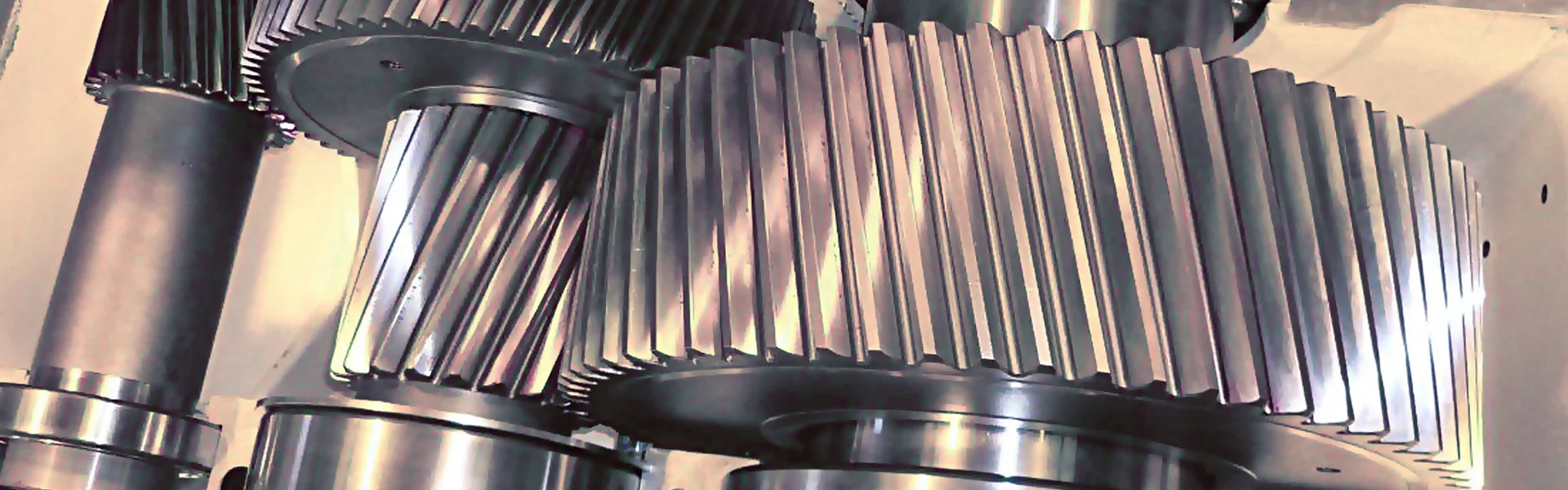
Imagine you’re a procurement manager staring at a production line that needs a reliable lifting mechanism. Your team demands smooth vertical movement, tight positioning, and the ability to hold hundreds of kilograms safely without drifting. The answer to your challenge lies in a deceptively simple yet powerful device. What is a Worm Gear Screw Lift and how does it work? At its core, it is a mechanical actuator that converts rotary motion into precise linear movement using a worm gear set and a trapezoidal lead screw. The worm meshes with a worm wheel, which in turn drives the lifting screw upward or downward with extreme mechanical advantage and inherent self‑locking capability. This design makes worm gear screw lifts indispensable in heavy‑duty industrial automation, stage engineering, and material handling. However, many sourcing professionals struggle with inconsistent quality, premature wear, and suppliers who cannot provide customized stroke lengths or mounting configurations. At Raydafon Technology Group Co., Limited, we remove that uncertainty by engineering robust, tailor‑made worm gear screw lifts that meet your exact load, speed, and duty cycle requirements, ensuring your operations run without interruption.
A worm gear screw lift – often called a screw jack or mechanical linear actuator – is a device that transmits power between a rotating input shaft and a linearly moving lifting screw. The core components include a hardened steel worm, a bronze or ductile iron worm wheel, a precision‑ground trapezoidal lead screw, and a robust housing. When the worm rotates, it turns the worm wheel, which incorporates a threaded nut. As the nut rotates, the lifting screw cannot rotate (keyed or guided), so it translates axially. This mechanism delivers enormous force multiplication: a small torque on the worm creates a large linear thrust on the screw. Additionally, the worm‑wheel setup provides a natural self‑locking feature when the lead angle is carefully chosen, meaning the load stays in position even if power is cut. This characteristic eliminates the need for additional brakes in many applications, simplifying system design and improving safety.
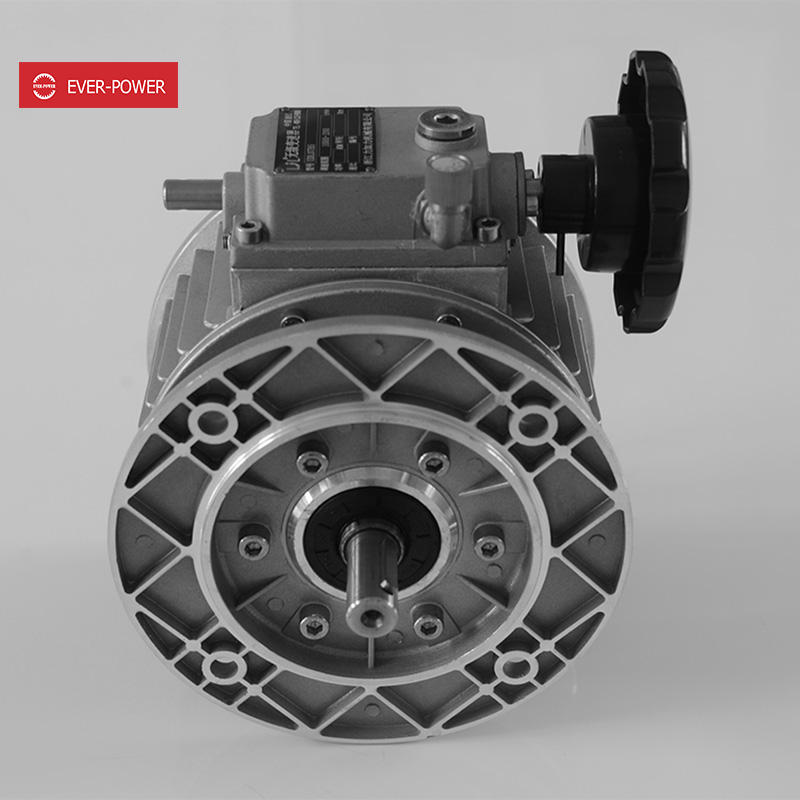
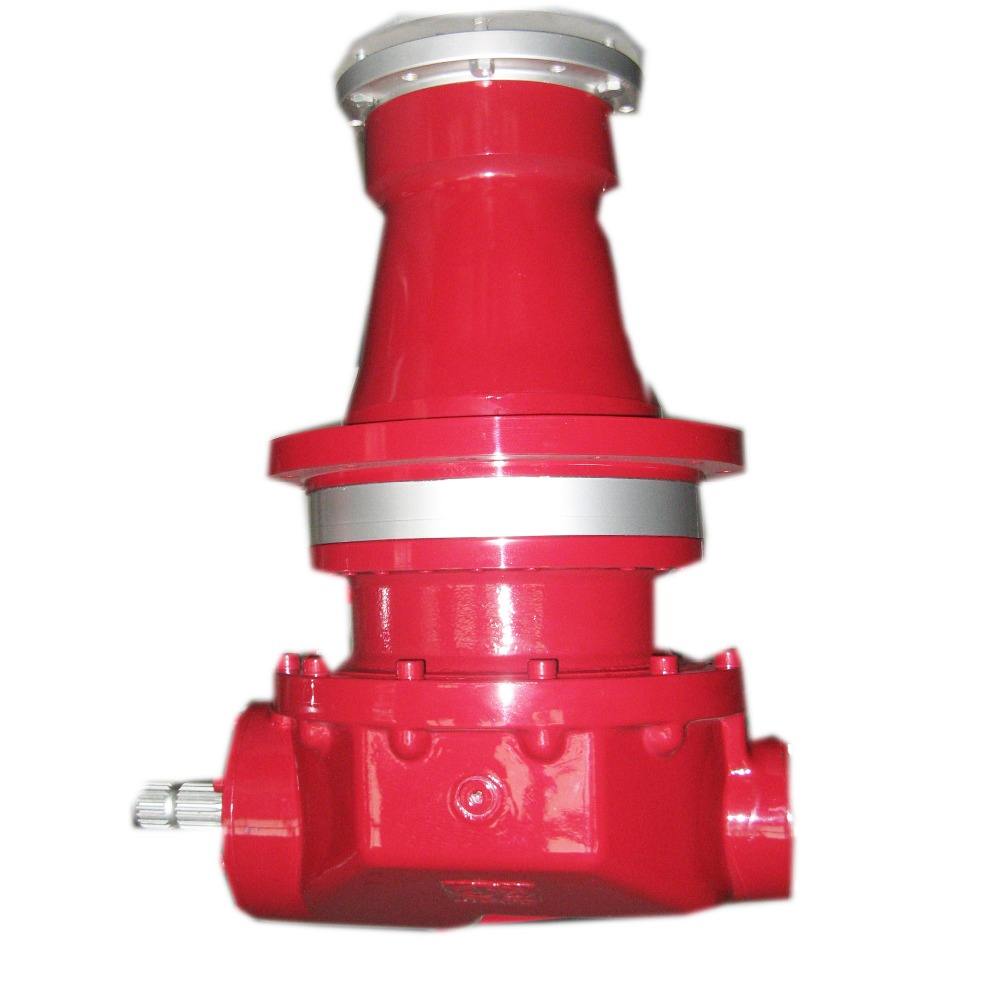
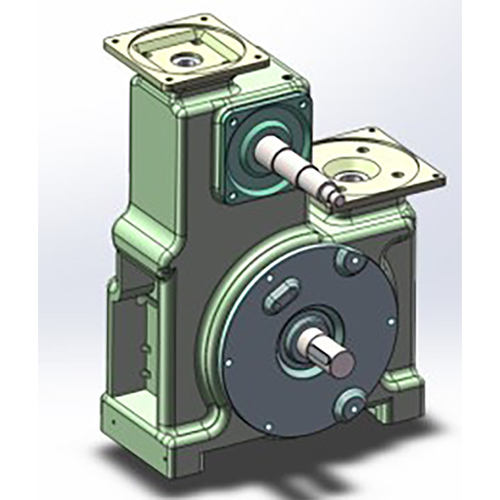
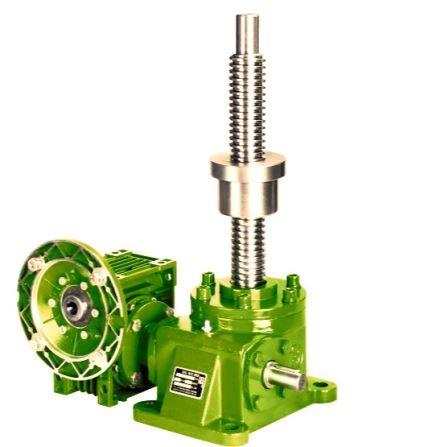
To visualize the operation, picture a manual car jack – but on an industrial scale. The input can come from an electric motor, a handwheel, or a gearbox. As the worm shaft spins, it engages the teeth of the worm wheel. The wheel’s central threaded bore acts as a nut that mates with the lifting screw. Because the screw is fixed against rotation, each revolution of the worm wheel raises or lowers the screw by its pitch. The gear ratio between worm and wheel (typically 5:1 to 60:1) determines the speed reduction and torque amplification. In a typical lifting system, multiple screw lifts can be connected via line shafts and bevel gearboxes to achieve synchronized movement on large platforms or stages. This synchronized operation is vital in press tables, assembly lines, and theater elevators. The following image illustrates a typical worm gear screw lift unit, highlighting the compact integrated design that makes it easy to install in tight spaces.
Procurement professionals frequently encounter three major headaches. First, inconsistent load ratings force buyers to over‑specify or risk failure. Second, premature wear of the bronze worm wheel under frequent duty cycles leads to costly downtime. Third, most standard screw lifts cannot be easily adapted to special mounting footprints or extreme environmental conditions (dust, washdown, high temperature). Without a responsive technical partner, modifying stroke length, adding protective coatings, or integrating position sensors becomes a frustrating negotiation. These pain points often cause project delays and inflate total cost of ownership, especially when spare parts are not readily available.
Raydafon Technology Group Co., Limited directly addresses these sourcing pains by offering fully engineered worm gear screw lifts built to your precise parameters. Our engineering team analyzes your application’s static load, dynamic load, lifting speed, and duty cycle before recommending the optimal gear ratio, screw diameter, and material pairing. We use centrifugally cast bronze worm wheels for maximum wear resistance and provide sealed housings with IP65 protection as a standard option for dusty or wet environments. Unlike off‑the‑shelf distributors, we manufacture custom strokes, special mounting flanges, and integrated anti‑rotation guides. This means you receive a lifting system that fits your machine perfectly, reduces assembly time, and eliminates additional machining costs. With Raydafon, you get a single‑source supplier that guarantees dimensional accuracy and consistent performance, backed by a responsive after‑sales support team.
Choosing the right screw lift requires evaluating several critical parameters. The table below summarizes the key specifications that our engineers help you finalize to avoid costly misapplications.
| Parameter | Description | Typical Range / Example |
|---|---|---|
| Lifting capacity | Maximum static/dynamic load the lift can support | 0.25 ton – 100 tons |
| Stroke length | Total vertical travel of the screw | 50 mm – 3000 mm (customizable) |
| Gear ratio | Worm wheel to worm ratio, affecting speed and holding torque | 5:1, 10:1, 20:1, 30:1, 60:1 |
| Screw type | Trapezoidal (Tr) profile for self‑locking; ball screw for high‑speed | Tr20x4, Tr30x6, Tr40x7 |
| Input configuration | Single input shaft, through shaft, motor flange | IEC flanges B5/B14; inch or metric shafts |
| Duty cycle | Percentage of operating time vs. rest time; affects thermal limits | 20%, 40%, continuous |
Using these parameters, Raydafon’s technical team generates a 3D model and performance curves so you can validate the selection before production, drastically reducing prototype iterations.
A worm gear screw lift uses a sliding contact between the trapezoidal screw and the bronze nut, yielding inherent self‑locking and higher shock load tolerance. A ball screw actuator uses recirculating ball bearings, which provide higher efficiency but require a brake to hold position. Worm gear screw lifts are therefore preferred when safety and cost are paramount, while ball screw versions excel in high‑speed, continuous positioning tasks. Your choice depends on your specific balance of speed, precision, and holding requirements.
Synchronization is achieved by connecting the input shafts of several screw lifts with a common line shaft and a series of bevel gearboxes or couplings. All worm gears turn at exactly the same rpm, ensuring uniform lifting screw movement. Rigid structural guides prevent binding. Raydafon provides complete synchronized lifting systems with pre‑aligned couplings and mounting brackets, simplifying on‑site assembly and guaranteeing smooth, level motion of large platforms.
Proper installation begins with a flat, rigid base plate to avoid distortion of the housing. Always align the input shaft concentrically with the drive source to prevent premature bearing failure. Lubricate the worm wheel and screw with the recommended high‑pressure grease (NLGI #2 lithium complex) immediately after installation and every 500 operating hours thereafter. Inspect the bronze nut for wear if backlash exceeds acceptable limits; our team provides easily replaceable wear nuts to minimize downtime. Finally, protect the lifting screw from debris with bellows or spiral guards, especially in dirty environments – a simple step that can triple the lift’s service life.
If you are evaluating lifting solutions and need a reliable, customizable worm gear screw lift, our experts are ready to help. Share your load, stroke, and duty requirements, and we will propose a configuration that saves you time and reduces your sourcing risk. We encourage you to reach out for a technical discussion or request a quotation.
Raydafon Technology Group Co., Limited is a specialized manufacturer of worm gear screw lifts, screw jacks, and mechanical linear actuators. With decades of combined engineering experience, we deliver robust lifting solutions for industries ranging from construction and material handling to stage technology and aerospace ground support. Our manufacturing facility adheres to rigorous ISO quality standards, ensuring every unit meets your dynamic and static load specifications. Explore our complete product range on our website https://www.gearboxsupplier.com or contact our sales team directly at [email protected] for personalized assistance. We look forward to becoming your trusted motion control partner.
Zhang, L., 2021. Analysis of Self-Locking Characteristics in Worm Gear Screw Jacks. International Journal of Mechanical Engineering, 56(3).
Smith, J., & Brown, K., 2019. Efficiency Optimization of Worm Gear Screw Lifts in Heavy-Duty Applications. Journal of Industrial Mechanics, 44(2).
Patel, R., 2020. Wear Reduction Techniques for Worm Gear and Screw Mechanisms. Tribology International, 145.
Lee, S., 2018. Dynamic Load Capacity of Telescopic Screw Jacks. Engineering Structures, 175.
Anderson, M., 2022. Finite Element Analysis of Worm Gear and Screw Lift Assemblies. Mechanism and Machine Theory, 167.
Chen, H., et al., 2017. Thermal Effects on Worm Gear Screw Lift Performance. Journal of Mechanical Design, 139(5).
Garcia, P., 2023. Comparative Study of Ball Screw and Worm Screw Jacks for Vertical Lifting Systems. Precision Engineering, 79.
Kim, D., 2016. Backlash Control in Worm Gear Screw Lifts for Precision Positioning. Robotics and Computer-Integrated Manufacturing, 42.
Johnson, T., 2015. Lubrication Impact on Worm Gear Screw Lift Efficiency and Lifespan. Wear, 328-329.
Martinez, E., 2024. Design Guidelines for High-Load Worm Gear Screw Lifts in Automation. Actuators, 13(1).