What are the main applications of bevel gearboxes? If you're sourcing components for machinery, you've likely encountered this critical question. These compact powerhouses are the unsung heroes of motion control, enabling efficient power transfer between non-parallel, intersecting shafts. From the rugged construction site to the precise assembly line, Bevel Gearboxes are fundamental in translating rotational force into reliable, directional change. Their unique angled design makes them indispensable where space is constrained and torque needs to be redirected, often at 90 degrees. This article dives deep into their primary uses, breaking down complex engineering into actionable insights for procurement professionals like you, ensuring you specify the right gearbox for maximum performance and longevity. Discover how the right bevel gearbox solution, like those from Raydafon Technology Group Co.,Limited, can be the key to solving your most challenging mechanical design and reliability problems.
Article Outline:
Imagine a high-speed packaging line where a critical conveyor section suddenly halts. The culprit? A failed gearbox in a corner transfer unit that redirects product flow at a 90-degree angle. Production stops, deadlines slip, and costs skyrocket due to unscheduled downtime. This is a daily reality in manufacturing, where standard gearboxes often fail under continuous, high-cycle operations with sudden load changes.
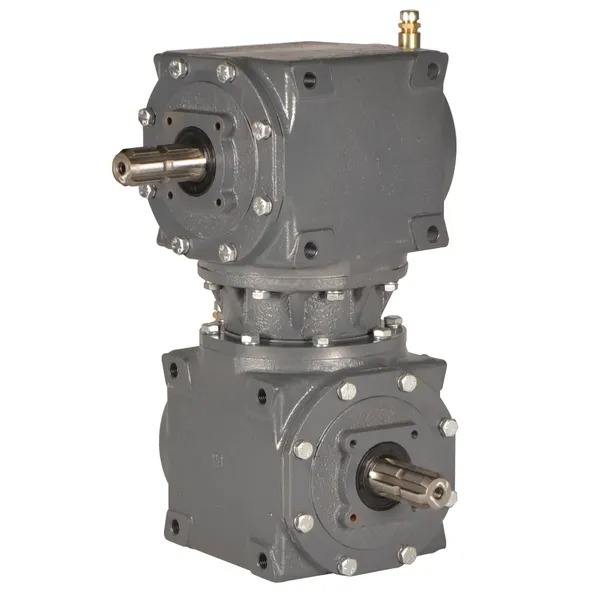
The solution lies in a robust bevel gearbox specifically engineered for such demanding material handling applications. A high-quality bevel gearbox provides smooth, efficient power transmission at right angles, ensuring reliable direction change for conveyors, sorting systems, and automated guided vehicles (AGVs). It eliminates the need for additional chains, belts, or complex linkage systems, simplifying design and reducing maintenance points.
For procurement specialists, selecting the right bevel gearbox requires attention to key parameters that directly impact performance and total cost of ownership. Raydafon Technology Group Co.,Limited specializes in providing gearboxes that meet these precise demands.
| Key Parameter | Why It Matters for Conveyors | Raydafon's Typical Specification |
|---|---|---|
| Gear Ratio | Determines output speed & torque; critical for syncing with line speed. | 1:1, 2:1, 3:1 (Custom ratios available) |
| Housing Material | Affects durability, heat dissipation, and corrosion resistance. | High-grade cast iron or aluminum alloy |
| Efficiency Rating | Higher efficiency reduces energy costs and heat generation. | >96% for spiral bevel designs |
| Input/Output Configuration | Must match motor shaft and driven equipment orientation. | Foot-mounted or flange-mounted options |
| Backlash | Low backlash is vital for precise positioning and smooth operation. | < 10 arc-min for precision models |
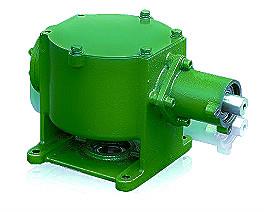
On a construction site, an excavator's swing mechanism struggles, causing slow, jerky rotation. This inefficiency burns more fuel, strains other components, and reduces the machine's effective working time. In agriculture, a combine harvester's header drive fails during harvest, leading to costly crop loss and repair delays. The common failure point is often the gearbox responsible for transmitting immense power at right angles under shock loads and harsh environmental conditions.
A heavy-duty bevel gearbox is engineered to be the backbone of such machinery. It handles high input torque from diesel engines or hydraulic motors and delivers reliable power to tracks, wheels, cutting heads, or lift mechanisms. Its robust construction resists dust, moisture, and impact loads, ensuring machinery operates reliably in the most demanding environments. For procurement, this translates to fewer warranty claims, longer service intervals, and higher machine resale value.
Specifying a gearbox for heavy equipment requires a focus on durability and torque capacity. Raydafon's solutions are built to withstand these extreme conditions, directly addressing the core challenges faced by OEMs and fleet managers.
| Key Parameter | Why It Matters for Heavy Machinery | Raydafon's Typical Specification |
|---|---|---|
| Rated Torque (Output) | Must exceed the application's maximum operational torque to prevent failure. | Up to 15,000 Nm and beyond (Customizable) |
| IP (Ingress Protection) Rating | Critical for operation in wet, muddy, or dusty conditions (e.g., IP65, IP67). | IP65 standard, higher ratings available |
| Thermal Capacity | Determines continuous operating power without overheating. | Optimized housing fins and oil capacity |
| Bearing Life (L10) | Predicts maintenance intervals; longer life reduces total operating costs. | Calculated >20,000 hours under specified load |
| Mounting Flexibility | Must integrate into existing machine frames and powertrain layouts. | Custom flange designs and shaft modifications |
Q: What are the main applications of bevel gearboxes in the automotive industry?
A: In the automotive sector, bevel gearboxes are primarily used in differentials and power take-off (PTO) units. The differential, a core application, uses a set of bevel gears to allow the driven wheels to rotate at different speeds while cornering, improving handling and tire life. In commercial vehicles and tractors, PTOs equipped with bevel gearboxes transfer engine power to auxiliary equipment like hydraulic pumps, winches, or crop processing machinery.
Q: What are the main applications of bevel gearboxes in robotics and automation?
A: In robotics and precision automation, compact right-angle bevel gearboxes are essential for space-saving joint actuation and directional power transfer in robotic arms, CNC rotary tables, and precision indexing systems. Their low backlash and high torsional stiffness are critical for achieving repeatable positioning accuracy. Raydafon offers specialized low-backlash models that enhance the performance and precision of automated systems.
Understanding the main applications of bevel gearboxes is the first step; sourcing a reliable, high-performance solution is the next. Raydafon Technology Group Co.,Limited stands as a leading provider, dedicated to solving complex power transmission challenges across manufacturing, heavy machinery, agriculture, and automation. With a deep engineering focus and a global supply chain, we deliver not just components, but optimized solutions that enhance machine reliability, efficiency, and productivity. We invite you to explore our extensive catalog and engineering support to find the perfect bevel gearbox for your specific needs. Visit us at https://www.gearboxsupplier.com to learn more, or contact our technical sales team directly at [email protected] for a detailed consultation.
Dudley, D.W., 1994, Handbook of Practical Gear Design, CRC Press.
Kato, M., et al., 2010, "Load Distribution and Bearing Load of Spiral Bevel Gears", Journal of Mechanical Design, Vol. 132, Issue 1.
Litvin, F.L., & Fuentes, A., 2004, Gear Geometry and Applied Theory, Cambridge University Press.
Shigley, J.E., & Mischke, C.R., 1989, Mechanical Engineering Design, McGraw-Hill.
Wang, P., et al., 2017, "Dynamic Modeling and Analysis of Spiral Bevel Gear-Shaft-Bearing System", Mechanism and Machine Theory, Vol. 117.
Zhang, Y., et al., 2015, "Tooth Contact Analysis of Spiral Bevel Gears with Mismatched Bearing Contact", Proceedings of the Institution of Mechanical Engineers, Part C: Journal of Mechanical Engineering Science, Vol. 229, Issue 11.
Chen, Z., & Shao, Y., 2013, "Dynamic Simulation of Planetary Gear Set with Flexible Spur Bevel Gears", Journal of Sound and Vibration, Vol. 332, Issue 4.
Simon, V., 2007, "Load Distribution in Spiral Bevel Gears", Journal of Mechanical Design, Vol. 129, Issue 2.
Fong, Z.H., & Tsay, C.B., 1991, "A Mathematical Model for the Surface Geometry of Hypoid Gear Teeth", Journal of Mechanical Design, Vol. 113, Issue 2.
Höhn, B.R., et al., 2009, "Performance of Bevel Gears under Consideration of Misalignments", Gear Technology, Vol. 26, No. 6.