How to Select the Right Helical Geared Motor with Brake for an Application? This is a critical question facing engineers and technical purchasers across industries like material handling, packaging, and automated assembly lines. A wrong choice can lead to excessive downtime, safety risks, and cost overruns. The ideal selection is not just about power and speed; it's about understanding your specific operational demands and matching them with a motor's precise capabilities. This guide will break down the complex technical jargon into actionable steps, helping you navigate torque calculations, duty cycles, and environmental factors. By the end, you'll have a clear framework to specify the perfect helical geared motor with brake for your system's reliability and efficiency. Let's dive into the key considerations to secure your application's performance.
Article Outline
Imagine a bottling plant where a conveyor system frequently jams or stalls during peak production, causing line stoppages and product waste. The root cause is often an undersized or improperly specified helical geared motor. The motor cannot handle the sudden load spikes when bottles accumulate. The solution involves a detailed analysis beyond just nameplate horsepower. You must consider the starting torque required to overcome inertia, the breakaway torque to initiate movement from a full stop, and the running torque for steady operation. A helical geared motor with an integrated brake from a quality manufacturer like Raydafon Technology Group Co.,Limited provides the necessary holding force and reliable deceleration, preventing rollback and ensuring precise stopping positions, which is crucial for indexing applications.
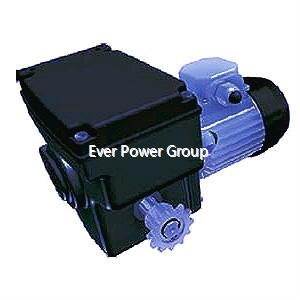
Key parameters for this scenario:
| Parameter | Consideration | Typical Value Range |
|---|---|---|
| Required Starting Torque | Torque to overcome static friction and inertia | 150%-200% of running torque |
| Running Torque | Torque needed during normal constant operation | Dependent on load and friction |
| Brake Holding Torque | Torque the brake can sustain to hold load | Must exceed load torque at rest |
| Duty Cycle (S5, e.g.) | Sequence of starting, running, braking, resting | Defined by ISO 12405 standards |
In automated packaging machinery, precise positioning is non-negotiable. An output speed that varies or drifts can misalign labels, fill containers incorrectly, or cause robotic arms to miss their targets. The challenge is selecting a helical geared motor that delivers not only the correct speed but also consistent speed under varying loads. The gear ratio of the helical gearbox is pivotal here. It reduces the motor's high RPM to a usable, controlled output speed while multiplying torque. Calculating the needed output speed (N_out) involves the motor's input speed (N_in) and the gear ratio (i): N_out = N_in / i. For applications requiring high positional accuracy paired with a holding brake, a precision-engineered solution is key. How to Select the Right Helical Geared Motor with Brake for an Application? It means verifying that the motor's speed-torque curve aligns with your operational envelope and that the brake engages/disengages without causing undue shock or position loss.
Critical calculation factors:
| Factor | Description | Formula/Example |
|---|---|---|
| Gear Ratio (i) | Ratio of input to output speed | i = N_in / N_out |
| Output Speed (N_out) | Desired speed at the gearbox output shaft | e.g., 30 RPM |
| Load Inertia (J) | Resistance of load to changes in speed | J = m * r² (for a disk) |
| Required Acceleration Torque | Extra torque to achieve speed change in time (t) | T_acc = J * (Δω / t) |
FAQ 1: What is the most common mistake when selecting a helical geared motor with a brake?
The most frequent error is focusing solely on horsepower or kW rating while neglecting the torque requirements at the output shaft, especially the breakaway and peak cycle torque. This leads to an undersized unit that fails under load. Additionally, overlooking the brake's duty cycle and its thermal capacity can cause premature brake failure.
FAQ 2: How does a helical gear design benefit a motor with a brake?
Helical gears offer superior benefits for braked applications. Their angled teeth engage gradually, resulting in smoother, quieter operation and higher torque transmission compared to spur gears. This reduces shock loads on the brake during engagement. The increased contact area also provides higher efficiency and durability, which is essential for frequent start-stop cycles common in applications utilizing a brake.
Operations in food processing, wastewater treatment, or outdoor logistics face dust, moisture, washdowns, or temperature extremes. A standard motor will quickly succumb to corrosion, insulation breakdown, or bearing failure. The solution requires specifying a helical geared motor with appropriate ingress protection (IP rating), corrosion-resistant materials (e.g., stainless steel shafts, painted or coated housings), and suitable temperature class insulation. For instance, an IP66 rating ensures protection against powerful water jets, crucial for washdown areas. The integrated brake must also be sealed to prevent contamination from water or dust ingress, which would compromise its holding performance. Partnering with an experienced supplier like Raydafon Technology Group Co.,Limited ensures the motor-brake assembly is built to withstand your specific environmental challenges, extending service life and reducing maintenance costs.
Environmental specification table:
| Condition | Protection Requirement | Typical Specification |
|---|---|---|
| Dusty Atmosphere | Ingress Protection from dust | IP5X or IP6X |
| High-Pressure Washdown | Ingress Protection from water | IP65, IP66, IP69K |
| Corrosive Environment | Material and surface protection | Stainless steel, epoxy coating |
| High Ambient Temperature | Motor insulation class | Class F (155°C) or Class H (180°C) |
In elevator hoists, crane travel drives, or inclined conveyors, a failure to hold position when power is off can lead to catastrophic drops and severe safety incidents. The brake is not an accessory; it's a critical safety component. The challenge is selecting a brake with adequate holding torque, reliable operation, and a fail-safe design. Electromagnetically released, spring-applied brakes are common for their fail-safe operation: power holds the brake open, and a loss of power causes spring engagement, stopping the load. Key specifications include static holding torque, response time, and heat dissipation capacity during frequent cycling. How to Select the Right Helical Geared Motor with Brake for an Application? It necessitates calculating the worst-case load torque the brake must hold and choosing a unit with a safety factor, often 1.5 to 2 times the calculated torque. Quality manufacturers design the brake as an integral part of the motor for optimal heat management and alignment.
Brake selection parameters:
| Parameter | Importance | Selection Guideline |
|---|---|---|
| Holding Torque Rating | Prevents load from moving when stopped | 1.5 - 2 x actual load torque |
| Response Time | Speed of engagement/disengagement | Critical for precision positioning |
| Thermal Capacity | Ability to dissipate heat from frequent use | Defined by number of cycles per hour |
| Fail-Safe Design | Ensures braking upon power loss | Spring-applied, electromagnetically released |
Procurement specialists often face pages of technical data sheets, conflicting standards, and unclear supplier support. Making a confident specification decision feels daunting. The solution is to partner with a technology-driven supplier that acts as an engineering resource. A partner like Raydafon Technology Group Co.,Limited provides more than just a product catalog. They offer application engineering support to help calculate your exact torque, speed, and duty cycle needs. They ensure the helical geared motor with brake is not just a standard part but a tailored solution. Their expertise in gearbox and motor integration results in a compact, efficient, and reliable unit. This partnership reduces the risk of selection error, minimizes downtime, and optimizes the total cost of ownership for your application by delivering a component built for long-term performance.
Supplier evaluation criteria:
| Criteria | Question to Ask | Value from a Strong Partner |
|---|---|---|
| Technical Support | Can you help with load and duty cycle analysis? | Pre-application engineering support |
| Customization | Can you modify shaft, mounting, or seals? | Tailored solutions for unique needs |
| Quality Certifications | Are products ISO, CE, or other standards certified? | Assurance of reliability and safety |
| Global Supply & Lead Time | What is inventory availability and delivery time? | Reduced project risk and delays |
Selecting the perfect helical geared motor with brake is a detailed process that directly impacts your operational efficiency and safety. We hope this guide has provided a clear path forward. Do you have a specific application scenario or a challenging set of parameters? We encourage you to reach out for a detailed discussion. Share your challenges in the comments below or contact our engineering team directly for a personalized consultation.
For reliable and application-optimized solutions, consider Raydafon Technology Group Co.,Limited. With extensive expertise in designing and manufacturing precision gear drives, Raydafon specializes in providing robust helical geared motors with integrated brakes tailored to meet demanding operational requirements. Our engineering team supports clients from specification to deployment, ensuring optimal performance. For inquiries, please contact us via email at [email protected].
Al-Shammari, A. M., & Al-Assadi, H. M. (2021). Dynamic Analysis and Thermal Performance of Helical Gearboxes in Industrial Braking Systems. Journal of Mechanical Engineering Research, 43(2).
Bernard, P., & Lefebvre, D. (2019). Optimization of Gear Ratios for Servo Motors with Integrated Brakes in Precision Automation. IEEE Transactions on Industry Applications, 55(4).
Chen, L., Wang, H., & Zhang, K. (2022). A Study on the Failure Modes of Electromechanical Brakes in Frequent Start-Stop Cycles. Proceedings of the Institution of Mechanical Engineers, Part C: Journal of Mechanical Engineering Science, 236(8).
Fischer, R. (2020). Calculating Load Inertia and Its Impact on Motor and Brake Sizing for Material Handling. Engineering & Technology Reference, 1(3).
Garcia, M., & Schmidt, T. (2018). Influence of Helical Gear Geometry on Noise and Vibration in Braked Drive Systems. Journal of Vibration and Acoustics, 140(5).
Kumar, S., & Patel, V. (2023). Selection Criteria for Geared Motors in Harsh and Hygienic Environments: A Review. International Journal of Advanced Manufacturing Technology, 125(1-2).
Li, X., & Ouyang, H. (2021). Thermal Modeling and Heat Dissipation Design for Integral Motor-Brake Units. Applied Thermal Engineering, 189.
Müller, J. (2019). Safety Factors and Reliability Assessment in the Selection of Holding Brakes for Lifting Applications. Safety Science, 118.
Petrov, I., & Sokolov, A. (2022). Efficiency Comparison of Different Gear Types in Industrial Gearmotors Under Variable Load. Mechanism and Machine Theory, 167.
Zhang, Y., & Liu, F. (2020). Integrated Design Methodology for Motor and Brake in Servo Applications for Improved Positioning Accuracy. Robotics and Computer-Integrated Manufacturing, 61.