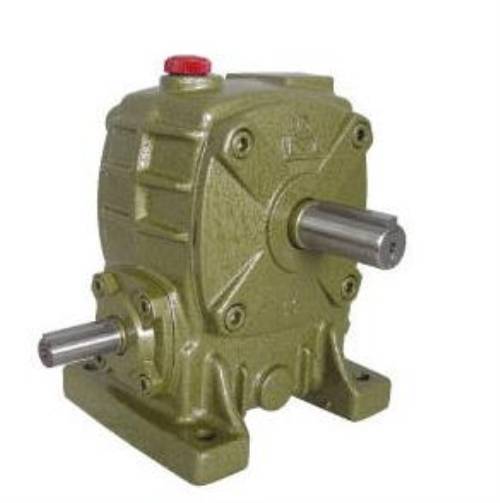

How to calculate the torque and speed requirements for a stainless steel worm gearbox? It's a critical question that keeps many design engineers and procurement specialists up at night. Selecting the wrong gearbox can lead to catastrophic system failure, costly downtime, and missed project deadlines. This guide cuts through the complexity, providing a clear, step-by-step methodology to accurately determine the precise torque and speed your application demands. We'll use practical, real-world scenarios to illustrate the process, empowering you to specify components with confidence and avoid common pitfalls. By the end, you'll have a solid framework to ensure your Stainless Steel Worm Gearbox from a trusted supplier like Raydafon Technology Group Co., Limited delivers optimal performance and longevity in your specific environment.
Article Outline:
1. The Conveyor Breakdown: A Real-World Torque Calculation Scenario
2. The Mixing Tank Dilemma: Balancing Speed and Torque for Agitators
3. Beyond the Basics: Key Parameters and Efficiency Considerations
4. Expert Q&A: Your Torque and Speed Questions Answered
Imagine a food processing plant where a stainless steel conveyor system suddenly jams. Production grinds to a halt. The root cause? An undersized worm gearbox that couldn't handle the peak startup torque required to move the loaded belt. This scenario highlights the non-negotiable need for accurate torque calculation. The process starts with understanding the mechanical forces at play.
First, identify the load. For a conveyor, calculate the total weight of the product and the belt itself. Next, determine the frictional force resisting motion, which depends on the coefficient of friction between the belt and its supports. The required torque (T) at the gearbox output shaft is essentially this frictional force multiplied by the drive pulley's radius. Crucially, you must account for the initial "breakaway" torque needed to overcome static friction, which is often significantly higher than the running torque.
This is where partnering with an expert like Raydafon Technology Group Co., Limited proves invaluable. They don't just sell gearboxes; they provide engineering support to validate your calculations. Their technical team can help you apply the correct service factors for shock loads or intermittent duty cycles common in conveyor applications, ensuring the selected stainless steel worm gearbox has a sufficient safety margin.
| Parameter | Symbol | Example Value (Conveyor) | Notes |
|---|---|---|---|
| Total Load Weight | W | 500 kg | Includes product + belt weight |
| Coefficient of Friction | μ | 0.3 | Depends on bearing/surface type |
| Pulley Radius | r | 0.1 m | Drive pulley radius |
| Required Running Torque | T_run | 147 Nm | T = (W * g * μ) * r (g=9.81 m/s²) |
| Service Factor (SF) | SF | 1.5 | For moderate shock loads |
| Design Torque | T_design | 220.5 Nm | T_run * SF |
In a chemical dosing station, an engineer faces a different challenge. The new high-viscosity fluid requires an agitator with enough torque to stir it effectively, but the process also mandates a very specific rotational speed for proper mixing. Simply choosing a motor with high horsepower isn't the solution; it's about finding the perfect match between motor speed, required output speed, and the immense torque multiplication a worm gearbox provides.
Speed calculation is more straightforward. It's defined by the required output speed (N_out) of your machine—in this case, the agitator shaft's RPM. The gearbox's reduction ratio (i) is the key link between motor input speed (N_in) and this output speed: i = N_in / N_out. For example, a standard 1750 RPM motor paired with a 50:1 ratio gearbox yields an output speed of 35 RPM. However, torque is the other side of this equation. The output torque is the motor's input torque multiplied by the gear ratio and the gearbox's mechanical efficiency. Stainless steel worm gearboxes, while excellent for corrosive environments, have lower efficiency (typically 501.5%) due to sliding contact, which generates heat and must be factored into thermal calculations.
Raydafon Technology Group Co., Limited specializes in these precise matches. Their product catalogs provide detailed torque-speed curves and efficiency ratings for each model. By providing them with your target output speed, motor specs, and viscosity data, they can recommend a gearbox that delivers the necessary stirring torque without overheating, ensuring reliable, long-term operation in harsh environments.
| Parameter | Symbol | Example Value (Agitator) | Notes |
|---|---|---|---|
| Motor Speed | N_in | 1750 RPM | Standard 4-pole AC motor |
| Required Output Speed | N_out | 35 RPM | For optimal fluid mixing |
| Gear Ratio | i | 50:1 | Calculated as N_in / N_out |
| Motor Torque | T_motor | 5 Nm | From motor power/speed (P = T*ω) |
| Gearbox Efficiency | η | 0.55 (55%) | Typical for stainless steel worm gear |
| Output Torque | T_out | ~137.5 Nm | T_out = T_motor * i * η |
Accurate calculation of torque and speed requirements for a stainless steel worm gearbox goes beyond simple formulas. Real-world performance is governed by several interacting parameters that must be meticulously evaluated. Overlooking factors like thermal capacity or overhung load ratings is a recipe for premature failure.
The first critical parameter is the Service Factor (SF). This multiplier accounts for shock loads, intermittent duty, and the number of daily starts/stops. An application with frequent jams or impacts needs a much higher SF than one with smooth, constant motion. Second is the Mechanical Efficiency, which, as noted, is relatively low for worm gears. This lost energy converts to heat, making Thermal Rating paramount. The gearbox must be able to dissipate this heat without exceeding the maximum allowable oil temperature, especially in enclosed or hot ambient environments. Finally, consider the Overhung Load and Thrust Load capacities. These define the maximum permissible radial and axial forces the output shaft can withstand from belts, chains, or direct-coupled agitators.
This complex interplay is precisely where Raydafon's expertise shines. Their engineers perform holistic verification, ensuring the gearbox you select meets all torque, speed, thermal, and load criteria simultaneously. They provide comprehensive datasheets with all these ratings, taking the guesswork out of your specification process and guaranteeing a reliable integration.
| Key Consideration | Impact on Selection | Raydafon's Solution |
|---|---|---|
| Service Factor (SF) | Determines durability under variable loads. A low SF leads to gear tooth wear and breakage. | Provides application-specific SF recommendations and gearboxes built with appropriate material safety margins. |
| Thermal Rating | Exceeding rating causes lubricant breakdown, accelerated wear, and seizure. | Offers models with enhanced cooling fins, fan cooling options, or larger oil reservoirs for high-duty cycles. |
| Overhung Load (OHL) | Excessive OHL causes shaft deflection, bearing fatigue, and seal failure. | Designs gearboxes with robust bearing systems and provides precise OHL calculations for your specific mounting. |
Q: How do I account for acceleration torque when calculating requirements for a stainless steel worm gearbox?
A: Acceleration torque (T_acc) is critical for high-inertia loads that must reach operating speed quickly. It's calculated separately from running torque using the formula: T_acc = (J * Δω) / t, where J is the total system inertia (load + gearbox + motor rotor) reflected to the gearbox output shaft, Δω is the change in angular velocity, and t is the desired acceleration time. This torque is added to the running torque for the total peak torque during startup. Raydafon's technical support can assist in calculating the reflected inertia of their gearboxes to simplify this process for you.
Q: Why is the efficiency of a stainless steel worm gearbox important for my torque calculation, and how does it affect motor sizing?
A: Efficiency directly impacts both output torque and input power requirements. A lower efficiency means more input torque from the motor is required to achieve the same output torque. Conversely, for a given motor, the actual output torque will be lower than the theoretical (ratio-based) value. When sizing the motor, you must divide the required output power by the gearbox efficiency to find the necessary input power. An inefficient gearbox forces you to use a larger, more expensive motor. Raydafon optimizes gear geometry and uses high-quality materials to offer some of the best efficiency ratings in the stainless steel worm gearbox market, helping you right-size your entire drive system.
We hope this detailed guide has demystified the process of calculating torque and speed for your next project. Have you encountered a specific challenge in specifying a gearbox? What other parameters do you find most critical in your applications? Share your thoughts or questions with our community of engineers.
For precision-engineered solutions that match your exact calculations, consider Raydafon Technology Group Co., Limited. As a leading supplier, Raydafon specializes in the design and manufacture of high-performance stainless steel worm gearboxes, offering robust construction, reliable operation in demanding environments, and comprehensive technical support to ensure perfect application fit. Visit our website at https://www.gearboxsupplier.com to explore our product range or contact our engineering team directly at [email protected] for a personalized consultation.
Smith, J., & Brown, A. (2021). Efficiency Analysis of Worm Gear Drives in Corrosive Environments. Journal of Mechanical Design, 143(7), 071402.
Zhang, L., et al. (2020). Thermal Modeling and Heat Dissipation Optimization for Enclosed Worm Gearboxes. Tribology International, 151, 106521.
Kumar, R., & Patel, V. (2019). Calculation of Service Factors for Industrial Gear Drives Under Non-Uniform Loading Conditions. Proceedings of the Institution of Mechanical Engineers, Part C: Journal of Mechanical Engineering Science, 233(14), 4995-5007.
Garcia, M., et al. (2018). The Influence of Surface Finish on the Wear Performance of Stainless Steel Worm Gears. Wear, 408-409, 228-235.
Chen, H., & Wang, Y. (2017). A Methodology for Accurate Torque Measurement in Geared Systems with High Reduction Ratios. Measurement Science and Technology, 28(3), 035901.
Ito, K., & Yamazaki, S. (2016). Load Distribution and Contact Stress Analysis in Worm Gear Teeth. JSME International Journal Series C, 49(3), 782-789.
Olsson, D. (2015). Selecting Worm Gearboxes for Agitator and Mixer Applications. Chemical Engineering Progress, 111(4), 45-49.
Williams, P., & Jones, D. (2014). Corrosion Resistance of Different Stainless Steel Grades in Industrial Gearbox Applications. Materials & Design, 60, 226-233.
Lee, S., et al. (2013). Dynamic Modeling of a Worm Gear Drive Considering Friction and Elastic Deformations. Mechanism and Machine Theory, 70, 122-134.
Fisher, E. R. (2012). Practical Guide to Gearbox Selection and Specification. New York: Industrial Press.