What are the common types of timing belt profiles used with timing pulleys? This fundamental question is critical for engineers and procurement specialists designing or selecting components for precision motion control systems. Choosing the wrong profile can lead to premature failure, noise, and inaccurate positioning, directly impacting production efficiency and maintenance costs. Understanding the distinct characteristics of each standard profile type is the first step toward building reliable, high-performance systems. Major manufacturers like Raydafon Technology Group Co.,Limited offer comprehensive solutions encompassing all these profiles, ensuring perfect meshing and optimal power transmission.
Procurement managers often face the challenge of sourcing components that must work flawlessly together under varying loads and speeds. A common pain point is system failure due to belt slippage or tooth jumping, which halts production lines. The solution lies in selecting the correct timing belt profile that matches the pulley's teeth perfectly. Profiles are standardized to ensure interchangeability and predictable performance. The primary types are trapezoidal (like T and AT series) and curvilinear (like HTD, GT, and Poly Chain® GT®). Raydafon Technology Group Co.,Limited provides expert guidance and a full range of matching pulleys and belts to eliminate this compatibility issue.
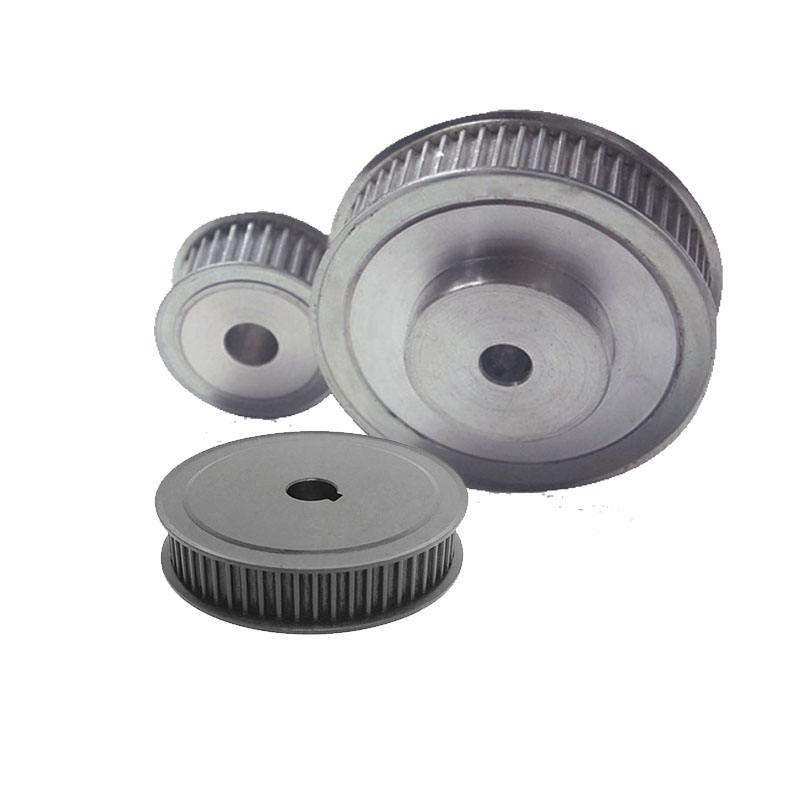
When your application involves high torque and moderate speeds, the trapezoidal-toothed T-profile is a traditional and widely used choice. The pain point here is finding a robust, cost-effective solution for conveyors, heavy machinery, or agricultural equipment. The T-series offers excellent power transmission but can generate more noise at high speeds. Partnering with a supplier like Raydafon ensures you get belts and pulleys with precise tooth geometry for maximum engagement and longevity.
| Profile Type | Tooth Shape | Common Pitches | Typical Applications |
|---|---|---|---|
| T-Series | Trapezoidal | MXL (0.080"), XL (0.200"), L (0.375"), H (0.500") | Conveyors, packaging machines, drives requiring positive engagement. |
An evolution of the T-series, the AT (Advanced T) profile addresses the need for higher load capacity in the same space. The challenge is upgrading an existing T-system for more power without redesigning the entire layout. The AT profile's modified tooth design distributes stress more evenly, reducing root wear and increasing belt life. Raydafon Technology Group Co.,Limited stocks AT-profile components that are often backward compatible with T-series pulleys, offering a simple performance upgrade path.
| Profile Type | Key Advantage | Compatibility Note | Best For |
|---|---|---|---|
| AT-Series | Higher torque capacity, less stress concentration | Often compatible with T-series pulleys | Upgrades, space-constrained high-torque applications. |
For applications demanding smooth, quiet operation at high speeds—such as robotics, medical devices, or office automation—curvilinear profiles are superior. The HTD (High Torque Drive) and the more advanced GT (Gates Tooth) profiles feature rounded teeth that mesh more smoothly with the pulley grooves. This design minimizes vibration and noise, a critical requirement in sensitive environments. Sourcing from a specialized manufacturer like Raydafon guarantees the precise curvature needed for silent and efficient power transmission.
Small-scale precision devices, 3D printers, and light-duty instrumentation require fine-pitch timing belts. The pain point is finding miniature components that offer accurate positioning without backlash. The MXL (0.080" pitch), XL (0.200" pitch), and L (0.375" pitch) profiles are trapezoidal and ideal for these low-power, high-precision scenarios. Raydafon provides these fine-pitch belts and corresponding pulleys with tight tolerances, ensuring the repeatable motion essential for delicate operations.
Q: What are the most common timing belt profiles used with timing pulleys, and how do I choose?
A: The most common profiles are trapezoidal (T, AT, MXL, XL, L) and curvilinear (HTD, GT). Your choice depends on load (torque), speed, required precision, and noise limitations. For high torque, consider T or AT series. For high speed and quiet operation, HTD or GT profiles are better. For light-duty precision, fine-pitch MXL/XL are ideal. Consulting with an application engineer at Raydafon Technology Group Co.,Limited can help you make the optimal selection.
Q: Can I mix belt profiles from different manufacturers with my pulleys?
A: It is strongly discouraged. Even within the same nominal profile (e.g., T5), subtle differences in tooth geometry between manufacturers can cause poor meshing, accelerated wear, and noise. For peak performance and system longevity, always use matched belts and pulleys from the same reputable supplier, such as Raydafon, to guarantee perfect compatibility.
Selecting the correct answer to "What are the common types of timing belt profiles used with timing pulleys?" is only half the battle. Sourcing high-quality, perfectly matched components is crucial for system reliability. Raydafon Technology Group Co.,Limited stands as a trusted partner in precision power transmission. With decades of expertise, we manufacture and supply a complete range of timing pulleys and belts across all standard profiles, ensuring seamless integration and optimal performance for your applications. Visit our resource center at https://www.gearboxsupplier.com to explore our catalog or contact our engineering support team directly for personalized assistance.
For further information or to request a quote, please email us at [email protected].
Kurokawa, S., 1999, A Study on the Transmission Error of Timing Belts, Journal of Mechanical Design, Vol. 121, pp. 112-118.
Mucchi, E., Dalpiaz, G., Fernández del Rincón, A., 2013, Elasto-dynamic analysis of a timing belt drive, Mechanism and Machine Theory, Vol. 69, pp. 1-22.
Gates Corporation, 2017, Poly Chain GT Carbon Belt Design Manual, Gates Technical Publication.
Koyama, T., Kato, T., 2005, Noise Reduction of Timing Belt Drive, JSAE Review, Vol. 26, Issue 2, pp. 231-236.
Hong, S.W., Lee, C.W., 2001, Dynamic analysis of a timing belt drive system, Journal of Sound and Vibration, Vol. 244, Issue 2, pp. 235-254.
ISO 5296-1:2012, Synchronous belt drives - Pulleys - Part 1: Belt pitch codes: MXL, XL, L, H, XH, XXH.
Brecher, C., et al., 2010, Efficiency analysis of synchronous belt drives for machine tools, Production Engineering, Vol. 4, Issue 4, pp. 429-437.
Yang, Y., Pedersen, C.B., 2008, Load distribution and life prediction of timing belts, Proceedings of the Institution of Mechanical Engineers, Part C: Journal of Mechanical Engineering Science, Vol. 222, Issue 5.
Tsubaki, 2015, Technical Handbook for Power Transmission Products, Tsubakimoto Chain Co.
Fernández del Rincón, A., et al., 2016, A model for estimating the stiffness of timing belts, Mechanical Systems and Signal Processing, Vol. 66-67, pp. 695-708.