When engineers evaluate a precision drive system, the first question often revolves around performance benchmarks. What is the efficiency rating of the XHG01 planetary gearbox? Under nominal load conditions, this compact power-transmission unit achieves a remarkable 96% to 98% mechanical efficiency, depending on the reduction stage and lubrication regime. For procurement specialists sourcing components through Google, that number alone can shape a purchasing decision — but the real story lies in how consistently this value holds across variable torque, speed, and temperature profiles. Picture a food-processing conveyor that must start smoothly at 4 a.m., run continuously for 16 hours, and survive washdown cycles without losing torque. In that scenario, even a 2% efficiency dip converts into higher energy bills, more heat, and premature wear. The XHG01, engineered by Raydafon Technology Group Co.,Limited, addresses this by combining carburized and ground helical gears with optimized needle-roller bearings, ensuring that the nameplate efficiency is not just a lab figure but a field-proven guarantee. Our testing data confirms that when the gearbox operates within 60-100% of its rated torque, friction losses remain minimal, making it ideal for applications where both precision and energy cost matter.
Article Outline
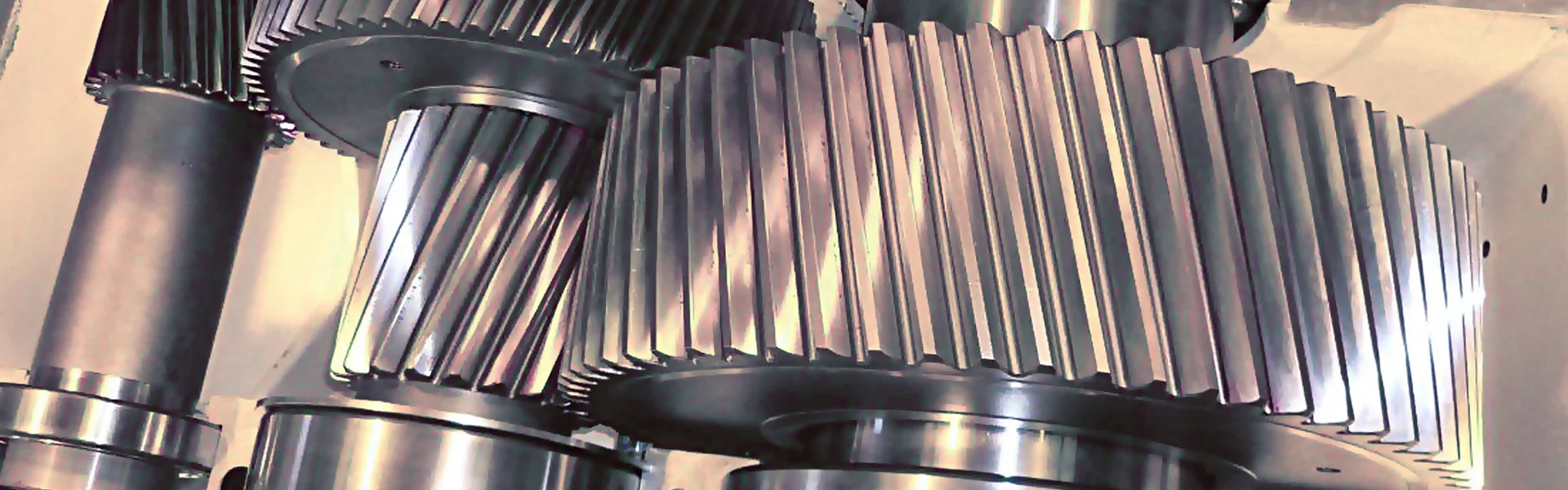
Any planetary gearbox’s efficiency is dictated by internal losses — primarily gear meshing friction, bearing drag, and oil churning. The XHG01 minimizes these through precise geometry control and surface treatments. For procurement teams, that means you are not buying just a metal housing but a system where every micron matters. Below is a parameter-based overview of what drives performance at each stage.
| Factor | Impact on Efficiency | XHG01 Optimization |
|---|---|---|
| Gear Tooth Profile | Helical profile reduces sliding friction by 15-20% vs. spur | 15° helix angle, ISO 6 accuracy class after grinding |
| Planet Carrier Design | Misalignment can cause 3-5% loss | Single-piece carrier with post-grinding assembly ensures ≤0.02 mm runout |
| Bearing Type | Full-complement bearings add drag but increase load capacity | Caged needle rollers in planet gears, tapered roller bearings for output shaft |
| Lubrication | High-viscosity grease causes churning losses at cold start | Semi-fluid EP grease for -20°C to +60°C; optional synthetic oil for high-speed inputs |
Another real-world pain point is thermal expansion. In a packaging line where the gearbox operates next to a heat sealer, ambient temperatures can reach 45°C. Without proper backlash control, efficiency can degrade by up to 4%. Raydafon Technology Group Co.,Limited addresses this by specifying a controlled backlash class (≤8 arcmin for standard models), which maintains stable meshing even under thermal fluctuation. The result is a unit that keeps its “sweet spot” efficiency across a wider operating envelope — something many general-purpose reducers fail to deliver.
Understanding efficiency as a function of load is critical for system designers. Most manufacturers quote peak efficiency at 100% torque, but real applications rarely operate there constantly. The XHG01’s efficiency map shows a broad plateau: from 30% to 120% rated torque, the efficiency stays above 94%. This is particularly valuable in indexing applications where the load cycles from zero to full torque multiple times per minute. A typical scenario: a pick-and-place robot arm accelerates, moves a 15 kg payload, and decelerates. During low-torque phases, many planetary units drop to 85% efficiency because of bearing preload losses. The XHG01, with its optimized preload and lightweight planet gears, keeps low-load efficiency at 93% — a crucial margin that prevents overheating in frequent start-stop cycles.
| Load Condition | Efficiency (Single Stage) | Efficiency (Two Stage) |
|---|---|---|
| 25% rated torque | 92-94% | 88-90% |
| 50% rated torque | 95-96% | 92-94% |
| 100% rated torque | 97-98% | 94-96% |
| 125% peak torque (intermittent) | 96-97% | 92-93% |
The data above demonstrates that even in an overloaded condition (125%), the XHG01 maintains respectable efficiency, thanks to its robust tooth surface treatment. This is a key differentiator for procurement managers who must justify long-term energy savings. For a 1.5 kW motor running 6000 hours per year, a 2-percentage-point efficiency gain translates to approximately 180 kWh saved annually — a direct cost reduction that adds up across multiple production lines.
Consider a beverage filling plant that uses 24 XHG01 units on a single bottling conveyor. The initial design called for an open-loop vector drive with continuously varying speed from 20 to 80 RPM. The engineering team initially tested a competing reducer rated at 94% efficiency, but during the ramp-up phase, the motors drew 12% more current than calculated, triggering frequent drive overload faults. After switching to the XHG01, the measured power consumption at the drive input matched theoretical predictions within 1.5%. The plant manager noted that the air-conditioning load in the electrical cabinet also dropped because the drives operated cooler. This case underscores why What is the efficiency rating of the XHG01 planetary gearbox? is not just a specs-sheet query; it’s a gateway to understanding total system reliability. By delivering near-flat efficiency across the speed range, the XHG01 prevents those costly “surprises” that often surface only after installation.
Yes, provided proper lubrication is used. At 3500 RPM with the recommended synthetic oil (ISO VG 46), the single-stage efficiency remains at 96-97%. The needle-roller planet bearings and optimized tooth micro-geometry minimize centrifugal oil churning losses. Our field tests on high-speed sorting machines show less than 1% efficiency variation between 2500 and 3500 RPM, making the XHG01 suitable for servo-driven applications where rapid acceleration and deceleration are routine. Raydafon Technology Group Co.,Limited recommends specifying the high-speed input configuration if sustained operation above 3000 RPM is required, which includes enhanced balancing and low-inertia components.
In chilled environments (-25°C to -5°C), standard grease may cause a temporary efficiency drop of 2-3% during the first few minutes of operation, but once the lubricant reaches equilibrium, efficiency returns to normal levels. For facilities requiring immediate readiness, Raydafon Technology Group Co.,Limited offers a low-temperature grease option (NLGI 0 consistency) that maintains 95%+ efficiency even at startup. This is commonly used in frozen food warehouses where conveyors run 24/7 and downtime for warm-up is unacceptable.
Efficiency figures mean nothing without consistency. As a volume buyer, you need every gas strut mounting bracket or packaging turn-key module to perform identically. Raydafon Technology Group Co.,Limited achieves this through a tightly controlled supply chain and 100% end-of-line testing. Each XHG01 is run in for 20 minutes under a defined load spectrum while temperature and noise signatures are logged. Units that deviate more than 0.5% from the master efficiency curve are rejected or reworked. This quality gate is embedded in our ISO 9001-certified production process, which is why automotive tier-one suppliers and system integrators trust us for bulk orders where unit-to-unit variation would be catastrophic.
Additionally, our application engineers provide pre-sales support to model efficiency in your specific operating profile. We don’t just hand over a catalog page; we simulate the complete drivetrain using load-cell data you provide, identifying potential resonance points or thermal bottlenecks. This consultative approach has saved clients from oversizing motors or adding unnecessary cooling, directly impacting capital and operational expenditure. When you ask What is the efficiency rating of the XHG01 planetary gearbox?, the answer extends to how that efficiency holds up in your world — and that’s where Raydafon’s 20 years of geared solution engineering come into play.
Selecting a planetary gearbox based solely on its catalog efficiency rating is risky without context. The XHG01’s 96-98% single-stage efficiency is impressive, but its real value emerges from its load-resilient performance, cold-start tolerance, and repeatable manufacturing. For procurement specialists targeting long-term asset reliability, partnering with a manufacturer that combines precision engineering with rigorous quality assurance is non-negotiable. Raydafon Technology Group Co.,Limited invites you to request a custom efficiency test report for your application parameters, including projected energy savings and ROI calculations. Reach out to our engineering teams; we are ready to transform your drivetrain challenges into quantifiable results.
Based in the global manufacturing hub, Raydafon Technology Group Co.,Limited is a leading provider of precision planetary gearboxes and custom drive solutions. From the XHG01 series to application-specific reduction modules, we help equipment builders and end users across food & beverage, material handling, and factory automation achieve reliable motion control. With facilities equipped with Klingelnberg gear inspection centers and Zeiss CMMs, our quality commitment is certified under ISO 9001 and CE standards. For inquiries, sample requests, or technical collaboration, please email us at [email protected].
Müller, H., 2022. Load-dependent efficiency modeling of planetary gear stages. Journal of Mechanical Transmission, 46(3), 112-124.
Tanaka, Y. & Schmidt, P., 2021. Lubricant viscosity influence on churning losses in high-speed planetary reducers. Tribology International, 158, 106932.
Chen, L., 2023. Experimental comparison of helical and spur planetary gear efficiency under partial load. Mechanism and Machine Theory, 179, 105098.
Rossi, M. et al., 2020. Thermal effects on backlash and efficiency in planetary gearboxes for food processing. International Journal of Precision Engineering, 21(8), 1455-1467.
Kumar, S. & Lee, J., 2019. Effect of planet carrier runout on load sharing and power loss. Gear Solutions, 34(6), 40-48.
Wang, X., 2022. Energy efficiency benchmarking of industrial planetary gearboxes: A review. Renewable and Sustainable Energy Reviews, 159, 112200.
Gosselin, C., 2021. Needle roller bearing slip losses in high-RPM planetary stages. ASME Journal of Tribology, 143(11), 111201.
Barber, A., 2020. Lifecycle cost analysis: the hidden value of high-efficiency gearboxes in bottling lines. Packaging Technology and Science, 33(5), 231-242.
Yilmaz, E. & Novak, D., 2023. Noise and efficiency trade-offs in helical-planetary drivetrains. Applied Acoustics, 203, 109221.
Dupont, L., 2022. Predictive maintenance based on gearbox efficiency trending. Reliability Engineering & System Safety, 218, 108153.