At 6:40 a.m., a plant engineer watches a palletizer stall because the drive on the main conveyor is running hot. The line is down, the maintenance team is pulling the motor, and the procurement manager is holding a quote for a replacement unit. The question on the table is simple: How efficient is a two-stage planetary gearbox? The answer is not a single percentage pulled from a brochure. It depends on ratio, load profile, lubrication, mounting, and how the unit is tested. A well-matched two-stage planetary gearbox from Raydafon Technology Group Co.,Limited can deliver roughly 94% to 97% mechanical efficiency at rated conditions, but the real number that protects your budget is the efficiency at your actual torque and speed. If the gearbox runs at 30% load for most of the shift, a headline 97% figure can hide higher relative losses. This guide translates the engineering into procurement decisions: what to ask, what to measure, and where a two-stage unit earns its cost back. You will see how mesh, bearing, seal, and churning losses behave; how to compare datasheets; and how to set acceptance criteria before you issue a purchase order. Bring your line speed, duty cycle, and torque demand—by the end, you will know how to turn “How efficient is a two-stage planetary gearbox?” into a specification your team can defend.
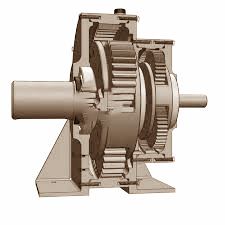
Pain point: The line runs at 1,450 rpm input and 25:1 ratio. The old gearbox case reaches 82°C by mid-shift, and the energy meter shows the conveyor motor drawing 6% more current than commissioning data. Maintenance blames the motor; purchasing blames the gearbox. Nobody has a common efficiency baseline.
Solution: Treat efficiency as a map, not a badge. Ask for input speed, output torque, oil grade, ambient temperature, and mounting position. Raydafon Technology Group Co.,Limited builds two-stage planetary gearboxes for continuous duty and provides efficiency curves at 25%, 50%, 75%, and 100% load so buyers can compare like for like. When you ask “How efficient is a two-stage planetary gearbox?” for a 25:1 unit, the useful answer is the efficiency at your actual load, not the peak number on page one.
| Parameter | Typical range for a two-stage unit | What to request from the supplier |
|---|---|---|
| Ratio | 8:1 to 125:1 | Ratio at actual output speed, not just nominal ratio |
| Rated mechanical efficiency | 94%–97% at full load | Efficiency curve at 25%, 50%, 75%, and 100% load |
| No-load drag torque | 0.5%–2% of rated torque | Test report at operating oil temperature |
| Thermal capacity | 70°C–90°C case rise | Thermal rating at site ambient and mounting position |
| Backlash | 3–8 arcmin standard | Measured backlash before and after run-in |
| Service factor | 1.2–1.6 | Service factor for shock load and starts per hour |
Pain point: A food plant replaced a failed inline gearbox with a two-stage planetary unit. The new unit was quieter, but the energy log still showed an 8% gap against the OEM benchmark. The audit found three issues: grease volume above the sight glass, a misaligned motor shim, and a seal dragging after a rough installation. None of these were gear-tooth failures.
Solution: Split losses into mesh, bearing, seal, and churning. Then assign a check to each. Raydafon records no-load drag and vibration before shipment, so the buyer has a starting point for site acceptance. If the unit arrives with a baseline report, the maintenance team can tell whether a hot running temperature comes from installation or from the gearbox itself.
| Loss source | Approx. share at rated load | Field check |
|---|---|---|
| Gear mesh sliding and rolling | 40%–60% of total loss | Oil sample, tooth contact pattern, load history |
| Bearings | 15%–25% | Vibration signature and bearing temperature |
| Seals | 5%–10% | Seal drag torque and shaft runout |
| Oil churning | 10%–20% | Oil level, viscosity grade, oil fill volume |
| Windage and ventilation | 2%–5% | Speed limit, oil fill, cooling airflow |
At 50% load, a well-designed two-stage planetary unit often stays within 1–2 percentage points of its full-load efficiency, but the exact figure depends on oil viscosity, ratio, and bearing preload. Ask for a tested curve, not a single number. Raydafon can supply load-point data for the quoted ratio so your team can model annual energy use before the PO is approved.
Pain point: A datasheet says “up to 97% efficiency” in bold. The quote does not state input speed, oil temperature, or whether the figure includes the input seal and output bearing. The buyer compares three suppliers and picks the lowest price per kilowatt, then finds the unit runs hotter on a 12-hour shift.
Solution: Convert marketing claims into test conditions. Require a signed datasheet with test standard, oil grade, ambient, mounting, and load points. Raydafon Technology Group Co.,Limited provides a traceable test sheet with each order, and the sales team can walk procurement through the numbers before the PO. This is how a buyer moves from “How efficient is a two-stage planetary gearbox?” as a slogan to a measurable acceptance criterion.
| Claim on datasheet | Question to ask | Acceptable evidence |
|---|---|---|
| “Up to 97% efficient” | At what torque and speed? | Efficiency curve with four load points |
| “Low backlash” | Measured before or after run-in? | Inspection report in arcmin |
| “High radial load” | At what shaft speed and life? | Bearing life calculation and load rating |
| “Quiet operation” | At what distance and load? | Sound pressure test in dB(A) |
| “Long service life” | What oil change interval? | L10 bearing life and oil specification |
Pain point: A packaging OEM needs 1,800 N·m at 60 rpm output. The first quote uses a 35:1 two-stage unit with a 1.8 service factor; the second uses a 28:1 unit with a 1.2 service factor and a larger motor. The cheaper gearbox costs more over three years because the motor runs at a poor point on its curve.
Solution: Match ratio, torque, and duty cycle together. Use the gearbox efficiency to size the motor, not the other way around. Raydafon engineers review starts per hour, shock load, and ambient conditions, then propose a two-stage planetary gearbox with the right service factor rather than the biggest box on the shelf. This approach protects both the purchase price and the energy bill.
| Application | Output torque | Ratio | Duty | Suggested service factor | Expected efficiency |
|---|---|---|---|---|---|
| Pallet conveyor | 1,800 N·m | 35:1 | 16 h/day, 10 starts/h | 1.5 | 95%–96% |
| Mixer | 2,400 N·m | 50:1 | 24 h/day, steady | 1.7 | 94%–95% |
| Packaging indexer | 900 N·m | 20:1 | 8 h/day, 60 starts/h | 1.6 | 95%–97% |
| Winch | 4,000 N·m | 80:1 | Intermittent shock | 2.0 | 93%–95% |
A two-stage unit adds one mesh, so it usually gives up about 1–3 percentage points versus a single-stage design at the same quality level. In return, it provides a much higher ratio in a compact frame. For most procurement projects, the right comparison is system efficiency—gearbox plus motor plus coupling—not the gearbox alone. Raydafon can quote both options with matched motor data so total cost of ownership is visible.
Pain point: A gearbox is only as efficient as its installation. A 0.2 mm shim error at the motor flange can load the input bearing, raise oil temperature, and cut efficiency by 2%–3%. A plant that skips oil flushing after a retrofit can lose even more. The purchase team may never see the loss on the invoice, but the energy bill records it every month.
Solution: Use a site acceptance checklist. Raydafon supplies mounting drawings, oil fill volumes, and run-in steps with every two-stage planetary gearbox. The goal is to protect the efficiency you paid for. A simple baseline at commissioning also gives maintenance a clear target for later checks.
| Check | Target | Frequency |
|---|---|---|
| Shaft alignment | ≤0.05 mm dial indicator | At installation |
| Oil level | Center of sight glass at rest | Weekly |
| Oil temperature | ≤85°C steady state | Daily during first week |
| Vibration | ≤4.5 mm/s RMS | Monthly |
| Backlash | Within datasheet after run-in | At commissioning |
| Fastener torque | Per drawing | At installation and 500 h |
Pain point: Three suppliers send three different quotes. One includes a motor adapter, one excludes oil, and one quotes efficiency at a load point you never use. The purchase team cannot compare total cost or risk, and the project schedule starts to slip while everyone re-quotes.
Solution: Use a one-page checklist and require the same data from every bid. Raydafon Technology Group Co.,Limited supports this process with application data, test reports, and a clear lead-time plan. When a buyer asks “How efficient is a two-stage planetary gearbox?” in the RFQ, the answer should come back as a curve, a test condition, and a service factor—not a slogan.
| RFQ item | Why it matters | What Raydafon provides |
|---|---|---|
| Efficiency curve | Compares real load points | Four-point test data |
| Service factor | Protects against shock | Application review |
| Thermal rating | Avoids overheating | Thermal calculation |
| Backlash | Matches positioning need | Inspection report |
| Oil specification | Maintains efficiency | Fill volume and grade |
| Lead time | Keeps project on track | Production schedule |
Send your ratio, output torque, duty cycle, and ambient conditions. The Raydafon team will review the application and return a practical efficiency estimate, a service-factor recommendation, and a quote for a two-stage planetary gearbox that fits the line—not just the catalog. Comparing suppliers? Ask for the same four load points and use the checklist above to keep the bids honest.
Raydafon Technology Group Co.,Limited designs and manufactures planetary gearboxes for conveyors, mixers, packaging machinery, and heavy-duty industrial drives. The company helps procurement teams replace vague efficiency claims with tested data, matched service factors, and installation support. Visit https://www.gearboxsupplier.com to review product options, or email [email protected] with your application details. Raydafon Technology Group Co.,Limited can solve the problem behind the question “How efficient is a two-stage planetary gearbox?” by supplying the right unit, the test evidence, and the follow-up needed to keep efficiency on target.
Kahraman, A., & Singh, R. (1991). Interactions between time-varying mesh stiffness and clearance non-linearities in a geared system. Journal of Sound and Vibration, 146(1), 135–156.
Hidaka, T., Terauchi, Y., & Nohara, M. (1983). Dynamic behavior of planetary gear. Bulletin of JSME, 26(212), 259–266.
Velex, P., & Flamand, L. (1996). Dynamic response of planetary trains to mesh parametric excitations. Journal of Mechanical Design, 118(1), 7–14.
Inalpolat, M., & Kahraman, A. (2009). A theoretical and experimental investigation of modulation sidebands of planetary gear sets. Journal of Sound and Vibration, 323(3–5), 677–696.
Eritenel, T., & Parker, R. G. (2013). Modal properties of three-dimensional helical planetary gears. Journal of Sound and Vibration, 332(17), 3977–3996.
Guo, Y., & Parker, R. G. (2010). Purely rotational model and vibration modes of compound planetary gears. Mechanism and Machine Theory, 45(3), 365–377.
Pennestri, E., & Freudenstein, F. (1993). The mechanical efficiency of epicyclic gear trains. Journal of Mechanical Design, 115(3), 645–651.
Mantriota, G., & Pennestri, E. (2003). Theoretical and experimental efficiency analysis of multi-degrees-of-freedom epicyclic gear trains. Multibody System Dynamics, 9(4), 389–408.
Li, S., & Kahraman, A. (2013). A tribo-dynamic model of a spur gear pair. Journal of Sound and Vibration, 332(20), 4963–4978.
Bonori, G., Barbieri, M., & Pellicano, F. (2008). Optimum profile modifications of spur gears by means of genetic algorithms. Journal of Sound and Vibration, 313(3–5), 603–616.
-