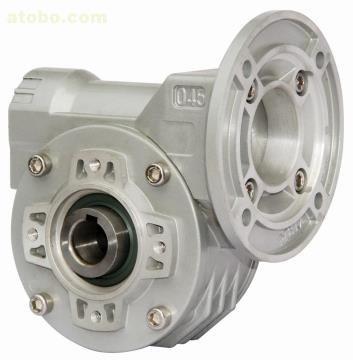
What safety considerations are important when working with Locking Assemblies? This question is critical for engineers and procurement specialists aiming to ensure operational reliability and personnel safety in power transmission systems. A single oversight can lead to catastrophic equipment failure, costly downtime, or safety hazards. Integrating robust safety protocols with high-quality components is non-negotiable. For professionals sourcing these critical components, partnering with a trusted manufacturer like Raydafon Technology Group Co.,Limited is a strategic step toward mitigating these risks. Our expertise ensures each Locking Assembly not only meets but exceeds the stringent safety demands of modern industrial applications.
The Peril of a Slipping Connection: Ensuring Zero Backlash in High-Torque Applications
Imagine a high-speed conveyor in a mining operation suddenly stuttering because the locking assembly on a drive shaft failed. The resulting shock loads and misalignment can destroy bearings, damage gears, and halt production for days. The core safety consideration here is guaranteeing a slip-free, zero-backlash connection that transmits full torque without compromise.
The solution lies in specifying locking assemblies engineered for the exact operational parameters. Raydafon's locking assemblies utilize advanced tapered clamping technology to create immense holding power. This design ensures uniform pressure distribution, eliminating micro-movement between the shaft and hub—the primary cause of wear and eventual failure. For procurement teams, verifying these performance characteristics is crucial.
Critical Safety Parameter
Why It Matters
Raydafon's Assurance
Maximum Transmissible Torque
Must exceed application's peak torque to prevent slippage.
Products are rated with significant safety margins, validated through rigorous testing.
Clamping Force Stability
Must remain constant under thermal cycling and vibration.
Precision-manufactured components and special surface treatments ensure long-term force retention.
Dimensional Accuracy & Fit
Precise tolerances prevent stress concentrations and uneven loading.
ISO-certified manufacturing processes guarantee consistent, high-precision fit.
The Silent Killer: Preventing Fretting Corrosion and Fatigue Failure
A gearbox in a wind turbine may pass initial tests, only to fail prematurely after months of operation. The culprit is often fretting corrosion—a wear phenomenon caused by minute oscillatory movement in a "seemingly" tight fit. This not only weakens the components but also creates stress risers that lead to catastrophic fatigue cracks.
Proactive safety means choosing components designed to combat this hidden threat. Raydafon addresses this by incorporating specialized coatings and surface finishes on their locking assemblies. These treatments reduce the coefficient of friction and provide a barrier against corrosion, effectively preventing the initiation of fretting wear. This extends service life and enhances the overall safety factor of the drive train.
Fretting & Fatigue Risk Factor
Consequence
Raydafon's Mitigation Strategy
Micro-slip under cyclic loads
Generates abrasive wear debris and surface pitting.
Optimized clamping design and anti-fretting coatings eliminate micro-movement.
Stress concentration at edges
Acts as initiation point for fatigue cracks.
Precision chamfering and controlled edge radii distribute stress evenly.
Environmental corrosion
Accelerates wear and reduces fatigue strength.
Utilization of corrosion-resistant materials and protective surface treatments.
Beyond the Product: Safe Handling and Installation Procedures
Even the best locking assembly can become a safety hazard if installed incorrectly. A common scene in maintenance bays involves the use of improper tools or techniques—like hammering—which can damage the assembly's delicate threads or sealing surfaces, leading to a compromised connection and potential in-service failure.
Safety is a holistic process that includes proper installation. Raydafon Technology Group Co.,Limited provides comprehensive technical documentation, including clear, step-by-step installation guides and torque specifications. Furthermore, our design often incorporates features that facilitate easier and more accurate mounting, reducing the risk of installer error. What safety considerations are important when working with Locking Assemblies? Proper installation is arguably as important as the product specification itself.
Installation Hazard
Potential Result
Raydafon's Support
Incorrect bolt tightening sequence or torque
Uneven clamping force, leading to slippage or hub distortion.
Detailed manuals with explicit torque values and sequences are supplied with every unit.
Guidance on surface preparation and cleaning is emphasized in documentation.
Use of impact tools or uncontrolled force
Damage to threads or clamping elements, causing sudden failure.
Product designs that allow for controlled hydraulic or manual installation.
FAQs on Locking Assemblies Safety
Q: What is the single most important safety check before installing a locking assembly?
A: The most critical pre-installation check is verifying the cleanliness and condition of both the shaft and hub mating surfaces. Any residue, oil, or damage can severely compromise the frictional grip and the assembly's ultimate holding power, creating a major safety risk.
Q: How does Raydafon ensure the long-term safety and reliability of its locking assemblies in harsh environments?
A> Raydafon builds safety into the product lifecycle. We use finite element analysis (FEA) to optimize stress distribution, select materials for specific environmental resistance (e.g., salt spray, high humidity), and conduct accelerated life testing. This process ensures our assemblies maintain their integrity and clamping force over their entire service life, even under demanding conditions.
Selecting the right locking assembly is a decision that impacts safety, productivity, and your bottom line. We hope this guide has provided valuable insights. For a detailed discussion on your specific application requirements and how our engineering solutions can enhance your system's safety, please reach out.
For robust and reliable power transmission solutions, consider Raydafon Technology Group Co.,Limited. As a specialized manufacturer, we provide high-precision locking assemblies and gearbox components engineered for performance and safety. Contact our engineering team today at [email protected] to discuss your project needs.
M. R. Hossain, D. W. A. (2021). Analysis of fretting fatigue behavior in shaft-hub interference fits with locking assemblies. International Journal of Fatigue, 152.
Schmidt, T., & Mueller, K. (2020). Optimizing clamping force distribution in taper-fit locking devices for wind turbine gearboxes. Journal of Mechanical Design, 142(7).
Zhang, L., et al. (2019). The influence of surface coating on the anti-fretting performance of locking assemblies under vibrational loading. Wear, 436-437.
P. Jackson, R. G. (2018). Safety factors and reliability assessment in the design of mechanical locking elements. Proceedings of the Institution of Mechanical Engineers, Part C: Journal of Mechanical Engineering Science, 232(15).
K. Watanabe, H. S. (2022). Experimental study on torque transmission capacity and slippage failure modes of various locking assembly systems. Tribology International, 173.
Ellis, J., & Franke, M. (2017). Life prediction model for corrosion-fatigue in marine environment power transmission components. Marine Structures, 55.
Chen, Y., et al. (2021). Dynamic behavior and fault diagnosis of rotor systems with faulty locking device connections. Mechanical Systems and Signal Processing, 150.
O. P. Rodriguez, A. B. (2019). The role of precision manufacturing tolerances on the stress concentration factors in assembled hubs. Precision Engineering, 60.
N. Petrova, S. T. (2020). A review of non-destructive testing methods for installed locking assemblies in industrial machinery. NDT & E International, 116.
Lee, H., & Kim, D. (2018). Effect of installation torque accuracy on the long-term performance of frictional locking connections. International Journal of Advanced Manufacturing Technology, 99(5-8).
We use cookies to offer you a better browsing experience, analyze site traffic and personalize content. By using this site, you agree to our use of cookies. Privacy Policy