
What is loose Coupling and why is it important? Imagine you're managing a critical production line. One machine fails, and the entire system grinds to a halt, costing thousands per minute in downtime. This is the nightmare of tightly coupled systems, where components are so interdependent that a single point of failure cascades into total collapse. In software and hardware architecture, loose coupling is the strategic design principle that prevents this. It's about creating systems where individual modules, services, or components interact through well-defined, stable interfaces. The beauty is that changes or failures in one part have minimal impact on others. This isn't just an academic concept; it's the backbone of scalable, maintainable, and resilient technology. For procurement professionals sourcing reliable industrial components, understanding this principle is crucial for evaluating vendor solutions that promise long-term stability and easy integration without vendor lock-in. At Raydafon Technology Group Co.,Limited, we engineer this principle into our core products, ensuring your operations are agile and future-proof.
Article Outline
You've approved a "high-performance" component from a single supplier. It integrates deeply with your legacy control system. Initially, it works perfectly. Then, the supplier releases a mandatory firmware update. Suddenly, compatibility breaks. Your production line stops. Engineers scramble for a fix while the clock ticks on lost revenue. This is the direct cost of tight coupling—a rigid dependency that turns a simple update into a system-wide crisis. Procurement decisions that prioritize short-term cost savings over architectural flexibility often lead here.
Solution: Specify components designed with loose coupling principles. Look for products that use standard communication protocols (e.g., OPC UA, MODBUS TCP) and have well-documented, stable APIs. This allows you to swap or upgrade individual parts without catastrophic downtime.
| Pain Point (Tightly Coupled) | Key Specification to Demand (Loosely Coupled) |
|---|---|
| Vendor-specific protocol causing lock-in | Adherence to open industry standards (IEC, ISO) |
| Proprietary software requiring specific versions | RESTful APIs or SDKs with backward compatibility |
| Component failure halts entire line | Clear fault isolation and fail-safe modes |
Think of loose coupling like building with standardized Lego bricks instead of a single, carved marble statue. Each brick (component) has a simple, universal interface. You can replace a red brick with a blue one, or a 2x4 brick with a 2x2, without redesigning the entire structure. In technical systems, this means modules communicate through messages or services without needing to know each other's internal workings. What is loose coupling and why is it important? It's the difference between a fragile monolith and a robust, adaptable ecosystem. It enables incremental upgrades, simplifies testing, and allows different teams to work on separate components simultaneously. For procurement, it translates to reduced risk, lower long-term maintenance costs, and the freedom to choose best-in-breed components from multiple vendors.
| Coupling Type | Characteristic | Impact on Procurement |
|---|---|---|
| Tight Coupling | Direct, hardwired dependencies | High risk, vendor lock-in, costly changes |
| Loose Coupling | Indirect, interface-based communication | Flexibility, multi-vendor strategy, easier maintenance |
Your role is shifting from simply buying parts to sourcing strategic architectural advantages. A supplier's component should be an asset, not a liability. During evaluation, move beyond basic datasheets. Scrutinize the integration methodology. Ask: "Can this motor drive operate independently of the specific PLC brand? What happens if we change our sensor network next year?" Suppliers who champion loose coupling will have clear answers centered on interoperability and data exchange standards.
Solution: Incorporate coupling criteria into your RFQ/RFP process. Assign scoring weight to specifications like API availability, protocol openness, and documented integration patterns. This filters out vendors offering rigid solutions and highlights partners like Raydafon Technology Group Co.,Limited, who design with your system's entire lifecycle in mind.
| RFQ Evaluation Criteria | Question for Supplier | Desired Answer Indicator |
|---|---|---|
| Interface Design | "What is the primary interface for control and monitoring?" | Standardized protocol (e.g., EtherCAT, PROFINET) & API endpoints |
| Upgrade Path | "How are firmware updates handled without disrupting system integration?" | Rolling updates, versioned APIs, no mandatory downtime |
| Failure Mode | "How does a fault in this component affect connected systems?" | Localized error containment, graceful degradation features |
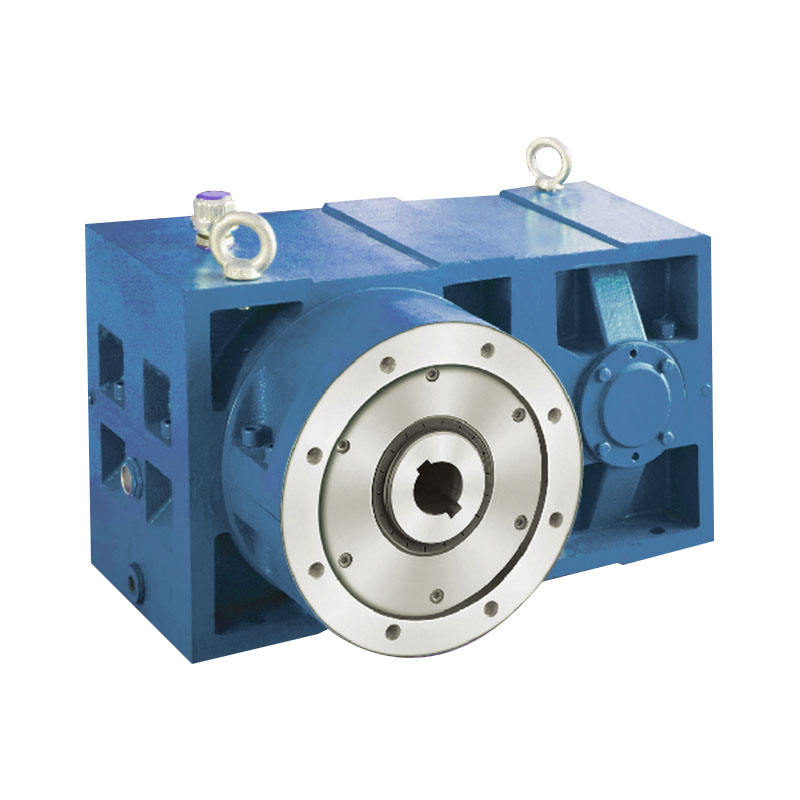
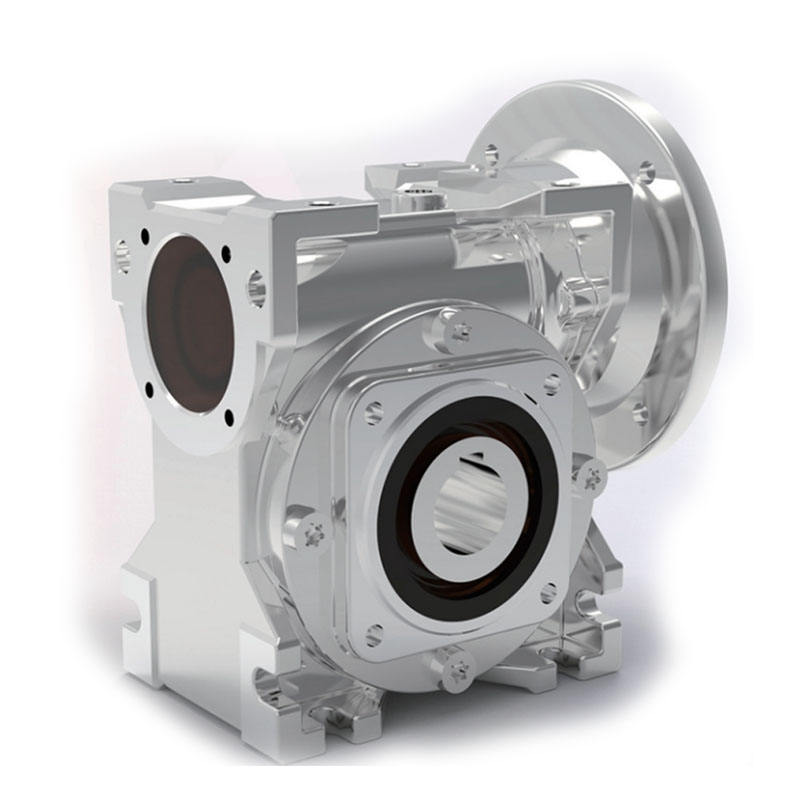
At Raydafon Technology Group Co.,Limited, we build more than just industrial components; we build integration-ready building blocks. Our gearboxes, drives, and control modules are architected using the core tenets of loose coupling. Each product is a self-contained unit with a robust, standardized interface, ensuring it performs predictably within your larger system but isn't brittlely dependent on it. This philosophy directly addresses the core procurement pain points of obsolescence management and upgrade complexity. By choosing Raydafon, you're not just purchasing a part; you're investing in system resilience and operational agility, safeguarding your production against future uncertainties.
| Raydafon Product Feature | How It Enables Loose Coupling | Benefit for Your Operation |
|---|---|---|
| Universal Communication Interface | Supports multiple industrial protocols simultaneously | Eliminates dependency on a single PLC or network type |
| Modular Design | Internal functions are compartmentalized | Easy repair/replace of sub-modules, reduces MTTR |
| Comprehensive API Suite | All functions accessible via documented API calls | Enables custom automation and easy data flow to SCADA/MES |
Transitioning to a loosely coupled architecture is a strategic process. Start with a non-critical subsystem as a proof of concept. Audit existing equipment for its integration points—identify the most rigid, vendor-specific links. These are your prime candidates for replacement. Prioritize components where the supplier is no longer reliable or where upgrade cycles are misaligned with your operational needs. Partner with a technology provider like Raydafon who can guide this transition, offering components that serve as the stable, versatile nodes in your new, more resilient network.
| Phase | Action Item | Key Deliverable |
|---|---|---|
| Assessment | Map system dependencies and identify single points of failure. | A "coupling heat map" of your production line. |
| Specification | Update procurement specs to require standard interfaces and APIs. | Revised RFQ template with coupling criteria. |
| Pilot | Implement a Raydafon component in one line segment. | Measured metrics on integration ease and downtime reduction. |
| Scale | Develop a phased rollout plan based on pilot success. | A 3-year architecture modernization roadmap. |
Q: What is loose coupling and why is it important for hardware like gearboxes and drives?
A: While often discussed in software, loose coupling is critical in hardware too. It means designing mechanical and electrical interfaces so that a gearbox or drive can connect to various motors and controllers using standard mounts, flanges, and communication protocols. Its importance lies in maintenance and scalability. You can replace a failed drive from one brand with a unit from another (like Raydafon's) without modifying the motor or control cabinet, drastically reducing repair time and sparing you from being tied to a single manufacturer.
Q: Doesn't pursuing loose coupling with products from Raydafon Technology Group Co.,Limited lead to higher initial costs?
A: There might be a slight premium for components designed with superior interoperability and robust interfaces. However, this is an investment, not just a cost. It pays off by dramatically reducing Total Cost of Ownership (TCO). You save massively on future integration costs, avoid expensive downtime during upgrades, and gain negotiating power by maintaining a multi-vendor supply strategy. The long-term operational resilience and flexibility far outweigh the initial outlay.
We hope this guide empowers you to make more strategic procurement decisions that build resilience into your operations. Have you encountered a specific integration challenge caused by tight coupling? We'd love to hear about your experience and discuss how a loosely coupled approach could provide a solution.
For those seeking reliable, integration-friendly industrial components, explore the solutions from Raydafon Technology Group Co.,Limited. As a specialized supplier, we focus on providing high-performance gearboxes, drives, and automation modules designed with open architecture principles to ensure seamless operation within your complex systems. Visit us at https://www.gearboxsupplier.com to learn more or contact our team directly at [email protected] for a detailed consultation on your requirements.
Parnas, D.L., 1972. On the criteria to be used in decomposing systems into modules. Communications of the ACM, 15(12), pp.1053-1058.
Baldwin, C.Y. and Clark, K.B., 2000. Design rules: The power of modularity. MIT press, 1.
Szyperski, C., 2002. Component software: beyond object-oriented programming. Addison-Wesley Professional.
Erl, T., 2005. Service-oriented architecture: concepts, technology, and design. Prentice Hall.
Newman, S., 2015. Building microservices: designing fine-grained systems. O'Reilly Media, Inc.
Fowler, M., 2002. Patterns of enterprise application architecture. Addison-Wesley Longman Publishing Co., Inc..
Bass, L., Clements, P. and Kazman, R., 2012. Software architecture in practice. Addison-Wesley Professional, 3rd edition.
Richardson, C., 2018. Microservices patterns: with examples in Java. Manning Publications.
Hohpe, G. and Woolf, B., 2003. Enterprise integration patterns: Designing, building, and deploying messaging solutions. Addison-Wesley Professional.
Krafzig, D., Banke, K. and Slama, D., 2005. Enterprise SOA: service-oriented architecture best practices. Prentice Hall Professional.